
The nervous system is like the body’s command center, overseeing everything from basic functions to complex actions. It helps us move, think, feel, and react to the world around us. By sending and receiving messages, it keeps our body in harmony and adapts to changes.
The nervous system is one of the most important systems in our body. Understanding it can give you a deeper appreciation for how your body works and how incredibly interconnected everything is. This article talks about details of the nervous system, types of nervous system, its organs, functions, the process of communication and much more.
What is a Nervous System?
The nervous system is like the body’s communication network. It helps you sense the world around you, think, feel emotions, and make decisions.
It’s made up of two main parts:
Central Nervous System (CNS)
This includes the brain and the spinal cord. Think of it as the control center. The brain processes information and makes decisions, while the spinal cord acts like a highway, sending messages between the brain and the rest of the body.
Peripheral Nervous System (PNS)
This consists of all the nerves outside the CNS. These nerves connect the CNS to other parts of the body, like your arms, legs, and organs. The PNS is like the network of roads that connect your control center to different destinations.
Components of the Nervous System
| Part | Subpart | Function |
| Central Nervous System (CNS) | Brain | Thought, emotion, behavior, sensory perception, cognition |
| Cerebrum | Voluntary activities | |
| Cerebellum | Muscle coordination, posture, balance | |
| Brainstem | Involuntary functions (heart rate, breathing) | |
| Spinal Cord | Transmit sensory and motor signals | |
| Peripheral Nervous System (PNS) | Somatic Nervous System (SNS) | Voluntary movements |
| Autonomic Nervous System (ANS) | Involuntary functions | |
| Sympathetic Nervous System | Fight or flight response | |
| Parasympathetic Nervous System | Rest and digest r |
Types of Nervous Systems
Different types of nervous systems help your body work together smoothly, from managing what you do on purpose to handling automatic processes you don’t even think about.
Here are the types of nervous systems, such as:
Central Nervous System (CNS)
The Central Nervous System is like the main control center of the body. It includes:
- Brain: This is the command center where all the thinking, planning, and processing happens. It controls everything from breathing to remembering your favorite song.
- Spinal Cord: Think of it as a big, thick cable that connects the brain to the rest of the body. It helps send messages back and forth between the brain and other parts of the body.
Peripheral Nervous System (PNS)
The Peripheral Nervous System is like a network of roads branching out from the Central Nervous System. It includes:
- Sensory Nerves: These nerves pick up information from your senses, like touching something hot or seeing a bright light. They send this information to the CNS.
- Motor Nerves: These nerves take instructions from the CNS and send them out to your muscles, telling them how to move. For example, they help you pick up a book or kick a ball.
Autonomic Nervous System (ANS)
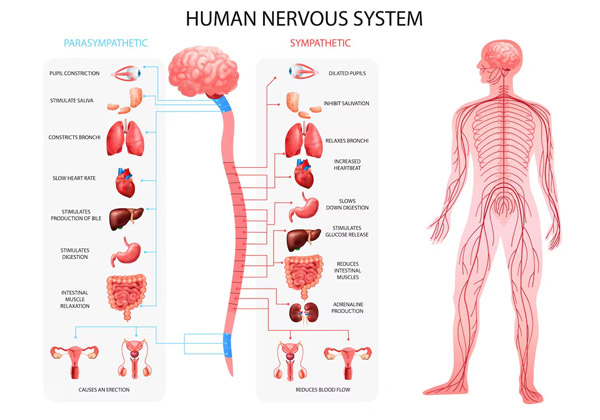
The Autonomic Nervous System controls things that happen automatically, without you having to think about them. It has two main parts:
- Sympathetic Nervous System: This part gets your body ready to handle stress or danger. It’s like the “fight or flight” response. For example, if you’re scared, your heart might race and you might start sweating.
- Parasympathetic Nervous System: This part helps your body relax and return to normal after stress. It’s like the “rest and digest” response. It slows your heart rate and helps with digestion.
Somatic Nervous System
The Somatic Nervous System controls voluntary movements. It’s what lets you move your muscles on purpose. When you decide to wave your hand or stand up, the somatic nervous system is at work.
Enteric Nervous System
The Enteric Nervous System is sometimes called the “second brain” because it controls the digestive system.
It manages things like stomach contractions and digestive juices without needing instructions from the brain. It works automatically to help break down food and absorb nutrients.
List of Nervous System Organs
Here are some key organs and parts of the nervous system:
| Parts | Subparts |
| Brain |
|
| Spinal Cord | A long, thin tube that runs down your back, connecting the brain to the rest of the body. |
| Nerves |
|
| Neurons |
|
| Meninges | Protective layers of tissue that cover the brain and spinal cord. |
| Cerebrospinal Fluid | A clear fluid that cushions and protects the brain and spinal cord. |
What are the Functions of a Nervous System?
The nervous system gathers information from the environment, processes it, and sends instructions to the body to respond.
Here are the main functions of a nervous system:
- Sensing: Gathers information from the environment through senses like sight, touch, and sound.
- Processing: Interprets and makes sense of the information collected.
- Responding: Sends instructions to muscles and organs to react appropriately.
- Controlling Movements: M nages voluntary actions like walking and talking.
- Regulating Automatic Functions: Controls involuntary actions like heartbeat and digestion.
- Maintaining Homeostasis: Keeps the body’s internal environment stable, such as temperature and fluid balance.
- Learning and Memory: Enables learning new things and storing memories.
- Emotions: Helps you experience and express feelings.
Nervous System Parts and Functions
| Parts | Functions |
| Brain | Controls thinking, memory, movement, and basic body functions. |
| Spinal Cord | Sends messages between the brain and the rest of the body. |
| Sensory Nerves | Collect information from the senses and send it to the brain. |
| Motor Nerves | Carry instructions from the brain to the muscles. |
| Neurons | Transmit messages throughout the nervous system |
| Dendrites | Receive messages from other neurons. |
| Axons | Send messages to other neurons. |
| Synapses | Gaps where neurons pass messages to each other. |
| Meninges | Protect the brain and spinal cord. |
| Cerebrospinal Fluid | Cushions and protects the brain and spinal cord. |
How Does Nervous System Work?
The nervous system works by sending and receiving messages throughout the body. Here’s a simple explanation of how it works:
- Sensing: Your body picks up information from the environment through your senses. For example, your eyes see, your skin feels, and your ears hear.
- Sending Signals: Sensory nerves carry this information to the brain and spinal cord.
- Processing: The brain processes this information and decides what to do. For instance, if you touch something hot, the brain quickly realizes it and decides you should move your hand away.
- Responding: The brain sends instructions back through motor nerves to your muscles.
- Action: Your muscles receive the instructions and react, like moving your hand away from the hot object.
This whole process happens very quickly, in just a fraction of a second, allowing you to react almost instantly to changes around you.
Central Nervous System
The Central Nervous System (CNS) is the control center of your body. It consists of two main parts:
Brain
- Cerebrum: The largest part, responsible for thinking, memory, and voluntary movements.
- Cerebellum: Helps with balance and coordination.
- Brainstem: Controls basic life functions like breathing, heartbeat, and digestion.
Spinal Cord
- A long, thin tube that runs down your back.
- It connects the brain to the rest of the body, sending messages back and forth.
The CNS processes information from your senses, makes decisions, and sends instructions to your muscles and organs. It’s essential for everything you do, from simple reflexes to complex thoughts.
Disorders of the Nervous System
Disorders of the nervous system can have profound effects on an individual’s quality of life. These disorders can result from genetic factors, infections, injuries, degeneration, structural defects, tumors, or systemic diseases.
- Alzheimer’s Disease: A progressive neurodegenerative disorder that leads to memory loss, cognitive decline, and personality changes.
- Parkinson’s Disease: A degenerative disorder affecting movement control, characterized by tremors, stiffness, and bradykinesia (slowness of movement).
- Multiple Sclerosis (MS): An autoimmune disease where the immune system attacks the protective sheath (myelin) of nerve fibers, causing communication problems between the brain and the rest of the body.
- Epilepsy: A disorder characterized by recurrent seizures caused by abnormal electrical activity in the brain.
- Migraine: A neurological condition that can cause multiple symptoms, most notably intense headaches, often accompanied by nausea, vomiting, and sensitivity to light and sound.
- Stroke: Occurs when the blood supply to part of the brain is interrupted or reduced, preventing brain tissue from getting oxygen and nutrients.
- Amyotrophic Lateral Sclerosis (ALS): A progressive neurodegenerative disease affecting nerve cells in the brain and spinal cord, leading to loss of muscle control.
Nervous System FAQs
Q1. What is the nervous system?
The nervous system is a network in your body that controls everything you do, from moving and breathing to thinking and feeling.
Q2. What are the main parts of the nervous system?
The main parts are the brain, spinal cord, and nerves.
Q3. What does the brain in a nervous system do?
The brain is the control center that processes information, makes decisions, and controls your movements and thoughts.
Q4. How do nerves work in a nervous system?
Nerves carry messages to and from the brain and spinal cord to the rest of the body.
Q5. What are sensory nerves?
Sensory nerves collect information from your senses (like touch, sight, and smell) and send it to the brain.
Q6. What are the functions of the nervous system?
The nervous system is responsible for sensory input, integration of data, motor output, homeostasis, and mental activity such as thought, memory, and learning.
Q7. What is the difference between the CNS and the PNS?
The CNS consists of the brain and spinal cord, which process and send out information. The PNS connects the CNS to the rest of the body and includes the somatic nervous system, which controls voluntary movements, and the autonomic nervous system, which regulates involuntary functions.
Q8. How can nervous system disorders be treated?
Treatment varies depending on the disorder but may include medication, physical therapy, lifestyle changes, and in some cases, surgery. Early diagnosis and intervention are crucial for managing symptoms and improving quality of life.