
Molecular Mass of NaCl: Sodium chloride (NaCl), commonly known as table salt, is an essential compound in both everyday life and chemistry laboratories. Understanding the molecular mass of NaCl is crucial for students preparing for competitive exams like NEET and JEE, as well as for anyone studying chemical reactions and stoichiometry. This article will explore the definition, step-by-step calculation, and importance of NaCl’s molecular mass in various applications.
What is the Molecular Mass of NaCl?
Molecular mass (or molecular weight) is the sum of the atomic masses of all atoms present in a molecule. In the case of NaCl, the compound is formed by one sodium (Na) atom and one chlorine (Cl) atom. These two atoms are held together by ionic bonding, forming a simple binary salt.
How to Calculate the Molecular Mass of NaCl?
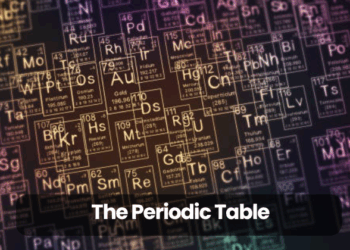
To find the molecular mass of NaCl, we need the atomic masses of sodium and chlorine, as given in the periodic table.
| Element | Symbol | Atomic Mass (in u) |
|---|---|---|
| Sodium | Na | 22.99 |
| Chlorine | Cl | 35.45 |
Now, use the formula:
Molecular Mass of NaCl = Atomic Mass of Na + Atomic Mass of Cl
= 22.99 u + 35.45 u = 58.44 u
Therefore, the molecular mass of NaCl is 58.44 unified atomic mass units (u).
Importance of Knowing the Molecular Mass of NaCl
1. Stoichiometric Calculations
In chemical reactions, knowing the molecular mass helps determine the exact amount of NaCl required or produced. This is especially important in lab experiments and industrial-scale chemical manufacturing.
2. Solution Preparation
Molarity calculations rely heavily on molecular mass. If you need to prepare a 1 M solution of NaCl, you’ll dissolve 58.44 grams of salt in one liter of water.
3. Biological Significance
NaCl plays a vital role in nerve impulse transmission and muscle contraction. Understanding its molecular structure and mass helps in fields like biochemistry and physiology.
4. Competitive Exams
NEET and JEE often include questions related to molecular mass, so memorizing the value of 58.44 u for NaCl is helpful.
Conclusion
-
NaCl stands for Sodium Chloride.
-
It consists of one sodium atom and one chlorine atom.
-
Molecular Mass = 58.44 u, calculated as 22.99 u (Na) + 35.45 u (Cl).
-
Important in chemistry labs, biological systems, and exam preparation.
Molecular Mass of NaCl FAQs
Q1. What is the molecular mass of NaCl?
Answer: The molecular mass of NaCl (sodium chloride) is 58.44 unified atomic mass units (u). It is calculated by adding the atomic mass of sodium (Na = 22.99 u) and chlorine (Cl = 35.45 u).
Q2. Why is calculating the molecular mass of NaCl important in chemistry?
Answer: Calculating the molecular mass of NaCl is essential for stoichiometry, molarity calculations, and preparing chemical solutions. It helps determine how much NaCl is needed or produced in a chemical reaction.
Q3. Is molecular mass the same as molar mass for NaCl?
Answer: Yes, for NaCl, the molecular mass (in atomic mass units) and the molar mass (in grams per mole) have the same numerical value, i.e., 58.44, but the units differ. Molecular mass is in u (amu), and molar mass is in g/mol.
Q4. How is the molecular mass of NaCl useful in preparing a 1M solution?
Answer: To prepare a 1 molar (1M) solution of NaCl, you need 58.44 grams of NaCl dissolved in 1 liter of water. The molecular mass helps accurately measure the substance required for the solution.