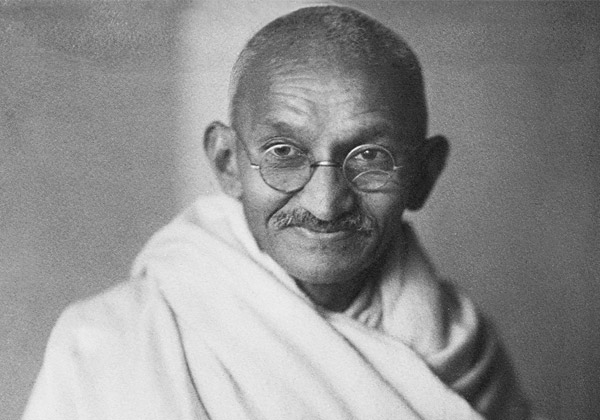

Mahatma Gandhi, born as Mohandas Karamchand Gandhi on October 2, 1869, in Porbandar, India, is a famous figure in modern history. Known as the “Father of the Nation” in India, Gandhi’s life and work have greatly impacted the world. He was dedicated to nonviolence and truth. Gandhi led India to independence from British rule by using peaceful protests and nonviolent resistance, known as Satyagraha. This approach inspired millions of Indians to join the fight for freedom and influenced many global movements for civil rights and social change.
Gandhi also worked for social reforms. He fought for the rights of the oppressed, including untouchables and women, and promoted self-reliance through the Swadeshi movement, encouraging people to make and use their own goods. Gandhi’s impact goes beyond Indian independence.
This article talks about the details of the life of Mahatma Gandhi, his early days, his achievements, his findings, his awards, his contributions to Indian history in independence and much more. Gandhi’s family was close-knit, with strong bonds among the members. He had three older siblings—two brothers, Laxmidas and Karsandas, and a sister, Raliatbehn.
Mahatma Gandhi Early Life and Education
Birth and Family
Mahatma Gandhi was born on October 2, 1869, in Porbandar, a small coastal town in the state of Gujarat, western India. His birth took place in a modest home, part of a well-respected and influential family in the region. Gandhi’s birth name was Mohandas Karamchand Gandhi, and he was later given the title “Mahatma,” meaning “great soul,” in recognition of his profound impact on the world.
Gandhi’s father, Karamchand Gandhi, played an important role in his life. Karamchand held the position of the diwan (chief minister) of Porbandar, which gave him considerable influence and responsibility in the local government. He was known for his integrity, honesty, and dedication to his duties. Karamchand married four times in his life, and Mohandas was born to his fourth wife, Putlibai. Putlibai, Gandhi’s mother, was a deeply religious woman. She followed the principles of Jainism, a religion that emphasizes nonviolence, truth, and asceticism.
At the age of 13, Gandhi married Kasturba Makhanji, who was also 13. This was a common practice in India at that time. The marriage was arranged by their parents. Despite being so young, Gandhi and Kasturba developed a strong bond and supported each other throughout their lives.
Early Schooling
Mahatma Gandhi began his formal education at a local school, where he was a modest student. His early schooling laid the foundation for his love of learning and his dedication to discipline. The school emphasized basic subjects like arithmetic, geography, and language, which Gandhi studied diligently. Although he was not an outstanding student academically, his teachers noticed his sincerity and commitment to his studies. This period of education introduced Gandhi to the importance of learning and instilled in him a sense of responsibility and self-discipline.
Secondary Education
After completing his initial schooling, Gandhi moved to Rajkot to continue his education at a high school there. During this time, he faced several challenges, including homesickness and adapting to a new environment. Despite these difficulties, Gandhi performed well in his studies and developed a keen interest in reading and philosophy. His secondary education included subjects like English literature, history, and science, which broadened his intellectual horizons. The experiences he gained during this period contributed to his growing understanding of the world and his developing sense of social justice.
Higher Education in London
In 1888, at the age of 18, Gandhi traveled to London to pursue a law degree. This was a significant and challenging step, as it involved adjusting to a new country and culture. In London, Gandhi enrolled at University College London to study law and enrolled in the Inner Temple to train as a barrister.
The academic rigors of legal studies in London were demanding, but Gandhi persevered with determination. During his time in London, he also developed an interest in vegetarianism and joined the Vegetarian Society. This period of education was pivotal in shaping his intellectual and moral beliefs, preparing him for his future role as a leader and reformer.
Return to India and Professional Challenges
After completing his legal studies in London, Gandhi returned to India in 1891, eager to start his law practice. However, he faced numerous challenges in establishing a successful career. His initial attempts to find work in Bombay and Rajkot were met with limited success. Despite his academic qualifications, Gandhi struggled with the practical aspects of legal practice and found himself at a crossroads.
This period of struggle and self-reflection was crucial in shaping Gandhi’s future path. It was during this time that he decided to accept a job offer in South Africa, which would mark the beginning of his journey as a social activist and leader.
Mahatma Gandhi Personal Life
Marriage and Family Life
Mahatma Gandhi married Kasturba Makhanji when they were both 13 years old. Their marriage was arranged by their parents, which was a common practice in India at that time. Despite their young age, Gandhi and Kasturba built a strong and supportive relationship over the years. Kasturba played a significant role in Gandhi’s life, supporting him in his work and struggles. They had four children together: Harilal, Manilal, Ramdas, and Devdas. Gandhi and Kasturba faced many challenges, including financial difficulties and health problems, but their bond remained strong throughout their lives.
Values and Beliefs
From a young age, Gandhi was influenced by his mother, Putlibai, who was deeply religious and followed Jainism. Jainism’s teachings of nonviolence, truth, and compassion had a profound impact on him. Gandhi adopted these principles as guiding values in his life. He believed in living simply and practicing what he preached. This meant avoiding luxury and focusing on the well-being of others. His commitment to these values was evident in his daily life, from his diet and clothing to his interactions with people.
Lifestyle and Habits
Gandhi led a very simple lifestyle, which he believed was essential for personal and spiritual growth. He wore simple, hand-spun clothes and avoided material comforts. Gandhi also practiced fasting and believed in self-discipline as a way to strengthen his character. His daily routine was structured around his work, meditation, and prayer. He lived in ashrams (spiritual communities) where he and his followers followed strict rules of conduct, including communal living and shared responsibilities.
Health and Challenges
Gandhi’s health was often a concern, especially later in his life. He frequently fasted as a form of protest or self-purification, which sometimes affected his health. Despite this, he continued his work and activism tirelessly.
Gandhi faced numerous challenges, including political opposition, personal losses, and health issues. His resilience in the face of these difficulties was a testament to his dedication to his principles and his vision for social justice and independence.
Mahatma Gandhi Career
Early Career Struggles
After completing his law studies in London, Gandhi returned to India in 1891 with hopes of starting a successful legal career. He faced significant challenges in establishing his practice. His early attempts to find work in Bombay (now Mumbai) and Rajkot were met with little success. Gandhi struggled with the practicalities of being a lawyer and found it difficult to attract clients. Despite his qualifications, he faced numerous setbacks and rejections during this period.
Move to South Africa
In 1893, Gandhi accepted a job offer from an Indian firm in South Africa. This move marked a turning point in his career. In South Africa, Gandhi encountered severe racial discrimination, which was a new and shocking experience for him. He began to actively challenge these injustices, which led him to develop his philosophy of nonviolent resistance, known as Satyagraha. Gandhi’s work in South Africa involved legal cases, organizing protests, and fighting for the rights of the Indian community. His experiences there laid the groundwork for his later work in India.
Return to India and the Freedom Struggle
Gandhi returned to India in 1915, bringing with him a wealth of experience from his time in South Africa. He became involved in the Indian independence movement, initially focusing on local issues and social reforms. Gandhi’s approach to the struggle for independence was unique. He emphasized nonviolent methods, such as peaceful protests, boycotts, and civil disobedience. One of his most notable campaigns was the Salt March in 1930, where he led a 240-mile march to the sea to protest the British monopoly on salt production. This march brought him international recognition and mobilized millions of Indians in the fight for freedom.
Mahatma Gandhi Contribution’s To Indian Independence Struggle
Early Political Involvement
When Gandhi returned to India in 1915, he quickly became involved in the Indian independence movement. He joined the Indian National Congress and started working on various local issues. Gandhi believed in addressing the needs of ordinary people and improving their lives. He organized campaigns to help farmers and workers, and his focus on nonviolent methods began to shape his approach to the independence struggle.
Non-Cooperation Movement
In 1920, Gandhi launched the Non-Cooperation Movement, which was one of his major campaigns. The goal was to protest against British rule by withdrawing cooperation with the colonial government.
Gandhi encouraged Indians to boycott British goods, institutions, and services. This included refusing to use British textiles and schools. The movement aimed to unite Indians in a peaceful protest against British policies and demonstrate their demand for self-rule.
Salt March (Dandi March)
One of Gandhi’s most famous contributions was the Salt March in 1930. The British government had a monopoly on salt production, and it was heavily taxed. Gandhi led a 240-mile march from his ashram to the Arabian Sea to produce salt from seawater, defying British laws. This act of civil disobedience gained widespread attention and support, both in India and internationally. It highlighted the unfairness of British policies and strengthened the Indian independence movement.
Quit India Movement
In 1942, Gandhi launched the Quit India Movement, demanding an end to British rule in India. The movement called for immediate independence and was marked by mass protests and civil disobedience. Gandhi’s slogan during this period was “Do or Die,” reflecting his determination to achieve freedom for India. The British response was harsh, with many leaders, including Gandhi, being arrested. Despite the repression, the movement demonstrated the strength of the Indian desire for independence.
Role in Partition and Independence
As the independence movement gained momentum, Gandhi worked tirelessly to ensure a peaceful transition from British rule. He advocated for Hindu-Muslim unity and opposed the division of India. Despite his efforts, the country was eventually partitioned into India and Pakistan in 1947. Gandhi’s vision for a united India faced significant challenges, but his leadership and principles played a crucial role in securing India’s independence from British rule. His legacy remains a testament to his dedication to justice and nonviolence.
Mahatma Gandhi Death
Mahatma Gandhi was assassinated on January 30, 1948. He was in New Delhi, India, and was preparing for his usual evening prayer meeting. On that day, he was scheduled to give a prayer speech at Birla House, where he was staying. As he walked to the prayer meeting, he was approached by Nathuram Godse, a Hindu nationalist who opposed Gandhi’s views and efforts towards Hindu-Muslim unity.
The Assassination
During the prayer meeting, Gandhi was shot by Godse at close range. The gunfire was sudden and shocked everyone present. Gandhi fell to the ground but remained calm and composed.
He was rushed to a nearby room, but he succumbed to his injuries shortly afterward. His death was a huge blow to India and to people around the world who admired him for his principles of nonviolence and peace.
Reaction and Mourning
The news of Gandhi’s assassination spread quickly, and it led to widespread grief and mourning across India and beyond. Thousands of people gathered to pay their respects, and the country went into a period of national mourning.
Leaders from all walks of life expressed their sorrow and paid tribute to Gandhi’s immense contributions to India’s independence and to global peace movements.
Mahatma Gandhi’s Writings
Here’s a table summarizing some of Mahatma Gandhi’s notable writings:
| Title | Key Themes |
| “My Experiments with Truth” | Nonviolence, self-discipline, truth |
| “Hind Swaraj” | Indian independence, criticism of modernity, self-rule |
| “The Story of My Experiments with Truth” | Personal growth, simplicity, nonviolence |
| “Young India” | Social reform, independence movement, political thoughts |
| “Satyagraha in South Africa” | Nonviolent resistance, racial equality, social justice |
| “Letters from a Father to His Daughter” | Education, ethics, family values |
| “Constructive Programme: Its Meaning and Place” | Rural development, self-reliance, social reform |
| “The Moral Basis of Vegetarianism” | Vegetarianism, ethics, moral living |
Popular Culture Representation of Mahatma Gandhi
These examples show how Mahatma Gandhi’s life and legacy have been depicted and remembered across different forms of popular culture.
| Category | Title | Description | Year |
| Film | “Gandhi” | A biographical film directed by Richard Attenborough, starring Ben Kingsley as Gandhi. It portrays Gandhi’s life and his role in India’s independence movement. | 1982 |
| Book | “The Story of My Experiments with Truth” | Gandhi’s autobiography, which details his personal experiences and philosophies. It’s widely read and studied. | 1927 |
| Play | “Gandhi | A stage play that explores Gandhi’s life and his impact on India’s freedom struggle. | Ongoing |
| Documentary | “Gandhi: The Great Soul” | A documentary series that examines Gandhi’s life, his teachings, and his influence on global movements. | 2010 |
| Television | “Mahatma Gandhi: The Great Soul” | A TV series that dramatizes the life of Gandhi and his impact on India’s fight for independence. | 2007 |
| Comics | “Gandhi: A Manga Biography” | A graphic novel that presents Gandhi’s life and achievements in a manga style, making his story accessible to younger audiences. | 2008 |
| Statues and Monuments | Statue of Gandhi in Parliament Square, London | A statue honoring Gandhi’s legacy and contributions to global peace, located in a prominent London location. | 2015 |
| Music | “Gandhi” (Soundtrack) | The soundtrack from the 1982 film “Gandhi,” featuring music that complements the film’s portrayal of his life. | 1982 |
Mahatma Gandhi Legacy for Indian History
Influence on Indian Independence
Mahatma Gandhi played a crucial role in India’s struggle for independence from British rule. His methods of nonviolent resistance, like peaceful protests and civil disobedience, brought widespread attention to the Indian freedom movement. His leadership in campaigns such as the Salt March and the Quit India Movement mobilized millions of Indians and pressured the British government to grant India independence in 1947. Gandhi’s approach showed that a peaceful struggle could achieve significant political change.
Promotion of Nonviolence
Gandhi’s commitment to nonviolence, or “ahimsa,” left a lasting impact on India and beyond. He believed that true change could only be achieved through peaceful means, rejecting violence and aggression. His philosophy inspired not only the Indian independence movement but also other global movements for civil rights and social justice. Leaders like Martin Luther King Jr. and Nelson Mandela admired Gandhi’s principles and applied them in their own struggles for equality and freedom.
Social Reforms
Gandhi also focused on social issues within India. He worked to improve the lives of the poor and marginalized communities, including the untouchables, whom he called Harijans or “children of God.” He campaigned against the caste system and promoted education and equal rights for women. His efforts in social reform aimed to create a more just and equitable society. Gandhi’s work helped lay the foundation for future social policies and movements in India.
Cultural and Moral Impact
Gandhi’s lifestyle and values had a profound cultural and moral influence on India. He promoted simplicity, self-reliance, and the use of traditional Indian crafts, like spinning cloth on a charkha (spinning wheel). His personal example of living a life of humility and dedication to service inspired many Indians to adopt similar values. Gandhi’s teachings on morality, truth, and ethical conduct continue to be important in Indian culture and education.
Lasting Global Influence
Gandhi’s legacy extends beyond India. His methods and ideas have influenced various global leaders and movements, advocating for peaceful solutions to conflicts and social injustices. His life and work are studied and celebrated around the world as examples of effective nonviolent resistance and moral leadership. Gandhi’s legacy continues to inspire people to strive for justice and equality through peaceful means, making him a symbol of hope and change for many.
Mahatma Gandhi FAQs
Q1. Who is Mahatma Gandhi in history?
Answer: Mahatma Gandhi was a key leader in India's fight for independence from British rule. Born on October 2, 1869, in Porbandar, India, he is known for his philosophy of nonviolence and his role in leading peaceful protests to challenge British policies.
Q2. Is Mahatma Gandhi a freedom fighter?
Answer: Yes, Mahatma Gandhi is considered a freedom fighter. He fought for India's independence from British rule using nonviolent methods, such as peaceful protests and civil disobedience. His leadership and strategies were crucial in uniting millions of Indians in the struggle for freedom.
Q3. What are the 6 facts about Mahatma Gandhi?
Answer:
Gandhi was born on October 2, 1869, in Porbandar, India.
He studied law in London and became a barrister.
Gandhi developed his philosophy of nonviolent resistance while in South Africa.
He led the Salt March in 1930 to protest the British salt tax.
Gandhi was known for his simple lifestyle and wore hand-spun cloth.
He advocated for the rights of the untouchables, whom he called Harijans.
Q4. When did Mahatma Gandhi die?
Answer: Mahatma Gandhi died on January 30, 1948. He was assassinated in New Delhi, India, by Nathuram Godse.