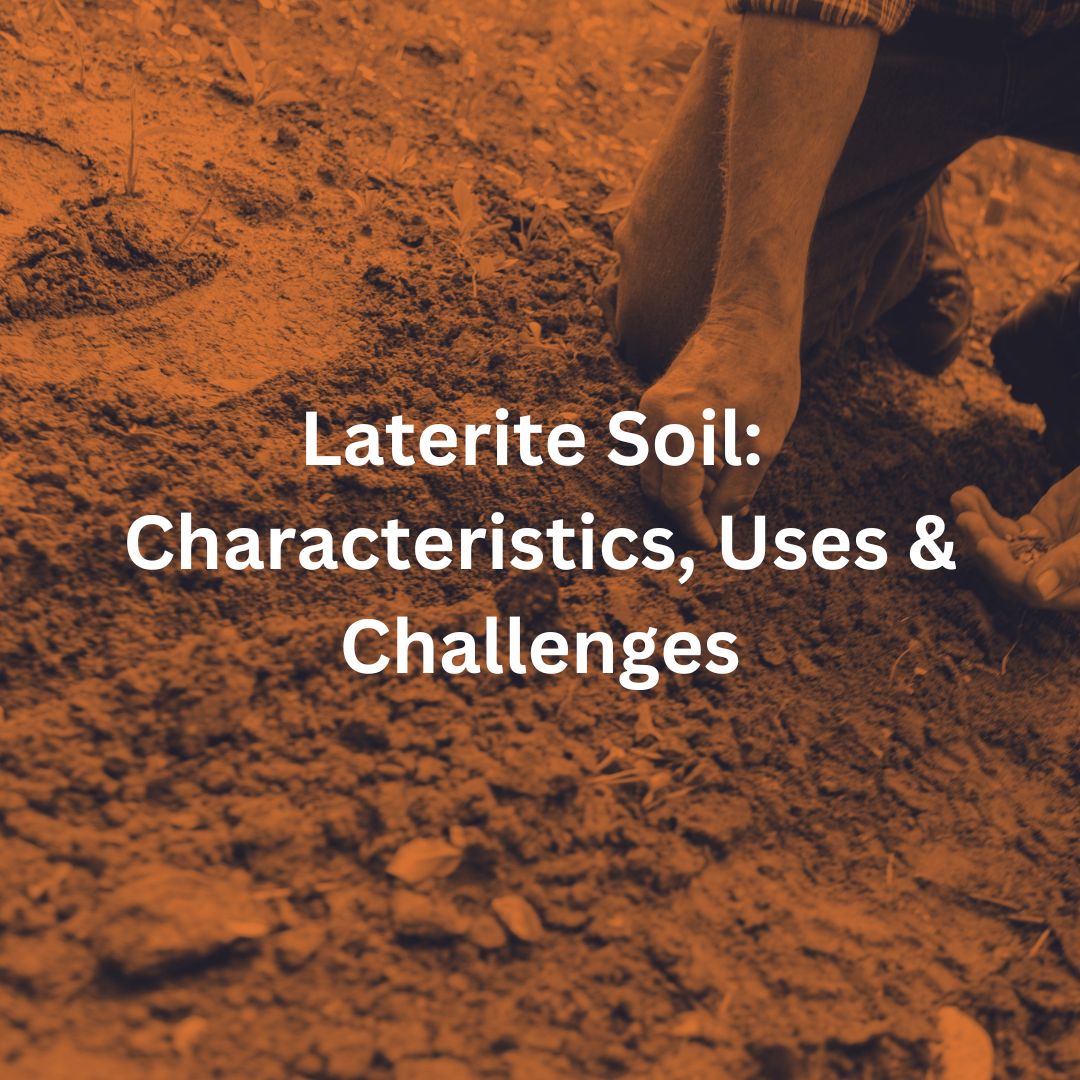

Laterite soil is a type of soil that develops in tropical and subtropical regions characterized by high temperatures and heavy rainfall. It forms through the weathering of rocks rich in iron and aluminum over long periods of time. This soil is known for its distinct reddish-brown color, coarse texture, and unique properties that make it suitable for specific agricultural and construction purposes. Here’s a brief overview of what makes laterite soil special:
Introduction to Laterite Soil
Laterite soil develops in hot and humid climates, especially in areas with high rainfall. It forms through the weathering of rocks rich in iron and aluminum over long periods.
Laterite soil plays a crucial role in agriculture and construction industries in regions where it is abundant. Its ability to drain well and resist weathering makes it ideal for building roads, houses, and monuments. In agriculture, despite its low fertility, laterite soil supports the growth of certain crops like cashew, tea, coffee, and rubber. Farmers often use fertilizers and organic matter to enhance its nutrient content and improve crop yields.
Understanding the characteristics and uses of laterite soil is essential for effective land management and sustainable development in tropical regions where this soil type is prevalent.
Characteristics of Laterite Soil
Color and Texture
Laterite soil ranges in color from red to brown and sometimes even yellow. It has a coarse texture due to the presence of particles of iron and aluminum oxides.
Porosity and Drainage
It is well-drained and porous, allowing water to percolate easily. This feature helps in preventing waterlogging, which is beneficial for plant growth.
Nutrient Content
Laterite soil is generally low in fertility and lacks essential nutrients like nitrogen, phosphorus, and organic matter. Therefore, it often requires fertilization for agricultural purposes.
Uses of Laterite Soil
Agriculture
Despite its low fertility, laterite soil supports the growth of certain crops like cashew, tea, coffee, and rubber. However, regular fertilization is necessary to enhance productivity.
Construction
Due to its hardness when dry, laterite soil is used as a building material for constructing houses, roads, and even monuments in some regions. It is durable and resistant to weathering.
Challenges and Management
Fertility Improvement
Farmers often use organic manures and chemical fertilizers to improve the fertility of laterite soil for better crop yields.
Erosion Control
Because laterite soil is prone to erosion, methods like contour plowing and afforestation are employed to prevent soil loss and maintain its structure.
In Summary, Laterite soil plays a crucial role in tropical agriculture and construction industries. Its unique properties make it suitable for specific crops and durable construction purposes. Understanding its characteristics and management techniques is essential for maximizing its potential in various applications.
By grasping these aspects, students can appreciate the significance of laterite soil and its impact on both natural ecosystems and human activities.
Laterite Soil FAQs
Q1. What is laterite soil?
Ans. Laterite soil is a type of soil that forms in tropical and subtropical regions through the weathering of rocks rich in iron and aluminum. It is characterized by its reddish-brown color and coarse texture.
Q2. Where is laterite soil found?
Ans. Laterite soil is predominantly found in regions with high temperatures and heavy rainfall, such as parts of India, Africa, Southeast Asia, and Australia.
Q3. What are the characteristics of laterite soil?
Ans. Laterite soil is known for its hardness when dry and its ability to become soft and slippery when wet. It is porous, allowing for good drainage, and often lacks fertility, requiring fertilization for agricultural purposes.
Q4. How is laterite soil used in agriculture?
Ans. Despite its low fertility, laterite soil supports the growth of crops like cashew, tea, coffee, and rubber. Farmers use fertilizers and organic matter to improve its nutrient content for better crop yields.
Q5. What are the challenges associated with laterite soil?
Ans. One major challenge is its low fertility and susceptibility to erosion. Farmers and land managers use techniques like fertilization, contour plowing, and afforestation to mitigate erosion and improve soil quality.