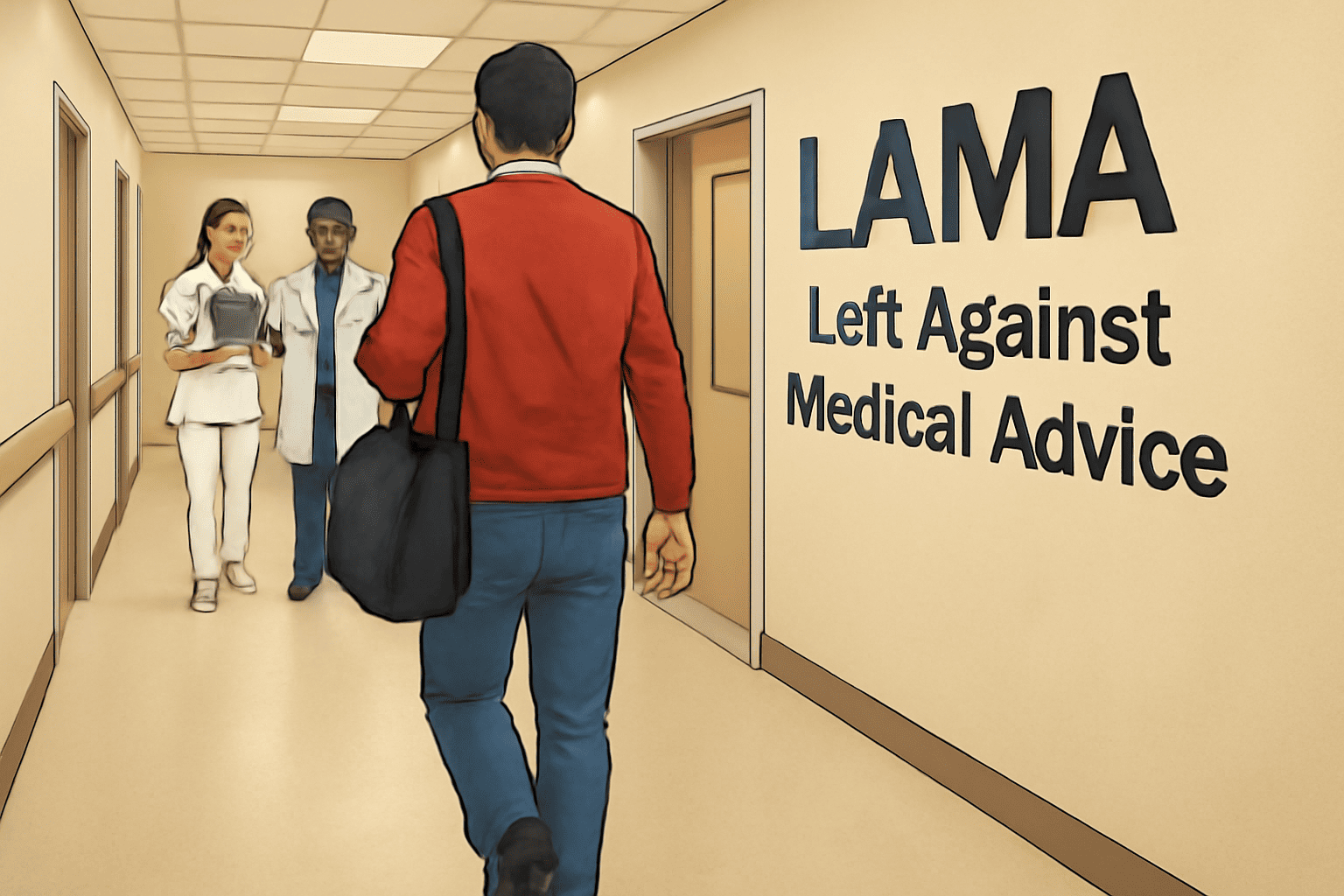

LAMA Full Form in Medical: In the medical world, LAMA stands for “Left Against Medical Advice.” It is a term used when a patient decides to leave a hospital or healthcare facility before the doctor officially discharges them. This can happen for many reasons, such as personal, financial, or emotional reasons or dissatisfaction with the treatment. However, choosing to leave without the doctor’s approval can be risky for the patient’s health.
What Does LAMA Mean in Medical Terms?
When a patient is admitted to a hospital, the doctors are responsible for their treatment and well-being. Sometimes, a patient may feel better or become upset and decide to leave the hospital even if the medical team advises against it. In such cases, the patient must sign a LAMA form. This form clearly states that the patient is leaving by personal choice and takes full responsibility for any risks or consequences.
Why Do Patients Leave Against Medical Advice?
Patients may choose to go LAMA due to various reasons, including
- Financial problems—cannot afford to stay in the hospital any longer.
- Personal or family issues – Need to return home for urgent reasons.
- Disagreement with treatment—Do not agree with the diagnosis or care plan.
- Feeling better – Think they have recovered and no longer need treatment.
- Fear or stress—Hospital environment causes anxiety or discomfort.
- Poor communication – Not understanding the medical advice properly.
Process of LAMA in Hospitals
Hospitals follow a strict process if a patient decides to leave against medical advice:
- Counseling the patient: Doctors or nurses try to explain the risks of leaving early.
- Filling the LAMA form: If the patient insists, a legal LAMA form is presented.
- Patient’s signature: The patient or a close relative signs the form.
- Doctor’s note: The attending doctor notes the condition of the patient and the decision in the file.
- Release of patient: The hospital is not responsible for any health issues after the patient leaves.
Risks Involved in Leaving Against Medical Advice
Choosing to go LAMA can be dangerous. Some of the risks include
- Worsening of condition—The illness may become more serious without proper care.
- Infections or complications – Leaving before completing treatment can lead to complications.
- Re-admission—Patients often have to return to the hospital in worse condition.
- Legal and insurance issues—Insurance may not cover the treatment if the patient goes LAMA.
Legal and Ethical Aspects of LAMA
Hospitals ensure that the LAMA process is handled legally and ethically. Patients have the right to leave, but doctors have the duty to explain the medical consequences. The signed form protects the hospital from legal action if anything happens to the patient after discharge. It also makes it clear that the patient took the decision on their own.
Role of Doctors and Healthcare Staff
Doctors and nurses must communicate clearly with the patient. They should explain:
- Why the patient needs to stay
- What can go wrong if they leave early
- The current medical condition
- The importance of completing treatment
If the patient still decides to leave, healthcare providers must remain respectful and complete the paperwork.
Difference Between Discharge and LAMA
| Basis | Discharge | LAMA (Left Against Medical Advice) |
| Who decides? | Doctor | Patient |
| Patient condition | Usually stable or cured | May or may not be stable |
| Formal process | Yes, with summary and prescription | Yes, with LAMA form and signature |
| Legal responsibility | With hospital | Transferred to patient |
| Medical advice | Followed | Not followed |
Importance of LAMA in Medical Records
LAMA status is important in medical records for future reference. It helps doctors understand the previous medical history if the patient comes back. It also helps in legal and insurance-related matters. Hospitals must document the time, reason, and person who signed the LAMA form.
How Can Hospitals Reduce LAMA Cases?
Hospitals can take several steps to reduce the number of LAMA cases:
- Improve communication with patients
- Provide clear information about treatment and costs
- Offer emotional support through counselors
- Help with financial assistance or referrals
- Make the hospital environment more patient-friendly
Full Form of LAMA in Medical FAQs
Q1. What is the full form of LAMA in medical terms?
LAMA stands for “Left Against Medical Advice.”
Q2. Is LAMA the same as discharge?
No. Discharge is approved by a doctor, while LAMA is a patient’s decision to leave early.
Q3. Can a patient go LAMA without signing a form?
Hospitals require a signed LAMA form to protect themselves legally.
Q4. Does insurance cover LAMA patients?
Most insurance policies do not cover treatment costs if a patient goes LAMA.
Q5. What happens if a patient returns after going LAMA?
Doctors will reassess the condition and may admit the patient again based on medical need.