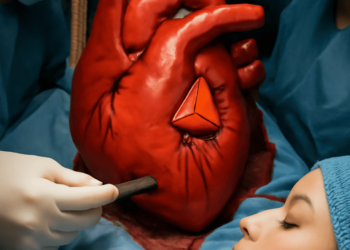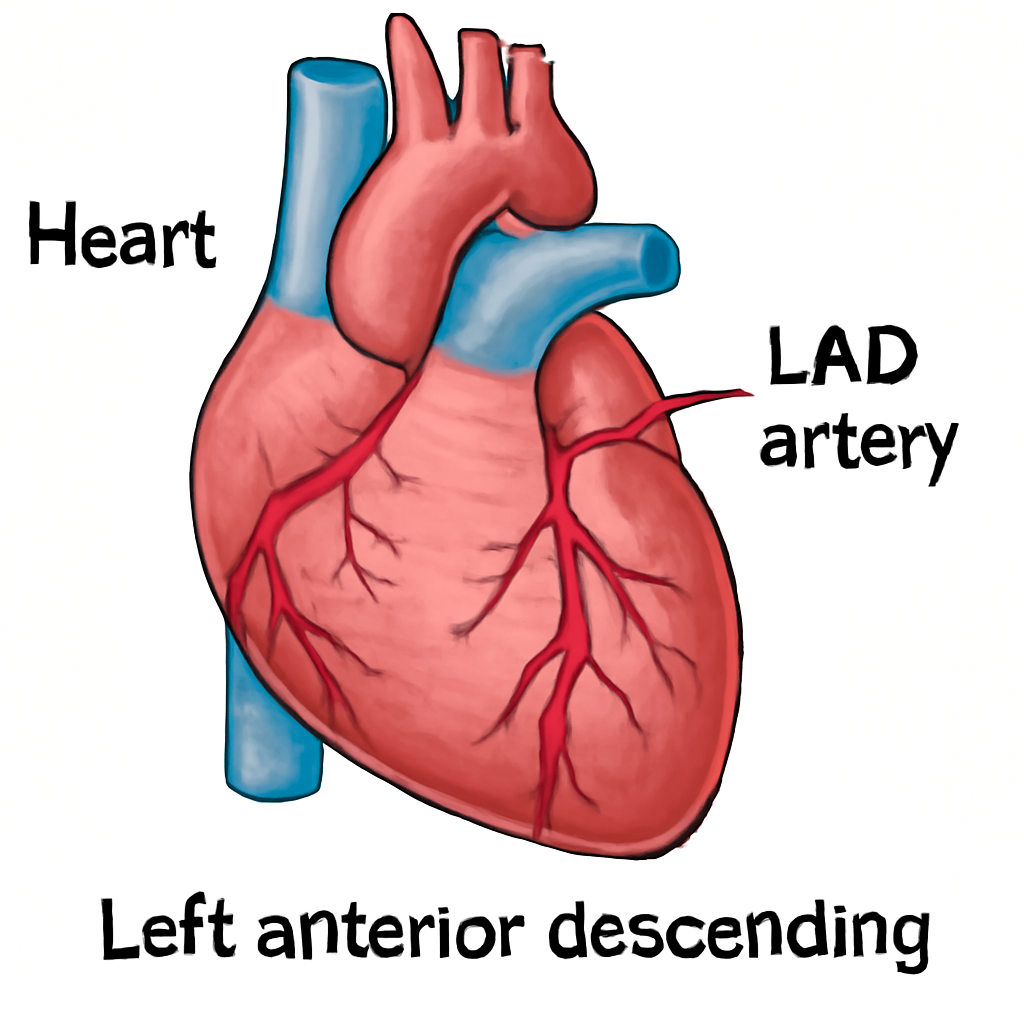

LAD Full Form in Medical: In the medical field, LAD stands for Left Anterior Descending artery. It is one of the most important arteries of the heart. This artery is a part of the left coronary artery, which supplies oxygen-rich blood to the heart muscle. The LAD runs down the front surface of the heart and provides blood mainly to the front wall of the left ventricle (the heart’s main pumping chamber). Because of its role in supplying blood to a large portion of the heart, any damage or blockage in the LAD can lead to serious heart problems, including heart attacks.
What is LAD in the Heart?
The Left Anterior Descending (LAD) artery is a branch of the left coronary artery. It travels along the anterior (front) surface of the heart, mainly supplying blood to
- The front portion of the left ventricle, which pumps blood to the whole body
- The front two-thirds of the interventricular septum, the wall dividing the left and right sides of the heart
Because it supplies a large and critical portion of the heart, doctors pay special attention to the LAD artery when diagnosing and treating heart diseases. If this artery becomes blocked, a large section of the heart may be starved of oxygen, leading to damage or death of the heart muscle.
Importance of LAD in Medical Field
The LAD artery is often called the “widow maker” artery because a complete blockage in this artery can lead to sudden and deadly heart attacks, especially if not treated in time. The LAD is extremely important in the field of cardiology because:
- It supplies blood to the largest and most important part of the heart
- Most serious heart attacks occur due to blockages in the LAD
- Heart function depends heavily on the blood flow from this artery
Doctors often examine the LAD when patients complain of symptoms such as chest pain, shortness of breath, or fainting spells. Early detection and treatment of LAD issues can help save lives.
Common LAD-Related Conditions
Several health problems are linked to the LAD artery, especially if the artery is narrowed or blocked. The most common conditions include:
1. LAD Blockage
This happens when fatty deposits or cholesterol build up inside the artery, reducing the blood flow to the heart. This condition is called coronary artery disease (CAD). It can lead to chest pain and increase the risk of heart attack.
2. Heart Attack (Myocardial Infarction)
If the LAD becomes completely blocked, the blood supply to a large area of the heart muscle stops. This causes the muscle tissue to die, resulting in a heart attack. Blockages in the LAD are responsible for the most serious types of heart attacks.
3. LAD Stenosis
Stenosis means narrowing. LAD stenosis refers to a narrowing of the LAD artery, usually caused by plaque. This narrowing reduces the amount of oxygen reaching the heart, especially during physical activity.
Symptoms of LAD Problems
When the LAD is blocked or narrowed, the heart muscle doesn’t get enough oxygen-rich blood. This causes several symptoms, such as
- Chest pain or pressure (angina)—especially during exercise or stress
- Shortness of breath—the heart struggles to pump enough oxygen to the body
- Fatigue—even with light activities
- Pain in the arms, shoulders, neck, jaw, or back
- Feeling lightheaded or fainting
These symptoms may be mild or very severe. Sometimes, heart attacks caused by LAD blockage come with sudden and sharp chest pain, which needs emergency medical help.
Diagnosis of LAD Issues
Doctors use several tests and tools to examine the LAD artery and identify any problems:
1. Electrocardiogram (ECG or EKG)
This test records the heart’s electrical activity. It helps detect abnormal rhythms and signs of heart attack.
2. Echocardiogram
This is an ultrasound test that creates images of the heart to see if all parts are pumping properly. It can also show damaged areas of the heart muscle.
3. Angiography
In this test, a special dye is injected into the blood vessels, and X-ray images are taken. It clearly shows if the LAD is blocked or narrowed.
4. Stress Test
The patient is asked to walk on a treadmill or given medicine to make the heart work harder. Doctors then monitor the heart to check blood flow and identify any blockages.
These tests help in finding the exact location and seriousness of any blockage in the LAD.
Treatment Options for LAD Blockage
If a problem is found in the LAD artery, treatment is needed to improve blood flow and protect the heart. Treatment options include:
1. Medications
Doctors may prescribe:
- Blood thinners to prevent clots
- Cholesterol-lowering drugs (statins)
- Beta-blockers to reduce heart workload
- Nitrates to open up blood vessels
These medicines can help manage symptoms and prevent worsening of the condition.
2. Angioplasty and Stenting
A balloon catheter is used to open the blocked LAD. Then, a stent (a small metal tube) is placed inside to keep the artery open and restore blood flow.
3. Coronary Artery Bypass Surgery (CABG)
If the blockage is large or in a hard-to-reach place, surgeons may perform bypass surgery. They take a healthy blood vessel from another part of the body and use it to create a new route for blood to reach the heart muscle.
Prevention of LAD Blockage
Maintaining a healthy lifestyle is the best way to prevent blockage in the LAD artery. You can reduce your risk by following these steps:
- Eat a heart-friendly diet—low in fat, sugar, and salt
- Exercise regularly—at least 30 minutes a day
- Stop smoking—smoking damages blood vessels
- Manage blood pressure, cholesterol, and diabetes
- Reduce stress levels through relaxation techniques
- Go for regular health check-ups to catch issues early
These habits not only protect the LAD but also help in maintaining overall heart health.
Conclusion
The Left Anterior Descending (LAD) artery plays a central role in keeping the heart healthy. Since it supplies blood to the most important parts of the heart muscle, any blockage in this artery is dangerous. LAD-related heart attacks are often more severe than others. However, with early diagnosis, timely treatment, and a healthy lifestyle, it is possible to prevent or manage problems related to the LAD. Understanding how this artery works and taking care of your heart can help you live a longer and healthier life.
FAQs on LAD Full Form in Medical
Q1. What is the LAD in the heart?
LAD stands for Left Anterior Descending artery. It supplies blood to the front part of the heart muscle.
Q2. Why is LAD called the widow maker artery?
Because blockages in this artery can cause sudden and severe heart attacks, often with deadly outcomes.
Q3. What are the signs of LAD blockage?
Common signs include chest pain, shortness of breath, and fatigue during activities or stress.
Q4. Can LAD blockage be treated?
Yes, LAD blockages can be treated using medicines, stents through angioplasty, or bypass surgery.
Q5. How to prevent LAD-related heart problems?
By maintaining a healthy diet, exercising regularly, avoiding smoking, and managing blood pressure and cholesterol.