If you are appearing for the JEE Main 2026 Exam, your preparation isn’t just about formulas and mock tests—what you wear on exam day matters too at the exam centre.
Every year, the National Testing Agency (NTA) releases important guidelines for dress codes for boys & girls along with the admit card. While it may seem like a small detail, not following it can lead to unnecessary stress or even delays at the exam centre at the time of checking.
Let’s break it down into a simple and practical way so you can walk into your exam hall stress-free and confident.
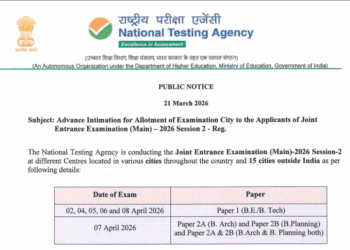
JEE Main 2026 Exam Dates (Session 2)
| Session | Exam Dates (2026) |
| April Session | April 2, 4, 5, 6, 7, and 8, 2026 |
Make sure your outfit is decided a day before the exam—this avoids last-minute confusion.
JEE Main 2026 Dress Code for Girls
What You Should Wear
For female candidates, the goal is simple:
- Go for simple tops or kurtis made of lightweight fabric
- Wear plain jeans, trousers, or leggings/jeggings
- Choose breathable fabrics like cotton
- Opt for simple slippers or flat sandals (preferably open footwear)
What You Should Avoid
- Clothes with metal zippers, heavy embroidery, or large buttons
- Dupattas, scarves, caps, or stoles (unless required for religious reasons)
- Any kind of jewellery – rings, chains, bracelets, watches
Tip: The simpler your outfit, the faster your entry into the exam hall.
JEE Main 2026 Dress Code for Boys
What You Should Wear
Boys should also stick to basic:
- Wear lightweight cotton shirts or t-shirts
- Choose plain jeans or simple trousers
- Keep clothing without extra pockets or metal accessories
- Wear slippers or sandals with thin soles
What You Should Avoid
- Outfits with metallic zippers, badges, or large buttons
- Belts, caps, scarves, or accessories
- Any type of jewellery or watches
- Shoes with thick soles (strictly not allowed)
Dress Code for Religious Attire
NTA respects religious practices.
- Sikh candidates can wear items like turban, kara, or kirpan
- They must report at least 1 hour early for proper checking
This ensures smooth security verification without affecting your exam timing.
Why Does JEE Main Have a Dress Code?
The JEE Main dress code isn’t random—it serves important purposes:
1. Prevents Unfair Means
Loose or layered clothing can be misused to hide electronic devices. A simple dress code ensures fairness for all candidates.
2. Speeds Up
Thousands of students appear at each centre. Simple clothing helps in quick security checks, reducing long queues and anxiety.
Important Note from NTA
NTA does not officially differentiate between boys and girls. The main rule mentioned in the jee main admit card is:
“Shoes with thick soles and garments with large buttons are not allowed.”
Everything else is based on practical guidelines to make your exam day smooth.
Do’s and Don’t at JEE Main Centre
Things You Cannot Carry
- Mobile phones, earphones, calculators
- Watches (digital or analog)
- Bags, wallets, papers, notes
- Food items or water bottles
- Any electronic gadgets or metallic items
Things You Can Carry
- Admit card with self-declaration
- Passport-size photograph
- Valid photo ID (Aadhaar, PAN, Passport, etc.)
- Transparent ballpoint pen
- Medical certificate (if applicable)
Final Tips for Exam Day
- Choose your outfit one day before the exam
- Avoid anything new or uncomfortable to avoid delays in exam centre
- Reach the centre before exam time to avoid panic
- Keep your look plane & simple, and distraction-free to avoid stress
Final Words
Your focus on exam day should be on your performance—not your outfit discrepencies . By following the JEE Main 2026 dress code instructions, you can avoid unnecessary stress and ensure a smooth entry into the examination hall.