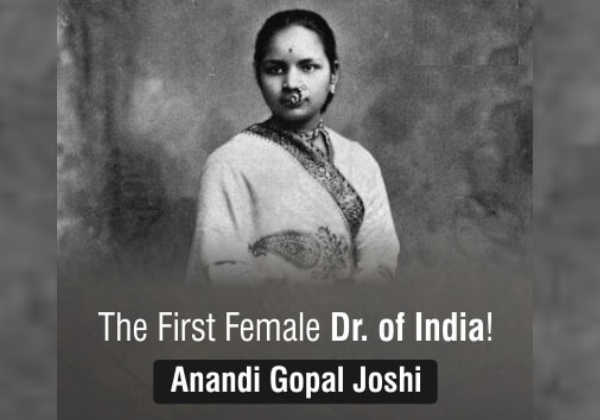

India’s first woman doctor was Dr. Anandi Gopal Joshi. Born on March 31, 1865, in Kalyan, Maharashtra, Anandi Gopal Joshi made history by becoming the first Indian woman to earn a degree in Western medicine. Her life story is a remarkable tale of determination, perseverance, and trailblazing achievement in a time when women’s education, especially in the medical field, was not encouraged.
Dr. Anandi Gopal Joshi: India’s First Woman Doctor
| Aspect | Details |
|---|---|
| Birth Name | Yamuna |
| Date of Birth | March 31, 1865 |
| Place of Birth | Kalyan, Maharashtra, India |
| Marriage | Married to Gopalrao Joshi at age nine |
| Inspiration | Loss of her newborn son |
| Sponsorship | Theodicia Carpenter (American woman) |
| Travel to USA | 1883 |
| Medical College | Woman’s Medical College of Pennsylvania |
| Graduation | 1886, MD degree |
| Thesis | “Obstetrics among the Aryan Hindoos” |
| Return to India | After graduation in 1886 |
| Professional Role | Physician-in-charge, Albert Edward Hospital |
| Legacy | Commemorative stamp by Indian government (1962) |
Early Life and Background
Birth and Family
Anandi Gopal Joshi, originally named Yamuna, was born on March 31, 1865, in Kalyan, a small town in the Bombay Presidency of British India. She was born into a Brahmin family, which, at the time, adhered strictly to traditional Hindu practices and societal norms. Her father, Gopalrao Joshi, was a progressive thinker who supported education, which was quite rare for women in that era.
Education and Marriage
Anandi’s journey to becoming a doctor began with her marriage to Gopalrao Joshi when she was only nine years old. Gopalrao, who was twenty years older than her, was a strong advocate for women’s education and played a pivotal role in encouraging Anandi to pursue her studies. Unlike most men of his time, Gopalrao’s vision for a modern, educated wife laid the foundation for Anandi’s remarkable journey.
Initially, Anandi’s education was rudimentary, as societal norms dictated that women should focus on household duties. However, her husband’s relentless support and determination saw her gradually advancing in her studies. Gopalrao’s unwavering belief in her potential became the cornerstone of her future achievements.
Pursuit of Medical Education
Inspiration and Determination
Anandi’s inspiration to become a doctor stemmed from a personal tragedy. At the age of fourteen, she gave birth to a son who died within ten days due to a lack of medical care. This profound loss ignited a burning desire in her to study medicine and prevent such tragedies from befalling other women. Anandi realized that there was a dire need for female doctors in India, particularly for women who were often reluctant to be treated by male physicians due to cultural norms.
Journey to the United States
The journey to becoming a doctor in the late 19th century was arduous for anyone, but even more so for a young Indian woman. Gopalrao corresponded with several American missionary societies and individuals, seeking assistance for Anandi’s medical education. Their perseverance paid off when Theodicia Carpenter, an American from New Jersey, agreed to sponsor Anandi’s education. Carpenter’s support was instrumental in Anandi’s acceptance into the Woman’s Medical College of Pennsylvania.
In 1883, Anandi embarked on the arduous journey to the United States, leaving behind her homeland and stepping into a world vastly different from her own. Her departure was met with both support and criticism from various quarters of Indian society. Yet, Anandi’s resolve remained unshaken, and she pressed forward, determined to achieve her goal.
Medical Education in the United States
Challenges and Achievements
Upon her arrival in the United States, Anandi faced numerous challenges, including the cold climate, cultural differences, and the rigors of medical education. Despite these hurdles, her dedication and resilience saw her through. She quickly adapted to her new environment and excelled in her studies.
In 1886, Anandi graduated with an MD degree, making her the first Indian woman to achieve this feat. Her thesis, “Obstetrics among the Aryan Hindoos,” highlighted the practices and challenges faced by Indian women during childbirth and emphasized the need for trained female medical professionals in India.
Support System
Anandi’s journey was supported by a network of individuals who believed in her mission. Gopalrao, despite being far away, continued to provide moral support through his letters. Theodicia Carpenter’s financial and emotional support played a crucial role in Anandi’s success. Additionally, her professors and peers at the Woman’s Medical College of Pennsylvania provided a nurturing environment that enabled her to thrive.
Return to India and Professional Life
Contributions to Indian Healthcare
After completing her education, Dr. Anandi Gopal Joshi returned to India in 1886, where she was received with great admiration and respect. She was appointed as the physician-in-charge of the female ward at the Albert Edward Hospital in Kolhapur. Her appointment was a historic moment, symbolizing a significant breakthrough for women in the field of medicine in India.
Dr. Joshi’s contributions went beyond her clinical duties. She actively engaged in promoting women’s health and education, advocating for improved healthcare facilities and greater access to medical education for women. Her presence in the medical field challenged the prevailing gender norms and inspired many young women to pursue careers in medicine.
Challenges in Professional Practice
Despite her achievements, Dr. Joshi faced significant challenges in her professional life. The healthcare infrastructure in India was still rudimentary, and societal resistance to female doctors persisted. Additionally, her health, which had been deteriorating since her time in the United States, continued to decline. Nevertheless, she remained committed to her mission of improving healthcare for women in India.
Legacy and Impact
Recognition and Honors
Dr. Anandi Gopal Joshi’s legacy is one of inspiration and pioneering spirit. Her achievements were recognized both in India and abroad. The Indian government issued a commemorative stamp in her honor in 1962, acknowledging her contributions to medicine and women’s empowerment. Various institutions and awards have been named after her, ensuring that her legacy continues to inspire future generations.
Influence on Future Generations
Dr. Joshi’s story has inspired countless women to pursue careers in medicine and other fields traditionally dominated by men. Her determination and success demonstrated that women could excel in any profession given the opportunity and support. Her legacy continues to motivate efforts towards gender equality and the empowerment of women in India and around the world.
FAQs about Dr. Anandi Gopal Joshi
Who was Dr. Anandi Gopal Joshi?
Dr. Anandi Gopal Joshi was the first Indian woman to obtain a degree in Western medicine. She graduated from the Woman’s Medical College of Pennsylvania in 1886.
What inspired Dr. Joshi to become a doctor?
Dr. Joshi was inspired to become a doctor after experiencing the loss of her newborn son due to a lack of medical care. This personal tragedy motivated her to pursue a career in medicine to prevent such losses for other women.
How did Dr. Joshi manage to study in the United States?
With the support of her husband, Gopalrao Joshi, and financial sponsorship from Theodicia Carpenter, an American woman from New Jersey, Dr. Joshi was able to travel to the United States and enroll in the Woman’s Medical College of Pennsylvania.
What were some of the challenges Dr. Joshi faced during her education?
Dr. Joshi faced numerous challenges, including cultural differences, a cold climate, and the rigorous demands of medical education. Despite these obstacles, she remained dedicated and excelled in her studies.
What was Dr. Joshi's contribution to Indian healthcare upon her return?
Upon returning to India, Dr. Joshi was appointed as the physician-in-charge of the female ward at the Albert Edward Hospital in Kolhapur. She also actively promoted women’s health and education and advocated for improved healthcare facilities.
How is Dr. Joshi remembered today?
Dr. Joshi is remembered as a pioneer in Indian medicine and a symbol of women's empowerment. Her legacy is honored through various commemorations, including a postage stamp issued in her honor by the Indian government, and her story continues to inspire future generations.
What impact did Dr. Joshi have on women's education in India?
Dr. Joshi's achievements demonstrated that women could excel in any profession, thereby challenging societal norms and inspiring many young women to pursue higher education and professional careers, particularly in medicine.
How did Dr. Joshi's health affect her career?
Dr. Joshi's health, which had been compromised during her studies in the United States, continued to deteriorate upon her return to India. Despite her declining health, she remained committed to her work and mission until her untimely death at the age of 21.
What is Dr. Joshi’s lasting legacy?
Dr. Joshi's lasting legacy is one of breaking barriers and inspiring change. She paved the way for future generations of women in medicine and other fields, proving that with determination and support, societal norms could be challenged and overcome.
How can Dr. Joshi's life inspire modern-day women?
Dr. Joshi's life story is a testament to the power of perseverance, determination, and the pursuit of one's dreams despite societal challenges. Modern-day women can draw inspiration from her resilience and commitment to making a difference in the world.
Who was Dr. Anandi Gopal Joshi?
Dr. Anandi Gopal Joshi was the first Indian woman to obtain a degree in Western medicine. She graduated from the Woman’s Medical College of Pennsylvania in 1886.
What inspired Dr. Joshi to become a doctor?
Dr. Joshi was inspired to become a doctor after experiencing the loss of her newborn son due to a lack of medical care. This personal tragedy motivated her to pursue a career in medicine to prevent such losses for other women.
How did Dr. Joshi manage to study in the United States?
With the support of her husband, Gopalrao Joshi, and financial sponsorship from Theodicia Carpenter, an American woman from New Jersey, Dr. Joshi was able to travel to the United States and enroll in the Woman’s Medical College of Pennsylvania.
What were some of the challenges Dr. Joshi faced during her education?
Dr. Joshi faced numerous challenges, including cultural differences, a cold climate, and the rigorous demands of medical education. Despite these obstacles, she remained dedicated and excelled in her studies.
What was Dr. Joshi's contribution to Indian healthcare upon her return?
Upon returning to India, Dr. Joshi was appointed as the physician-in-charge of the female ward at the Albert Edward Hospital in Kolhapur. She also actively promoted women’s health and education and advocated for improved healthcare facilities.
How is Dr. Joshi remembered today?
Dr. Joshi is remembered as a pioneer in Indian medicine and a symbol of women's empowerment. Her legacy is honored through various commemorations, including a postage stamp issued in her honor by the Indian government, and her story continues to inspire future generations.
What impact did Dr. Joshi have on women's education in India?
Dr. Joshi's achievements demonstrated that women could excel in any profession, thereby challenging societal norms and inspiring many young women to pursue higher education and professional careers, particularly in medicine.
How did Dr. Joshi's health affect her career?
Dr. Joshi's health, which had been compromised during her studies in the United States, continued to deteriorate upon her return to India. Despite her declining health, she remained committed to her work and mission until her untimely death at the age of 21.
What is Dr. Joshi’s lasting legacy?
Dr. Joshi's lasting legacy is one of breaking barriers and inspiring change. She paved the way for future generations of women in medicine and other fields, proving that with determination and support, societal norms could be challenged and overcome.
How can Dr. Joshi's life inspire modern-day women?
Dr. Joshi's life story is a testament to the power of perseverance, determination, and the pursuit of one's dreams despite societal challenges. Modern-day women can draw inspiration from her resilience and commitment to making a difference in the world.