
How to Make Distilled Water at Home? Distilled water is water that has been boiled into steam and then condensed back into liquid form. This process removes impurities and minerals, making the water pure. Distilled water is used for many purposes, including drinking, cooking, and in appliances like steam irons and humidifiers. Making distilled water at home is simple and can be done using basic kitchen items. This guide will walk you through the process step by step. By following these instructions, you’ll be able to make your own distilled water at home, ensuring you always have a supply of pure water whenever you need it.
What is Distilled Water?
Distilled water is a type of purified water that has undergone a process called distillation to remove impurities. It is one of the purest forms of water available, as the distillation process eliminates contaminants, minerals, and other substances. This makes distilled water ideal for various uses where purity is essential.
Characteristics of Distilled Water
Distilled water has several distinct characteristics that set it apart from other types of water. These characteristics are a result of the distillation process, which removes impurities and minerals from the water.
Purity
Free from Impurities:
- Distilled water is one of the purest forms of water. The distillation process removes contaminants such as bacteria, viruses, chemicals, and other impurities.
- This high level of purity makes distilled water suitable for sensitive applications, such as medical uses and laboratory experiments.
Mineral-Free
Lacks Minerals:
- Unlike tap water or spring water, distilled water does not contain any dissolved minerals. Common minerals like calcium, magnesium, and potassium are removed during the distillation process.
- This can be both a benefit and a drawback. While the absence of minerals makes distilled water ideal for certain uses, it also means the water may lack beneficial nutrients found in mineral-rich waters.
Taste
Bland Flavor:
- Due to the absence of minerals, distilled water often tastes flat or bland compared to regular drinking water. Minerals in water contribute to its flavor, and their absence can make distilled water less appealing to some people.
Conductivity
Low Electrical Conductivity:
- Because it lacks dissolved salts and minerals, distilled water has very low electrical conductivity. This makes it useful in applications where high-purity, non-conductive water is required, such as in cooling systems and certain industrial processes.
pH Level
Neutral pH:
- Distilled water typically has a neutral pH of around 7. However, it can absorb carbon dioxide from the air over time, which can lower its pH slightly and make it slightly acidic. This change does not affect its purity or suitability for most uses.
Uses of Distilled Water
Drinking
- Purity: Some people prefer to drink distilled water because it is very pure. There are no impurities or contaminants, making it safe and clean.
- Taste: However, because distilled water lacks minerals, it might taste flat or bland compared to regular tap water, which contains natural minerals that add to its flavor.
Cooking
- Recipes: Distilled water is used in cooking, especially in recipes where the purity of water is important. For example, in making delicate sauces, soups, or when baking, distilled water ensures no unwanted flavors or impurities affect the dish.
Medical
- Sterile: Hospitals and laboratories use distilled water because it is sterile and free from bacteria and other contaminants. It is used for cleaning wounds, in medical equipment, and for laboratory experiments where purity is crucial.
Appliances
- Mineral Buildup: Using distilled water in appliances like steam irons, humidifiers, and car batteries helps prevent mineral buildup. Minerals in regular water can accumulate and damage these appliances over time.
Can I Make Distilled Water at Home?
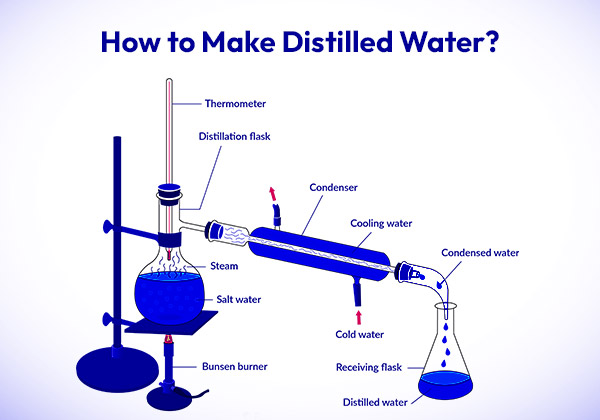
Yes, you can make distilled water at home. Making distilled water involves boiling water and then collecting the steam that condenses back into liquid. This process removes impurities and minerals from the water, making it very pure. You can do this with basic kitchen items like a large pot, a smaller pot or bowl, a lid, and some ice. By following a few simple steps, you can produce your own distilled water for drinking, cooking, or use in appliances. It’s a straightforward process that doesn’t require any special equipment, and it can save you money compared to buying bottled distilled water.
Material Needed To Make Distilled Water At Home
To make distilled water at home, you will need some basic kitchen items. Here’s a list of everything you need:
- Large Pot: A large pot that can hold a good amount of water. This will be used for boiling the water.
- Smaller Pot or Heat-Resistant Glass Bowl: A smaller pot or a heat-resistant glass bowl that can fit inside the large pot. This will collect the distilled water.
- Lid for the Large Pot: A lid for the large pot. It’s best if the lid is dome-shaped or can be inverted to allow the steam to condense and drip into the smaller pot.
- Ice: Ice cubes or crushed ice. This will be placed on top of the inverted lid to help condense the steam back into water more quickly.
- Stove or Heat Source: A stove or any heat source to boil the water in the large pot.
- Clean, Sterilized Container: A clean, sterilized container to store the distilled water once it’s collected. A funnel can be helpful for transferring the water.
By gathering these simple materials, you can easily make distilled water at home without any special equipment.
Step By Step Procedure To Make Distilled Water At Home
Making distilled water at home is a straightforward process. Follow these detailed steps to ensure you get pure, distilled water.
Step 1: Prepare the Setup
First, gather all the materials you need: a large pot, a smaller pot or heat-resistant glass bowl, a lid, and some ice. Place the large pot on your stove or heat source. Fill the large pot with about halfway with tap water. Ensure there’s enough space left at the top to avoid boiling over. The water level should be low enough so that the smaller pot or bowl, when placed inside, will float and not be submerged. If the smaller pot doesn’t float, you can place a small rack or heat-resistant object at the bottom of the large pot to hold the smaller pot above the water level. This setup ensures that when the water boils, the steam will rise and condense into the smaller pot or bowl.
Step 2: Position the Lid
Next, take the lid of the large pot and invert it. Place it on top of the large pot with the handle pointing downwards towards the smaller pot. The idea is to use the inverted lid to collect the steam that will rise from the boiling water. The handle of the lid will act as a funnel, directing the condensed steam (now distilled water) to drip into the smaller pot or bowl. This step is crucial as it ensures that the condensed water, free from impurities, is collected efficiently. Make sure the lid fits snugly to avoid any steam escaping from the sides.
Step 3: Add Ice
Now, add ice cubes or crushed ice on top of the inverted lid. The ice will cool down the lid, making it easier for the steam to condense back into liquid water. As the steam rises and hits the cold surface of the lid, it will turn into water droplets and drip into the smaller pot. This speeds up the distillation process and ensures that more steam is condensed and collected. You may need to add more ice as it melts, so keep an eye on it and replenish the ice as needed. This step helps in efficiently collecting the distilled water without losing much steam.
Step 4: Boil the Water
Turn on the heat source and bring the water in the large pot to a gentle boil. It’s important to maintain a steady, gentle boil rather than a vigorous one to ensure the process works effectively. As the water boils, steam will rise, hit the cold lid, condense into water droplets, and then drip into the smaller pot. This collected water is your distilled water. Keep the heat at a level where the water is continuously boiling, and avoid boiling too vigorously as this could cause water to splash into the smaller pot, contaminating the distilled water. Be patient and let the process take its time.
Step 5: Collect the Distilled Water
Continue boiling the water until you have collected the desired amount of distilled water in the smaller pot. Periodically check the smaller pot to see how much water has been collected. Be cautious when handling the pots and lid, as they will be hot. Use oven mitts or a cloth to avoid burns. If you need to collect more water, you can add more tap water to the large pot and repeat the boiling process. Make sure to let the smaller pot cool down before handling it to avoid any accidents.
Step 6: Cool and Store
Once you’ve collected enough distilled water, turn off the heat and carefully remove the smaller pot. Let the distilled water cool to room temperature before transferring it. Pour the cooled distilled water into a clean, sterilized container for storage. Use a funnel to avoid spilling and ensure the container is properly sealed. Store the distilled water in a cool, dark place to keep it fresh. Label the container to avoid confusion with regular tap water. By following these steps, you’ll have a supply of pure, distilled water ready for use whenever you need it.
Is Homemade Distilled Water Safe?
Yes, homemade distilled water is safe to use. The process of making distilled water at home involves boiling water and collecting the steam, which turns back into liquid water. This method removes impurities and contaminants, leaving you with pure water.
Reasons Why Homemade Distilled Water is Safe
- Purity: Distillation removes most impurities, including bacteria, viruses, and chemicals. The steam that condenses into distilled water is free from these contaminants.
- Simple Process: The process of boiling and condensing water is straightforward. As long as you follow the steps carefully and use clean equipment, the distilled water you make will be safe.
- No Special Equipment Needed: You don’t need any special equipment to make distilled water at home. Basic kitchen items like pots and a lid are enough. This simplicity ensures that the process remains under your control and is easy to manage.
- Suitable for Various Uses: Homemade distilled water is suitable for drinking, cooking, and using in appliances like steam irons and humidifiers. It is also safe for medical uses, such as cleaning wounds, because it is free from contaminants.
Tips for Ensuring Safety
- Clean Equipment: Make sure all pots, lids, and containers are clean before you start. This prevents any dirt or bacteria from contaminating your distilled water.
- Handle Boiling Water Carefully: Be cautious when handling hot pots and boiling water to avoid burns.
- Store Properly: Store the distilled water in a clean, sealed container to keep it pure.
By following these guidelines, you can ensure that the distilled water you make at home is safe and pure for all your needs.
How to Make Distilled Water at Home? FAQs
Q1. Is boiled water the same as distilled water?
Answer: No, boiled water is not the same as distilled water. Boiling water kills most bacteria and viruses, making it safe to drink, but it does not remove impurities and minerals. Distilled water, on the other hand, involves boiling water and then collecting the steam, which condenses back into liquid form. This process removes almost all impurities, making distilled water much purer than boiled water.
Q2. What can I use instead of distilled water?
Answer: If you don’t have distilled water, you can use the following alternatives, depending on your needs:
Filtered Water: This is a good alternative for drinking and cooking. It’s cleaner than tap water but still contains some minerals.
Deionized Water: This type of water has had most of its mineral ions removed, similar to distilled water. It’s often used in laboratories and for cleaning purposes.
Reverse Osmosis Water: This water has been filtered to remove many impurities and is often used for drinking and cooking. It’s not as pure as distilled water but is a good alternative.
Q3. Is rainwater distilled water?
Answer: No, rainwater is not distilled water. Rainwater is essentially water that has evaporated from the earth's surface and then condensed in the atmosphere before falling back to the ground. While this process is similar to distillation, rainwater can collect impurities from the atmosphere, such as dust, pollutants, and chemicals, before it falls to the ground. Therefore, rainwater is not as pure as distilled water.
Q4. Is homemade distilled water safe?
Answer: Yes, homemade distilled water is safe as long as you follow the proper steps and use clean equipment. The distillation process removes impurities, bacteria, and contaminants, making the water very pure. Ensure you use clean pots and containers to avoid contamination.