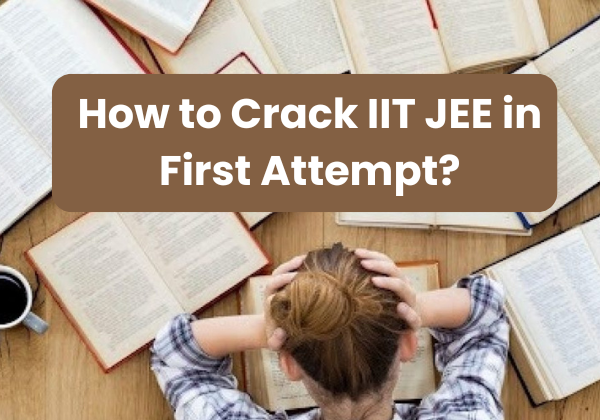

The IIT JEE (Indian Institutes of Technology Joint Entrance Examination) is one of the toughest and most prestigious exams in India. Every year, millions of aspirants dream of cracking the IIT JEE in their first attempt to secure admission in the top engineering institutes like IITs, NITs, and IIITs. However, with the competition increasing every year and the complexity of the exam, it can be overwhelming for students. So, how do you crack IIT JEE on your first attempt?
This guide will walk you through a detailed roadmap that covers the essential strategies, study plans, and tips to help you crack IIT JEE with flying colors on your first attempt.
Also Read: JEE Main exam
1. Understand the IIT JEE Exam Structure and Syllabus
Before diving into the preparation, it is crucial to have a clear understanding of the IIT JEE exam structure and syllabus. The JEE exam is divided into two phases:
- JEE Main: It is the first stage of the exam, and clearing it will make you eligible to appear for JEE Advanced. JEE Main consists of two papers: Paper 1 (for B.E./B.Tech) and Paper 2 (for B.Arch).
- JEE Advanced: It is the second and final stage of the exam. Only those who clear JEE Main can appear for JEE Advanced, and the score in this exam determines your ranking for admission to the IITs.
The subjects covered in the IIT JEE exam are:
- Physics
- Chemistry
- Mathematics
Each subject has a detailed syllabus that requires comprehensive preparation. Make sure you go through the syllabus thoroughly to avoid missing out on any important topics.
2. Create a Realistic Study Plan
One of the most effective ways to crack IIT JEE in the first attempt is to have a well-structured and realistic study plan. It is important to stick to your plan and maintain consistency.
Key Tips for Creating a Study Plan:
- Start Early: Begin your preparation at least one year before the exam. Starting early will give you enough time to cover the entire syllabus and revise thoroughly.
- Break Down the Syllabus: Divide your syllabus into manageable chunks and assign specific time frames to each topic.
- Set Daily, Weekly, and Monthly Goals: Break down your study plan into daily, weekly, and monthly goals. Focus on completing one goal at a time to stay on track.
- Include Breaks and Relaxation Time: Overloading your study schedule can lead to burnout. Ensure you include breaks, hobbies, and relaxation time to stay refreshed.
- Mock Tests and Revision: Regularly take mock tests and revise your study material to ensure you are retaining what you’ve learned.
Here’s an example of how a typical study schedule might look like:
| Time | Activity |
|---|---|
| 6:00 AM – 7:00 AM | Morning Exercise and Breakfast |
| 7:00 AM – 9:00 AM | Study Physics (Theory + Practice Problems) |
| 9:00 AM – 10:00 AM | Short Break / Relaxation |
| 10:00 AM – 12:00 PM | Study Mathematics (Problem Solving) |
| 12:00 PM – 1:00 PM | Lunch Break |
| 1:00 PM – 3:00 PM | Study Chemistry (Concepts + Practice) |
| 3:00 PM – 4:00 PM | Take a Break or Light Revision |
| 4:00 PM – 6:00 PM | Mock Test / Practice Problems |
| 6:00 PM – 7:00 PM | Evening Exercise / Break |
| 7:00 PM – 8:00 PM | Revision of Topics Covered During the Day |
| 8:00 PM – 9:00 PM | Dinner and Relaxation |
| 9:00 PM – 10:00 PM | Light Revision / Watching Educational Videos |
3. Master the Core Concepts
The IIT JEE is a conceptual exam, and merely memorizing formulas will not help you succeed. You must focus on understanding the core concepts in Physics, Chemistry, and Mathematics. This deep understanding will help you solve complex problems and boost your problem-solving speed.
Tips to Master Concepts:
- Read NCERT Books First: NCERT textbooks are essential, especially for Chemistry. They provide a clear understanding of fundamental concepts.
- Understand the Derivations and Theories: Rather than just memorizing, understand the derivations, concepts, and underlying theories.
- Take Help from Online Resources and Coaching: Platforms like Aakash, Vedantu, and Unacademy offer live classes and video lessons on various topics, which can be helpful in building a solid foundation.
4. Prioritize Regular Practice and Problem-Solving
Problem-solving is key to cracking the IIT JEE exam, as it tests your ability to apply concepts and solve real-time challenges under time constraints.
Problem-Solving Tips:
- Solve Previous Year Papers: This is one of the best ways to understand the pattern of the exam. It will help you familiarize yourself with the types of questions asked in the exam.
- Practice Daily: Dedicate specific hours daily to solve problems. Practice a variety of problems, including previous year papers and problems from reference books like H.C. Verma (for Physics), O.P. Tandon (for Chemistry), and R.D. Sharma (for Mathematics).
- Time Management: JEE exams are time-bound, so practicing under timed conditions will improve your speed and accuracy.
- Take Mock Tests: Regular mock tests help you assess your preparation level and identify weak areas. They also help in improving your exam-taking strategy.
5. Stay Focused and Motivated
The journey to cracking IIT JEE can be long and challenging. Staying motivated and focused is crucial for success.
How to Stay Motivated:
- Track Your Progress: Regularly review your study plan and goals. Celebrate small victories and achievements.
- Stay Positive: Maintain a positive mindset throughout the preparation. Don’t get discouraged by setbacks. Focus on solutions and improvements.
- Healthy Routine: Stay healthy physically and mentally by getting enough sleep, exercising, and maintaining a balanced diet.
- Join Study Groups: Discussing problems with peers and mentors can help clarify doubts and boost motivation.
Also Check: Subject wise JEE Preparation Tips
6. Focus on Time Management
Time management plays a critical role in the preparation for IIT JEE. Effective time management ensures that you can complete your syllabus, revise in time, and perform well in mock tests.
Time Management Tips:
- Plan Your Day in Detail: Follow a well-planned daily schedule that allows you to allocate sufficient time to each subject and topic.
- Prioritize Difficult Subjects: Devote more time to challenging subjects like Physics or Mathematics. Allocate time according to your strengths and weaknesses.
- Minimize Distractions: While studying, limit distractions such as mobile phones and social media. Concentrate fully on your studies.
Also Check: Enhance your Preparation for JEE
7. Stay Calm During the Exam
Once the preparation is done, the next challenge is to stay calm during the exam. Your performance will be affected if you are nervous or anxious.
Tips for Exam Day:
- Reach Early: Arrive at the exam center early to avoid last-minute anxiety.
- Stay Calm: Do deep breathing exercises to reduce anxiety.
- Plan the Exam Strategy: Decide in advance the order in which you will attempt the questions. Start with the easier ones to build confidence.
8. Revision and Self-Assessment
Last-minute revision is essential to reinforce what you’ve learned. Take time to go through your notes, formulas, and practice questions.
Self-Assessment:
- Assess Your Progress: Identify areas where you need improvement and focus on those.
- Review Mistakes: When solving mock tests or practice papers, review your mistakes and work on them.
Cracking the IIT JEE in the first attempt is not impossible if you follow the right approach, stay focused, and maintain consistency in your efforts. Keep a positive mindset, stay motivated, and trust the process. With the right resources, proper guidance, and hard work, you can make your dream of studying at one of the top IITs a reality.
By implementing these strategies and tips, you’ll be well-prepared to take on the IIT JEE with confidence and excel in the exam. Remember, success is a result of consistent effort, strategic planning, and the ability to adapt to challenges. Start your preparation today, and best of luck on your journey to IIT!
How to Crack IIT JEE in First Attempt? FAQs
1. What is the best strategy to crack IIT JEE in the first attempt?
To crack IIT JEE in the first attempt, the best strategy is to start early, preferably in Class 11, and follow a structured study plan. Focus on understanding the concepts thoroughly, practice regularly, and take mock tests to assess your progress. Prioritize time management and stress management, and stay consistent in your preparation. Make use of high-quality study materials and online resources, and seek guidance from mentors if needed.
2. How much time should I dedicate to IIT JEE preparation daily?
The amount of time dedicated to IIT JEE preparation depends on your current level of understanding and the time available before the exam. Ideally, you should aim for around 6-8 hours of focused study per day, divided between Physics, Chemistry, and Mathematics. As the exam date approaches, you may need to increase your study hours, especially for revision and solving previous years' question papers. Ensure regular breaks to avoid burnout.
3. How can I manage my time effectively while preparing for IIT JEE?
Effective time management is crucial for IIT JEE preparation. Here are a few tips to help you manage your time:
Create a daily timetable that includes study hours, revision, and breaks.
Prioritize subjects based on your strengths and weaknesses.
Break down topics into smaller, manageable parts to avoid feeling overwhelmed.
Set weekly goals and track your progress.
Take regular breaks and avoid long, continuous study sessions to maintain focus.
4. What are the most important topics to focus on for IIT JEE?
While all topics in Physics, Chemistry, and Mathematics are important for IIT JEE, some of the most critical ones include:
Physics: Mechanics, Thermodynamics, Electricity and Magnetism, Optics, Modern Physics.
Chemistry: Physical Chemistry (especially Mole Concept, Thermodynamics, and Kinetics), Organic Chemistry (reactions, nomenclature), Inorganic Chemistry (Periodic Table, Coordination Compounds).
Mathematics: Algebra (Quadratic Equations, Permutations and Combinations), Calculus, Trigonometry, Coordinate Geometry, Vectors.
Focus on these high-weightage topics, but don’t neglect other subjects entirely
5. How important is solving mock tests and previous year papers for IIT JEE?
Solving mock tests and previous year papers is extremely important for IIT JEE preparation. It helps you get familiar with the exam pattern, improves your speed and accuracy, and helps identify weak areas that need more focus. Mock tests simulate the real exam environment and allow you to practice time management. Regularly solving these papers also builds confidence and helps you gauge your progress.