
How Does a Transistor Work?: Modern electronics is made up of transistors. Transistors are concealed in almost every electronic item we use in our day-to-day lives, be it a mobile phone, laptop, washing machines and remote control, just to mention a few.
Although they are extremely tiny, they have colossal roles in ensuring the smartness, speed, and efficiency of devices.
Then, what is a transistor? What is its mechanism? What makes it so important in electronics?
In this blog, we will provide details on what a transistor is and the functioning of a transistor.
What is a Transistor?
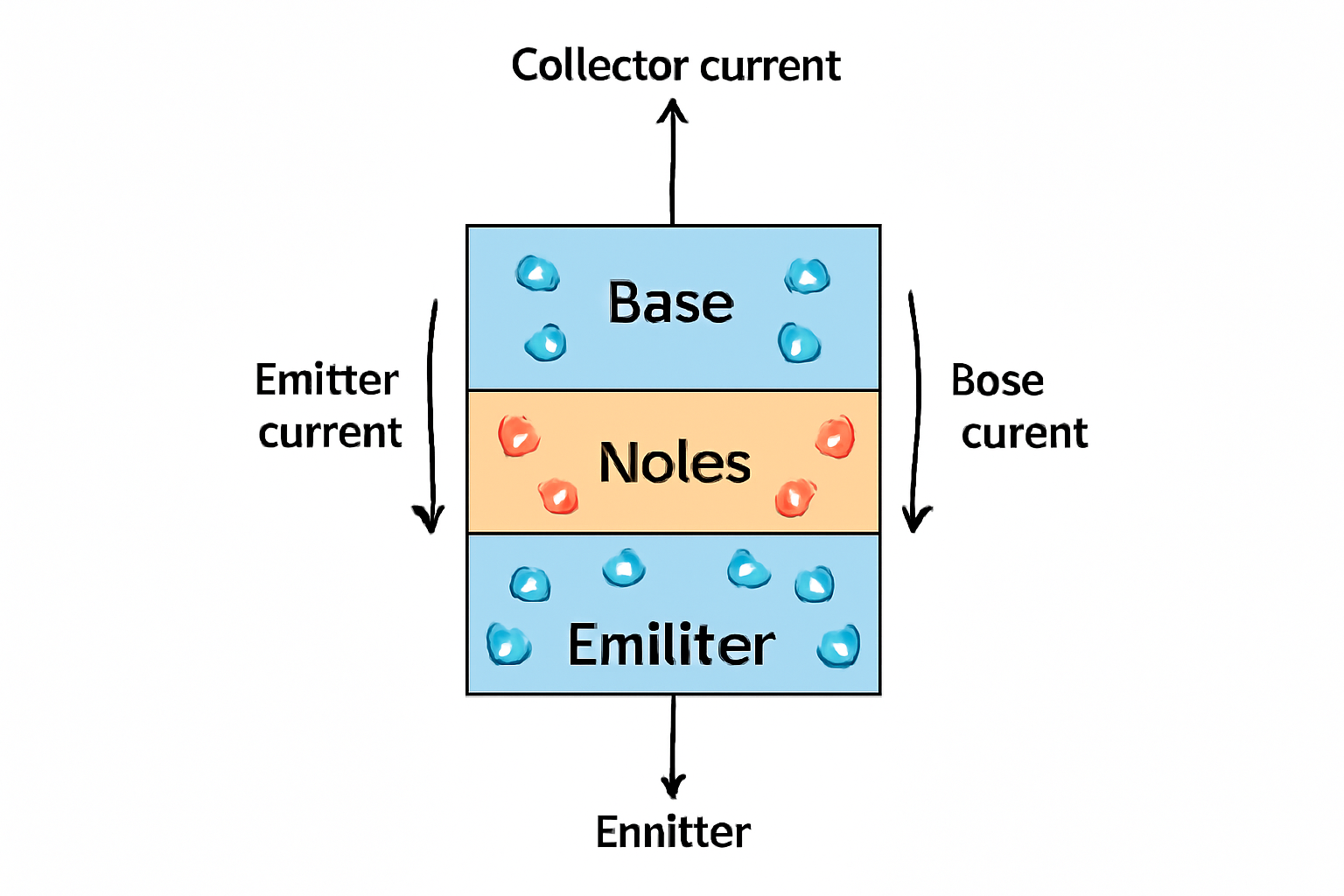
A transistor is a mini-electronic component that can either change electrical signals Between ON and OFF or amplify a weak signal. It consists of semiconductors, most commonly silicon, with a special quality in being able to conduct electricity to some extent.
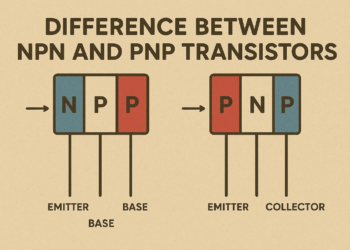
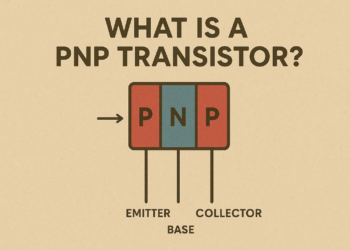
There are three components to a transistor:
- Emitter-Plays out charge (electrons most of the time).
- Base—The intermediate layer that regulates.
- Collector—Picks up the charge that flows through.
The elements assist the transistor in regulating the passage of electricity in a circuit.
Simply defined, a transistor is the equivalent of an electric current valve. The transistor works in an identical manner as the water tap in the sense that just as the water tap regulates the flow of water, so does the transistor regulate the flow of current in a circuit.
History of the Transistor
Vacuum tubes were formerly used as an amplifier and switch in order to switch electrical signals. However, vacuum tubes were bulky and consumed an excessive amount of power and they would not last long.
The functional transistor was unveiled in 1947 by three scientists, John Bardeen, Walter Brattain and William Shockley at Bell Laboratories in the United States. The invention transformed the face of the electronics industry. It enabled engineers to come up with smaller, faster, and more efficient devices.
By the 1960s, vacuum tubes were being discarded in favor of transistors in radios, computers and televisions. Now there are billions of transistors on one microchip in your smartphone or laptop.
Types of Transistors
There are two main types of transistors. Each type has a different way of controlling electrical current:
1. Bipolar Junction Transistor (BJT)
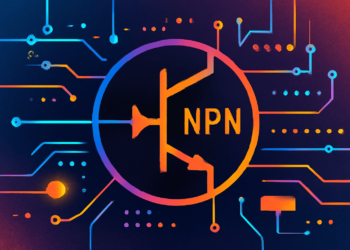
- This kind has 3 layers of semiconductor materials: NPN or PNP.
- The current flowing onto the base governs a much bigger current in between the collector and also the emitter.
- It is used also in analog circuits and amplifiers.
For instance, in a loudspeaker, a BJT is used to amplify the audio program so you can hear the music nicely.
2. Field Effect Transistor (FET)
- In this type, an electric field controls the current.
- It has three parts: Gate, Source, and Drain.
- A popular kind of FET is the MOSFET (Metal-Oxide-Semiconductor FET).
- It is widely used in digital circuits, such as in computer processors.
FETs use very little power and work very quickly, which is why they are perfect for use in modern gadgets.
Basic Working Principle of a Transistor
To understand how a transistor works, think of it like a light switch or a tap.
- When the switch is OFF, no current flows.
- When the switch is ON, electricity flows freely.
Similarly, in a transistor, a small signal at the base (or gate in FETs) controls whether a larger current can flow between the collector and emitter (or drain and source in FETs).
Here’s what happens in simple terms:
- If no signal is applied at the base or gate, the transistor stays OFF and blocks the current.
- If a small voltage is applied, it turns ON and allows the current to pass.
This ability to control current makes the transistor useful as both an amplifier and a switch.
Modes of Operation (For BJT)
BJTs can work in three different modes, depending on how the voltages are applied:
1. Cut-Off Mode
- The transistor is OFF.
- No current flows from collector to emitter.
- It acts like an open switch.
2. Active Mode
- A small current at the base allows a larger current to flow from collector to emitter.
- This is how the transistor works as an amplifier.
- The output is a stronger version of the input signal.
3. Saturation Mode
- The transistor is fully ON.
- Current flows freely from collector to emitter.
- It acts like a closed switch.
These modes help the transistor behave as either a switch or an amplifier depending on how it is connected in a circuit.
Transistor as a Switch
When electrical devices are switched on or off, a transistor can be utilized as a switch.
- The transistor is turned ON by a small signal to the base (or gate).
- The absence of a signal is an indication that the transistor is turned off.
It is an ON/OFF operation applicable in digital circles, such as in computer chips. On the inside of a CPU, there are billions of transistors switching on and off at high speed—it makes calculations, it opens programs, and it processes the data.
An ON is a 1, and an OFF is a 0. That is binary code and this is how computers read and interpret data.
Transistor as an Amplifier
Weak signals may also be amplified with the help of transistors.
Suppose that you are talking into a microphone. Your voice produces a small amount of electricity. This is a very weak signal to send to a speaker.
A transistor amplifier is used to take this weak signal and amplify it to sound the speaker. Then you will be able to hear your voice loudly and clearly.
Such application of a transistor is quite common in:
- Audio systems
- Radios
- Televisions
- Hearing aids
The transistor amplifies the signals, i.e., it makes weak electrical signals strong.
Applications of Transistors
Transistors are used in many devices around you. Here’s a table to show how they are used:
| Device/Area | Role of Transistor |
| Computers | Acts as switches in logic circuits (1s and 0s) |
| Smartphones | Used in chips for processing, audio, and signal control |
| Radios | Amplifies weak radio signals |
| Televisions | Helps process both sound and image signals |
| Cars | Used in sensors, controllers, and automatic systems |
| Washing Machines | Helps control the motor and timer functions |
| Medical Devices | Used in pacemakers, ECG machines, and hearing aids |
| Solar Inverters | Helps convert and regulate power from solar panels |
In short, wherever there are electronics, there are transistors.
Importance of Transistors
The invention of the transistor is one of the most important breakthroughs in science and technology.
Why?
- Size—They are tiny and can be packed in large numbers.
- Power—They use very little energy.
- Speed—They switch ON and OFF in microseconds.
- Durability—They are strong and last a long time.
- Cost—They are cheap to make.
Without transistors, we wouldn’t have mobile phones, computers, or even the internet. They made electronics smaller, faster, and smarter.
Transistors in Integrated Circuits
A transistor alone will be strong, but small electronics will require millions of them in the modern world.
This is the reason the engineers developed the integrated circuits (ICs) or in other words, small chips that have several transistors interconnected. For example:
The latest smartphone or laptop can possess more than 10 billion transistors in a chip.
All these transistors will collaborate to execute billions of operations per second.
They are due to our smartphones, video games, AI, and spacecraft that explore other planets, thanks to the integrated circuits full of transistors.
Conclusion
Transistor is small, but it performs a colossal role in ensuring that the electronic world works. Be it creating a stronger signal or switching a circuit on or off, its use can be seen at the center of every modern gadget.
Transistors have enabled all modern devices to make our lives easier, smarter, and more connected, whether that be in the form of radios in the 1950s, smartphones, or space technology.
Knowing the functionality of the transistor will enable us to become more grateful for the wonderful technology that is in everyday items.
FAQs
Q1. What is the main function of a transistor in a circuit?
A transistor regulates or enhances electrical signals in a circuit. It behaves as a switch or gate and will conduct or prevent the flow of current when required.
Q2. How does a transistor work as an amplifier?
The powering of a transistor uses a low agent on the base to regulate this higher current between the collector and emitter to furnish more power at output.
Q3. How does a transistor work as a switch in electronics?
When the current flows to the base, it enables complete current from the collector to the emitter by the transistor. It is like a switch and blocks the flow without base current.
Q4. What is the difference between BJT and MOSFET transistors?
BJTs control current using current and MOSFETs use voltage to control current. Digital and power electronics drive MOSFETs, which are more power-efficient
Q5. How does a Darlington transistor work in high-power circuits?
A Darlington transistor is composed of two transistors to produce increased current gain. The former amplifies the signal; the latter amplifies it even more in order to power heavier electrical loads.
Also Read
Difference Between NPN and PNP Transistors
PNP Transistor
NPN Transistor
What is a Transistor
What is Fet?
Bipolar Junction Transistor (BJT)
Characteristics of a Transistor
Uses of Transistors