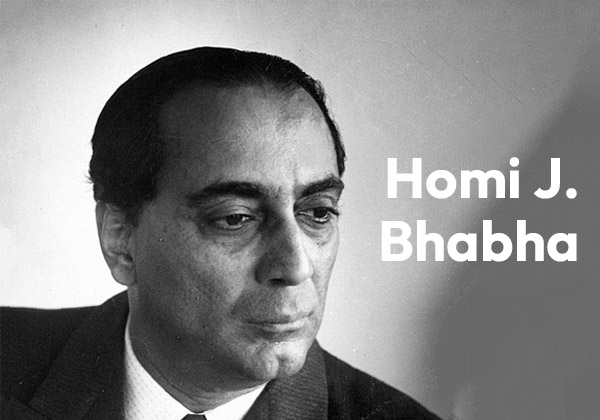

Homi Jehangir Bhabha is a name synonymous with the birth of nuclear science and technology in India. Known as the “Father of the Indian Nuclear Program,” Bhabha was not only a brilliant physicist but also an inspiring visionary who laid the foundation for India’s journey towards becoming a nuclear power. His work in theoretical physics, coupled with his strategic foresight, shaped India’s atomic energy policies and research.
Early Life and Education
Homi J. Bhabha was born on October 30, 1909, in Mumbai, into a wealthy Parsi family with a strong educational background. His father, Jehangir Hormusji Bhabha, was a prominent lawyer, and his mother, Meheren, came from a family that encouraged education and learning.
| Detail | Information |
| Birth Date | October 30, 1909 |
| Birthplace | Mumbai, Maharashtra, India |
| Parents | Jehangir Hormusji Bhabha (Father), Meheren Bhabha (Mother) |
| Education | Elphinstone College, Royal Institute of Science, Cambridge University |
| Nationality | Indian |
Bhabha’s early education took place at Mumbai’s Cathedral and John Connon School, followed by Elphinstone College and the Royal Institute of Science, Mumbai. His academic brilliance earned him a place at Gonville and Caius College, Cambridge, where he initially studied mechanical engineering. However, his passion for physics soon led him to switch to theoretical physics, a decision that would shape the course of his life.
Academic Achievements and Early Career
At Cambridge, Bhabha’s talent in physics flourished under the mentorship of notable scientists like Paul Dirac and Ralph Fowler. He completed his studies with a first-class honors degree in mechanical engineering and later pursued research in theoretical physics. Bhabha’s work during this period was highly regarded, particularly his contributions to quantum theory and cosmic radiation.
| Year | Achievement |
| 1930 | Graduated with a first-class honors degree in mechanical engineering |
| 1934 | Published the paper “The Absorption of Cosmic Radiation” |
| 1935 | Co-authored a paper with Niels Bohr on nuclear reactions |
| 1937 | Won the Adams Prize for his work on cosmic radiation |
Bhabha’s groundbreaking paper, “The Absorption of Cosmic Radiation,” published in 1934, introduced the concept of electron-positron scattering, later known as Bhabha Scattering. This work established him as a leading physicist in the global scientific community.
Return to India and the Establishment of TIFR
During World War II, Bhabha was unable to return to Cambridge and remained in India, where he began to envision the future of Indian science. He realized that India needed a strong foundation in nuclear research to achieve scientific and technological advancement. In 1945, Bhabha founded the Tata Institute of Fundamental Research (TIFR) in Mumbai, with the support of the Tata Trusts and the Indian government.
| Institute | Year Established | Purpose |
| Tata Institute of Fundamental Research | 1945 | To conduct advanced research in nuclear physics and mathematics |
TIFR became the cradle of India’s nuclear program, attracting some of the brightest minds in science. Bhabha’s leadership and vision turned TIFR into a world-class research institution, laying the groundwork for India’s atomic energy endeavors.
The Atomic Energy Commission and India’s Nuclear Program
In 1948, Bhabha was appointed the first Chairman of the Atomic Energy Commission of India. He played a pivotal role in formulating India’s nuclear energy policy and was instrumental in the establishment of the Department of Atomic Energy (DAE) in 1954. Bhabha’s goal was to harness nuclear energy for peaceful purposes, particularly in the fields of energy production, agriculture, and medicine.
| Commission/Department | Year Established | Role of Homi J. Bhabha |
| Atomic Energy Commission | 1948 | Chairman, led the development of India’s nuclear energy policy |
| Department of Atomic Energy (DAE) | 1954 | Founder and Secretary, oversaw the growth of nuclear research and development in India |
Bhabha’s vision for India’s nuclear program was ambitious. He believed that nuclear energy could provide the country with a reliable and sustainable source of power, which was crucial for economic growth and development. Under his leadership, India’s first nuclear reactor, Apsara, became operational in 1956. This was a significant milestone, making India one of the few countries with a functioning nuclear reactor at that time.
Contribution to Nuclear Physics and Science
Homi J. Bhabha’s contributions to nuclear physics extended beyond his administrative roles. He continued to engage in research and theoretical work, collaborating with international scientists and contributing to the global scientific community. His research in cosmic rays, nuclear reactions, and elementary particles was groundbreaking and earned him numerous accolades.
| Research Area | Contribution |
| Cosmic Rays | Proposed the theory of electron-positron scattering (Bhabha Scattering) |
| Nuclear Reactions | Contributed to the understanding of nuclear fission and reactor design |
| Elementary Particles | Conducted research on mesons and their interactions |
Bhabha’s work was recognized with several prestigious awards, including the Adams Prize in 1937 and the Padma Bhushan in 1954. His contributions to science were not only significant in India but also internationally acknowledged.
International Influence and Legacy
Bhabha’s influence extended beyond India’s borders. He was an advocate for the peaceful use of nuclear energy and was involved in international nuclear policy discussions. Bhabha represented India at various international forums, including the United Nations, where he argued against nuclear proliferation and for the peaceful use of atomic energy.
| Event/Forum | Year | Contribution |
| International Atomic Energy Agency (IAEA) | 1957 | Played a key role in the establishment and policy formation |
| UN Conference on the Peaceful Uses of Atomic Energy | 1955 | Represented India and advocated for peaceful nuclear applications |
Bhabha’s legacy is not limited to his scientific achievements. He inspired generations of Indian scientists and established a scientific community that continues to thrive. The institutions he founded, such as TIFR and the Bhabha Atomic Research Centre (BARC), remain at the forefront of scientific research in India.
The Tragic End and Lasting Impact
Homi J. Bhabha’s life was tragically cut short on January 24, 1966, when Air India Flight 101, on which he was traveling, crashed into Mont Blanc in the Alps. His death was a significant loss to the scientific community, both in India and globally.
| Date | Event |
| January 24, 1966 | Homi J. Bhabha dies in an air crash over Mont Blanc |
Despite his untimely death, Bhabha’s vision for India’s nuclear program lived on. His work laid the foundation for India’s nuclear energy and defense capabilities. The institutions he established continue to contribute to advancements in science and technology, ensuring that his legacy endures.
Bhabha’s Influence on Indian Science and Technology
Homi J. Bhabha’s impact on Indian science and technology extends beyond his work in nuclear physics. His strategic vision for the development of science and technology in India has had far-reaching effects. He emphasized the importance of a strong scientific infrastructure and advocated for research in various fields, including space science, atomic energy, and fundamental research.
Bhabha’s approach to science and technology was holistic, focusing not only on research but also on education and infrastructure development. His efforts led to the establishment of several research institutions and educational programs that have contributed to India’s growth as a scientific and technological powerhouse.
Bhabha Atomic Research Centre (BARC)
The Bhabha Atomic Research Centre (BARC) stands as a cornerstone of India’s nuclear research and development. Established in 1954, BARC is dedicated to advancing nuclear science and technology, contributing significantly to India’s progress in energy, healthcare, and industry.
BARC Origins and Establishment
Named after the esteemed physicist Homi J. Bhabha, BARC was founded to lead India’s nuclear research endeavors. Bhabha’s vision of harnessing nuclear energy for peaceful purposes laid the groundwork for this premier institution. Originally conceived as the Atomic Energy Establishment, BARC was established to support India’s ambitious nuclear energy program and scientific research.
BARC Objectives and Mission
BARC’s mission is to conduct research in nuclear science and technology, develop nuclear power reactors, and advance applications of radiation in various fields. The center focuses on:
- Nuclear Power Generation: Developing advanced reactor technologies and enhancing the safety and efficiency of nuclear power plants.
- Nuclear Fuel Cycle: Researching and improving nuclear fuel processing, recycling, and waste management.
- Radiation Applications: Utilizing radiation technology in medicine, industry, and agriculture to improve quality of life.
- Fundamental Research: Conducting cutting-edge research in physics, chemistry, and material science.
BARC Major Achievements
BARC has been instrumental in several key milestones for India’s nuclear program:
- Development of Indigenous Reactors: BARC has played a crucial role in the design and development of India’s indigenous reactors, including the Pressurized Heavy Water Reactor (PHWR) and the Advanced Heavy Water Reactor (AHWR).
- Nuclear Fuel Reprocessing: BARC developed advanced reprocessing technologies, which are critical for recycling spent nuclear fuel and managing radioactive waste.
- Medical Applications: The center has pioneered the use of radiation in medical diagnostics and treatment, including the development of radiopharmaceuticals for cancer therapy.
Research Facilities and Infrastructure of BARC
BARC boasts state-of-the-art facilities and infrastructure to support its diverse research activities:
| Facility | Purpose |
| Reactor Research | Houses reactors for research and development, including the Apsara reactor. |
| Radiation Technology | Develops and applies radiation technologies in various sectors. |
| Nuclear Fuel Cycle Facility | Focuses on fuel reprocessing and waste management. |
| Research Laboratories | Conducts research in physics, chemistry, and material science. |
BARC Collaboration and International Influence
BARC collaborates with numerous international organizations and research institutions, enhancing global scientific cooperation. Its partnerships with entities like the International Atomic Energy Agency (IAEA) and various international nuclear research centers contribute to global advancements in nuclear technology and safety.
BARC Training and Education
Education and training are integral to BARC’s mission. The center offers specialized training programs and fellowships to students and professionals, nurturing the next generation of nuclear scientists and engineers. BARC’s training programs are designed to equip individuals with the knowledge and skills needed to excel in nuclear research and technology.
Community and Environmental Impact on BARC
BARC is committed to promoting sustainable and safe nuclear practices. The center prioritizes environmental protection, implementing stringent safety measures to minimize the impact of nuclear activities on the environment. Additionally, BARC engages in community outreach and public awareness initiatives to foster understanding and acceptance of nuclear technology.
BARC Future Directions
As India continues to advance its nuclear capabilities, BARC remains at the forefront of innovation and research. The center is focusing on the development of next-generation reactor technologies, including fast breeder reactors and thorium-based reactors, to ensure a sustainable and secure energy future.
The Bhabha Atomic Research Centre (BARC) is a beacon of progress in nuclear science and technology. With its rich history, groundbreaking research, and unwavering commitment to advancing nuclear technology for peaceful purposes, BARC plays a vital role in shaping India’s scientific and technological landscape. Its contributions to nuclear power, radiation applications, and fundamental research continue to drive innovation and improve lives both in India and around the world.
The Legacy of Homi J. Bhabha
Homi J. Bhabha’s legacy is reflected in the continued success and growth of the institutions he founded. The Tata Institute of Fundamental Research (TIFR) and the Bhabha Atomic Research Centre (BARC) remain at the forefront of scientific research and innovation in India. These institutions continue to advance research in nuclear science, space technology, and other fields, ensuring that Bhabha’s vision for a scientifically advanced India endures.
Bhabha’s influence is also seen in the broader scientific community, where his contributions to nuclear physics and his advocacy for peaceful nuclear energy continue to be recognized and appreciated. His work has inspired countless scientists and researchers, both in India and around the world, and his legacy lives on through their achievements.
Homi J. Bhabha was a scientist, visionary, and nation-builder whose contributions to nuclear science have had a lasting impact on India and the world. His efforts in establishing India’s nuclear program, coupled with his contributions to theoretical physics, have made him an iconic figure in the annals of scientific history. The institutions he founded, such as TIFR and BARC, continue to lead scientific research and innovation in India, ensuring that Bhabha’s vision for a scientifically advanced nation remains a reality.
Homi J. Bhabha FAQs
Who was Homi J. Bhabha?
Homi J. Bhabha was an Indian physicist known as the "Father of the Indian Nuclear Program." He played a key role in establishing India's atomic energy research and development.
What were Homi J. Bhabha’s major contributions to science?
Bhabha made significant contributions to nuclear physics, particularly in cosmic radiation, nuclear reactions, and elementary particles. He is also credited with Bhabha Scattering, a concept in quantum electrodynamics.
What is Bhabha Scattering?
Bhabha Scattering refers to the process of electron-positron scattering, described by Homi J. Bhabha. It is an important concept in the study of particle physics.
What institutions did Homi J. Bhabha establish?
Bhabha founded the Tata Institute of Fundamental Research (TIFR) in 1945 and was instrumental in establishing the Bhabha Atomic Research Centre (BARC), which are leading research institutions in India.
How did Homi J. Bhabha die?
Homi J. Bhabha died in an air crash on January 24, 1966, when Air India Flight 101 crashed into Mont Blanc in the Alps.