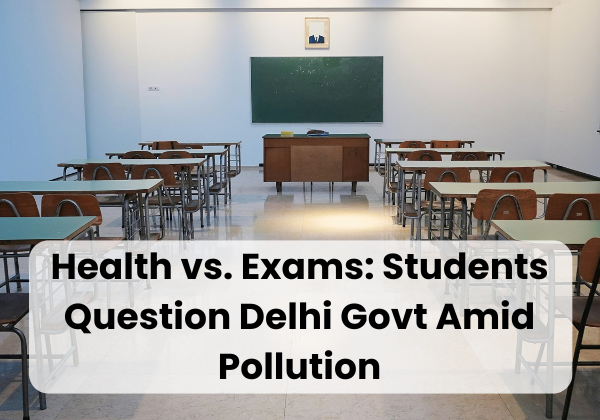

As Delhi grapples with dangerous pollution levels for the fifth consecutive day, the government has decided to suspend physical classes in schools, except for Class 10 and 12 students preparing for board exams. On November 18, Chief Minister Atishi updated the directive, announcing that from November 19, all studies for Classes 10 and 12 will also shift online.
While this decision has brought relief to many, it has sparked concerns among students and parents regarding the balance between academic priorities and health risks.
Students Speak Out: Health vs. Academics
Kamya Agarwal, a Class 10 student, shared her struggles: “Balancing health and studies is challenging but essential. Attending physical classes today was difficult because my eyes started burning due to the air quality. Many of my classmates skipped school, and I might have to do the same if classes don’t go online.”
Mixed Reactions from Teachers
Teachers are divided on the issue. Some believe offline classes provide structure and accountability, but others acknowledge the risks.
Deepak Walecha, an accounting tutor, said: “Parents prefer offline classes because they believe their children are less likely to waste time online. However, given the circumstances, moving to online classes seems like the safer option.”
On the other hand, Jassica Ahuja, a primary school teacher, raised concerns about screen time and logistical challenges: “Online classes will increase screen time, which is already high. Many families don’t have enough devices for multiple children, and working parents may find it difficult to supervise.”
Jyoti Kaushik, a social science teacher, added: “Schools have better resources for effective teaching. But in extreme situations like this, exceptions must be made to protect students’ health.”
Parents Weigh In
Parents are urging the government to prioritize health over academics. Keshav Agarwal, whose daughter studies at Delhi Public School RK Puram, said: “Our children’s well-being must come first, even during board exam years. The government should allow online classes for Class 10 and 12 students. Their syllabus is nearly complete, and this step will safeguard their health while keeping their academic preparation on track.”
The Need for Balanced Solutions
Some educators advocate for a middle ground. Dipika Sharma, a computer science teacher, argued: “While teachers can continue working in schools, it’s only logical to shift students to online classes to ensure their safety. Health should not be compromised.”
As Delhi faces an ongoing pollution crisis, the debate highlights the need for policies that balance academic goals with students’ physical and mental well-being. For many, the ultimate question remains: is any exam worth risking a child’s health?
Health vs. Exams: Students Question Delhi Govt Amid Pollution FAQs
1. Why are schools in Delhi being closed for physical classes?
Answer: Schools in Delhi are being closed for physical classes due to alarming pollution levels, which pose severe health risks. The government has decided to prioritize student safety by shifting classes online for students in Classes 10 and 12 to mitigate exposure to hazardous air quality.
2. Why are Class 10 and 12 students still attending offline classes while others are shifted online?
Answer: The Delhi government initially kept physical classes for Classes 10 and 12 open due to their upcoming board exams, as offline learning is considered more effective for these critical years. However, with rising pollution levels, the government has decided to shift these classes online as well to ensure the students' health and safety.
3. How does pollution impact students attending offline classes?
Answer: Prolonged exposure to high pollution levels can lead to respiratory issues, eye irritation, reduced concentration, and long-term health complications. Many students report discomfort, including burning eyes and difficulty breathing, making it challenging to focus on studies during offline classes.
4. What are the challenges of shifting Classes 10 and 12 to online learning?
Answer:
Increased Screen Time: Prolonged online classes may strain students’ mental and physical health.
Device Accessibility: Families with limited devices may struggle to support multiple children attending online classes.
Learning Effectiveness: Some teachers argue that in-person resources and infrastructure are better for effective teaching and learning.
5. How can parents and schools ensure effective online learning during pollution-related closures?
Answer:
Structured Schedules: Schools can design clear schedules with regular breaks to manage screen time.
Parental Supervision: Parents can monitor their children to prevent distractions like gaming or watching videos.
Accessible Resources: Providing students with digital tools, study materials, and online test modules can enhance online learning efficiency.