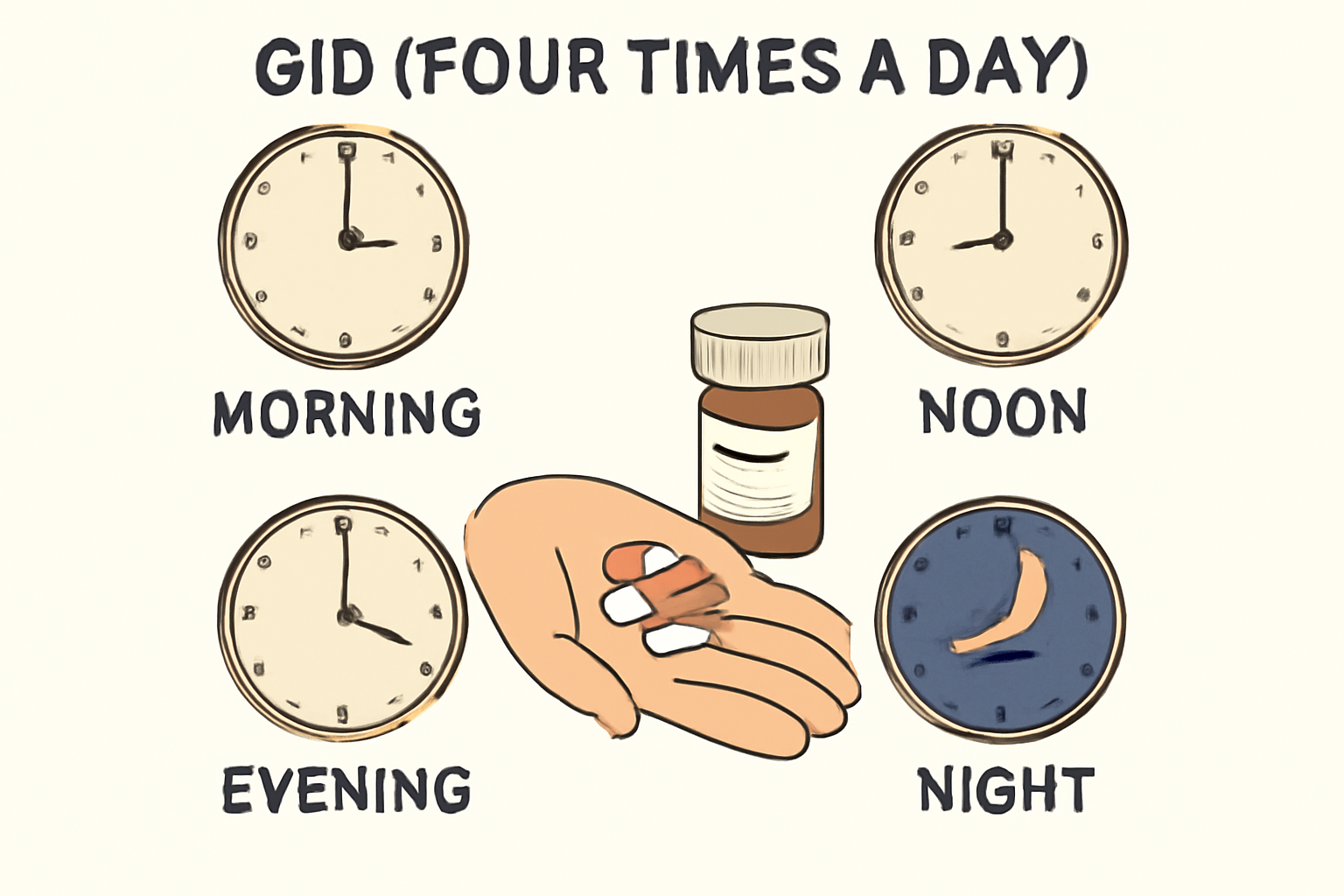

Full Form of QID in Medical: In the medical field, the term QID stands for “Quater in Die”, which is a Latin phrase meaning “four times a day.” It is used by doctors and healthcare professionals when writing prescriptions or instructions for taking medicines.
Understanding such medical abbreviations is important for patients, caregivers, and even students preparing for medical exams. QID helps to give clear and specific instructions to ensure that the medicine works effectively and safely.
What is the Full Form of QID in Medical?
The full form of QID in medical is “Quater in Die”. QID is used to tell a patient how often to take their medicine. If your doctor writes QID on your prescription, it means you should take the medicine four times in one day. These four doses are usually spaced out evenly throughout the day.
For example, if your doctor advises you to take a tablet QID, you might take it:
-
In the morning (around 8 AM)
-
At noon (around 12 PM)
-
In the evening (around 4 PM)
-
At night (around 8 PM)
The exact timing may change based on the type of medicine, your daily routine, or your doctor’s instructions.
Why Is QID Important?
QID helps make sure that the level of medicine in your body stays constant throughout the day. Many medicines work best when taken at regular intervals. If you miss a dose or take it at the wrong time, the medicine may not work properly or could even cause side effects.
How Is QID Different from Other Medical Abbreviations?
Here is a table showing how QID compares with other commonly used prescription terms:
| Abbreviation | Full Form (Latin) | Meaning in English | How Often to Take |
|---|---|---|---|
| QD | Quaque Die | Once a day | 1 time a day |
| BID | Bis in Die | Twice a day | 2 times a day |
| TID | Ter in Die | Three times a day | 3 times a day |
| QID | Quater in Die | Four times a day | 4 times a day |
| PRN | Pro Re Nata | As needed | Only when necessary |
| QHS | Quaque Hora Somni | Every night at bedtime | Once before sleeping |
Tips to Follow QID Medicine Schedule
-
Set alarms on your phone to remind you to take medicine.
-
Use a pill organizer to avoid confusion between doses.
-
Follow the doctor’s timing if they give specific hours.
-
Do not double the dose if you miss one. Consult your doctor first.
-
Take with food or on an empty stomach only as advised.
Common Mistakes to Avoid
-
Thinking QID means “every 4 hours” (it doesn’t; that’s Q4H).
-
Taking all 4 doses at once.
-
Skipping doses and then doubling later.
-
Ignoring the time gap between doses.
Conclusion
The full form of QID in medical terms is “Quater in Die” which means “four times a day.” It is a common term used in medical prescriptions to help guide how often a patient should take their medicine. Understanding this abbreviation can help avoid mistakes, improve health outcomes, and make communication with healthcare providers easier. Always follow your doctor’s instructions carefully and ask if you are unsure about your dosage schedule.