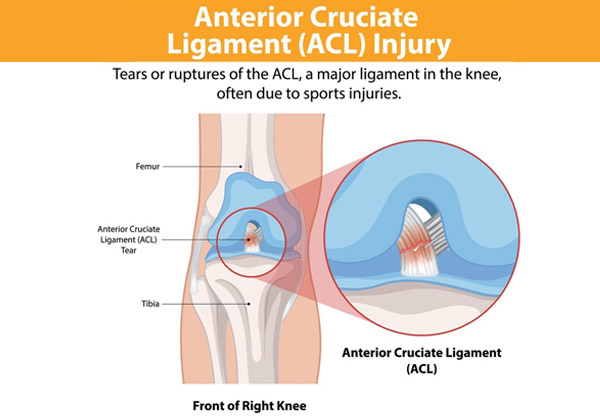

The Anterior Cruciate Ligament (ACL) is a crucial component of the knee joint, providing stability and facilitating movement. Injuries to the ACL are common, particularly among athletes, and understanding the full spectrum of its function, injury mechanisms, treatment options, and rehabilitation processes is essential for both healthcare professionals and patients. This comprehensive guide delves into the anatomy, function, common injuries, diagnostic methods, treatment options, and rehabilitation of the ACL.
Anatomy and Function of ACL
Anatomy of the ACL
The ACL is one of the four main ligaments in the knee joint, and it connects the femur (thighbone) to the tibia (shinbone). It is located within the center of the knee and runs diagonally through the joint.
| Component | Description |
| Origin | Lateral femoral condyle |
| Insertion | Anterior intercondylar area of the tibia |
| Structure | Composed of collagen fibers, giving it strength and elasticity |
| Blood Supply | Primarily from the middle genicular artery |
| Nerve Supply | Branches of the tibial nerve |
Function of the ACL
The primary functions of the ACL include:
- Stability: Prevents the tibia from sliding too far forward relative to the femur.
- Rotational Control: Provides stability during rotational movements of the knee.
- Proprioception: Contributes to the body’s sense of joint position and movement.
Common ACL Injuries
ACL injuries are prevalent, especially in sports that involve sudden stops, jumps, or changes in direction. They can range from mild sprains to complete tears.
Types of ACL Injuries
| Type | Description |
| Sprain (Grade I) | Minor stretching and microscopic tearing of the ligament fibers. |
| Partial Tear (Grade II) | Significant tearing of the ligament fibers, leading to instability. |
| Complete Tear (Grade III) | The ligament is completely torn, often associated with a popping sound and significant instability. |
Mechanisms of Injury
ACL injuries often occur due to:
- Non-contact Mechanisms: Sudden deceleration, pivoting, or awkward landings.
- Contact Mechanisms: Direct blow to the knee, causing hyperextension or rotational force.
Symptoms and Diagnosis of ACL
Symptoms of ACL Injuries
Common symptoms of an ACL injury include:
- Popping Sound: A noticeable pop at the time of injury.
- Pain: Immediate and severe pain in the knee.
- Swelling: Rapid swelling within the first few hours of injury.
- Instability: A feeling of the knee giving way, particularly during weight-bearing activities.
- Loss of Range of Motion: Difficulty fully extending or flexing the knee.
Diagnostic Methods
Accurate diagnosis of an ACL injury involves a combination of physical examination and imaging studies.
| Diagnostic Tool | Description |
| Physical Examination | Includes tests like the Lachman test, anterior drawer test, and pivot shift test to assess ligament integrity. |
| MRI | Provides detailed images of the soft tissues in the knee, confirming the extent of the injury. |
| X-Ray | Used to rule out fractures and assess the overall alignment of the knee joint. |
Treatment Options for ACL Injuries
Treatment for ACL injuries depends on the severity of the injury, the patient’s activity level, and overall health. Options range from conservative management to surgical intervention.
Conservative Management
| Treatment Option | Description |
| RICE Protocol | Rest, Ice, Compression, and Elevation to reduce pain and swelling. |
| Physical Therapy | Exercises to strengthen the muscles around the knee and improve stability. |
| Bracing | Knee braces to support the joint and prevent further injury. |
Surgical Intervention
Surgery is often recommended for patients who are physically active or have significant knee instability.
| Surgical Procedure | Description |
| ACL Reconstruction | The torn ACL is replaced with a graft, usually from the patient’s own hamstring or patellar tendon. |
| Allograft | The use of a donor graft for reconstruction. |
| Autograft | The use of the patient’s own tissue, such as the patellar or hamstring tendon, for reconstruction. |
Rehabilitation and Recovery of ACL
Successful rehabilitation is crucial for returning to normal activities and preventing future injuries.
Phases of Rehabilitation
| Phase | Goals and Activities |
| Acute Phase (0-2 weeks) | Reduce pain and swelling, begin gentle range of motion exercises, and start weight-bearing as tolerated. |
| Early Recovery (2-6 weeks) | Regain full range of motion, begin strength training exercises for the quadriceps and hamstrings. |
| Intermediate (6-12 weeks) | Focus on building strength, stability, and proprioception with more intensive exercises. |
| Advanced (3-6 months) | Prepare for return to sport with sport-specific drills, agility training, and plyometrics. |
| Return to Sport (6+ months) | Gradual return to full activity, ensuring proper mechanics and strength. |
Importance of Adherence
Adhering to a structured rehabilitation program is essential for:
- Preventing Re-injury: Ensures the knee regains full strength and stability.
- Optimizing Outcomes: Maximizes the chances of a successful return to pre-injury activity levels.
Preventing ACL Injuries
Preventive measures can significantly reduce the risk of ACL injuries, particularly for athletes.
| Strategy | Description |
| Strength Training | Focus on strengthening the quadriceps, hamstrings, and core muscles. |
| Neuromuscular Training | Exercises that improve balance, coordination, and proprioception. |
| Proper Technique | Educating athletes on proper techniques for jumping, landing, and changing direction. |
| Warm-Up and Stretching | Ensuring adequate warm-up and stretching routines before physical activity. |
Key Prevention Strategies
Specific programs, such as the FIFA 11+ and PEP Program, have been designed to prevent ACL injuries in athletes by incorporating strength, agility, and proprioceptive training.
The Role of ACL in Sports and Daily Activities
The ACL is vital for maintaining knee stability during various activities, both in sports and daily life.
Impact on Sports
| Sport | Common ACL Injury Mechanisms |
| Soccer | Sudden changes in direction, pivoting, and contact with other players. |
| Basketball | Jumping, landing, and quick stops or turns. |
| Skiing | Twisting movements and falls. |
| Football | Tackling, abrupt stops, and directional changes. |
Impact on Daily Activities
ACL injuries can affect daily activities such as walking, climbing stairs, and carrying out household tasks, highlighting the importance of proper treatment and rehabilitation.
Advances in ACL Research and Treatment
Ongoing research continues to improve our understanding of ACL injuries and enhance treatment methods.
Current Research Trends
| Research Area | Focus |
| Biomechanics | Understanding the mechanical properties and behavior of the ACL during different activities. |
| Tissue Engineering | Developing new graft materials and techniques for ACL reconstruction. |
| Prevention Programs | Evaluating the effectiveness of various injury prevention programs in different populations. |
| Rehabilitation Protocols | Optimizing post-surgical rehabilitation strategies to improve outcomes. |
Innovations in Treatment
Advancements in surgical techniques, such as minimally invasive arthroscopic surgery, and the development of bioengineered grafts, are improving the success rates and recovery times for ACL injuries.
The Anterior Cruciate Ligament (ACL) plays a crucial role in knee stability and function. Understanding its anatomy, function, and the mechanisms of injury is essential for effective diagnosis and treatment. Whether through conservative management or surgical intervention, the goal is to restore stability and function to the knee, enabling individuals to return to their daily activities and sports. Preventive measures and adherence to rehabilitation protocols are vital in reducing the risk of ACL injuries and ensuring a successful recovery for those affected. Advances in research and treatment continue to enhance our ability to manage ACL injuries effectively, offering hope for even better outcomes in the future.
FAQs: ACL (Anterior Cruciate Ligament)
Q1. What is the Anterior Cruciate Ligament (ACL) and what is its function?
Ans: The Anterior Cruciate Ligament (ACL) is one of the four main ligaments in the knee joint. It connects the femur (thighbone) to the tibia (shinbone) and provides stability by preventing the tibia from sliding too far forward relative to the femur. It also plays a crucial role in rotational stability and proprioception (the body's sense of joint position and movement).
Q2. What are common symptoms of an ACL injury?
Ans: Common symptoms of an ACL injury include:
A noticeable pop at the time of injury
Immediate and severe pain in the knee
Rapid swelling within a few hours of the injury
A feeling of instability or the knee "giving way"
Difficulty fully extending or flexing the knee
Q3. How is an ACL injury diagnosed?
Ans: An ACL injury is diagnosed through a combination of physical examination and imaging studies. Common diagnostic tools include:
Physical Examination: Tests such as the Lachman test, anterior drawer test, and pivot shift test assess the integrity of the ligament.
MRI: Provides detailed images of the soft tissues in the knee to confirm the extent of the injury.
X-Ray: Used to rule out fractures and assess the overall alignment of the knee joint.
Q4. What are the treatment options for ACL injuries?
Ans: Treatment for ACL injuries varies depending on the severity of the injury and the patient's activity level. Options include:
Conservative Management: RICE protocol (Rest, Ice, Compression, Elevation), physical therapy, and bracing.
Surgical Intervention: ACL reconstruction surgery, using either autografts (the patient's own tissue) or allografts (donor tissue), is often recommended for active individuals or those with significant knee instability.
Q5. How can ACL injuries be prevented, especially for athletes?
Ans: Preventive measures for ACL injuries include:
Strength Training: Focus on strengthening the quadriceps, hamstrings, and core muscles.
Neuromuscular Training: Exercises that improve balance, coordination, and proprioception.
Proper Technique: Educating athletes on proper techniques for jumping, landing, and changing direction.
Warm-Up and Stretching: Ensuring adequate warm-up and stretching routines before physical activity.
Injury Prevention Programs: Programs like the FIFA 11+ and PEP Program incorporate strength, agility, and proprioceptive training to reduce the risk of ACL injuries.