
The food chain is a fundamental concept in ecology that illustrates the flow of energy and nutrients from one organism to another in an ecosystem. It represents the sequence of organisms each dependent on the next as a source of food. Understanding the food chain helps us appreciate how ecosystems function and the interdependence of various species.
Definition of the Food Chain
A food chain is a linear sequence of organisms through which nutrients and energy pass as one organism eats another. It starts with primary producers and moves through various levels of consumers.
Key Components of a Food Chain
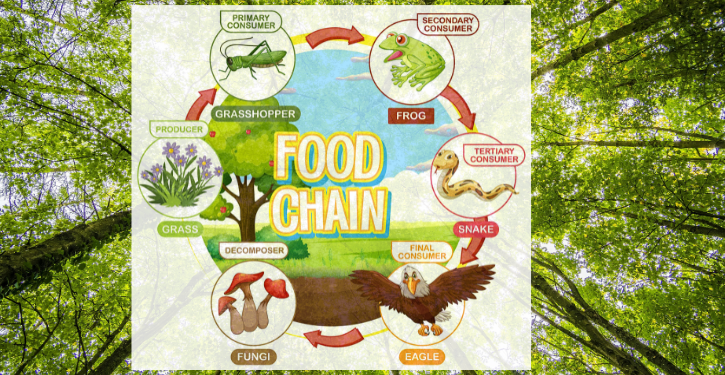
- Primary Producers: These are typically plants or algae that produce their own food through photosynthesis, forming the base of the food chain.
- Primary Consumers: Herbivores that feed on primary producers.
- Secondary Consumers: Carnivores that eat primary consumers.
- Tertiary Consumers: Apex predators at the top of the food chain that feed on secondary consumers.
- Decomposers: Organisms such as bacteria and fungi that break down dead organisms, returning nutrients to the soil.
Types of Food Chains
Food chains can be classified into different types based on the source of energy and the organisms involved. Here are the main types:
1. Grazing Food Chain
The grazing food chain begins with primary producers (plants) and involves herbivores (primary consumers) and predators (secondary and tertiary consumers).
| Level | Organism |
| Primary Producer | Grass |
| Primary Consumer | Grasshopper |
| Secondary Consumer | Frog |
| Tertiary Consumer | Snake |
2. Detritus Food Chain
The detritus food chain starts with decomposing organic matter, such as dead plants and animals, and involves detritivores and decomposers.
| Level | Organism |
| Detritus | Dead leaves |
| Detritivore | Earthworm |
| Decomposer | Bacteria |
3. Parasite Food Chain
In the parasite food chain, parasites live on or inside other organisms (hosts) and feed off them, often harming the host.
| Level | Organism |
| Detritus | Dead leaves |
| Detritivore | Earthworm |
| Decomposer | Bacteria |
Examples of Food Chains
Food chains are fundamental to understanding how energy and nutrients flow through ecosystems. They illustrate the sequential transfer of energy from one organism to another, starting with primary producers and moving through various trophic levels to apex predators. By examining different examples of food chains, we can gain insights into the intricate relationships and dependencies among species within various environments. These examples not only highlight the diversity of food chains in terrestrial, aquatic, and marine ecosystems but also underscore the crucial role each organism plays in maintaining ecological balance. From the grasslands to the oceans, exploring these food chains helps us appreciate the complexity of nature’s energy transfer systems and the interconnectedness of life on Earth.
| Type of Food Chain | Example | Description |
| Terrestrial Food Chain | Grass → Grasshopper → Frog → Snake → Eagle | A typical food chain in a forest ecosystem where grass serves as the primary producer. |
| Aquatic Food Chain | Phytoplankton → Zooplankton → Small Fish → Larger Fish → Shark | A common food chain in aquatic ecosystems, where phytoplankton are the primary producers. |
| Marine Food Chain | Phytoplankton → Krill → Small Fish → Seals → Killer Whale | An example from the ocean, highlighting the importance of plankton in marine ecosystems. |
| Desert Food Chain | Cactus → Insects → Lizards → Snakes → Hawks | A food chain in a desert ecosystem where cactus acts as the primary producer. |
| Forest Food Chain | Leaves → Caterpillar → Bird → Hawk | A typical food chain in a temperate forest where leaves provide energy to herbivores and then to predators. |
Importance of Food Chains
Food chains are vital for several reasons:
- Energy Transfer: They illustrate how energy moves through an ecosystem.
- Nutrient Cycling: They show how nutrients are recycled in nature.
- Population Control: They help in understanding predator-prey relationships and their effects on population dynamics.
- Biodiversity: They help maintain the balance of various species within an ecosystem.
Disruptions in Food Chains
Human activities and environmental changes can disrupt food chains, leading to ecological imbalances. Examples include:
- Overfishing: Reduces the number of top predators, affecting the entire food chain.
- Deforestation: Eliminates primary producers, which affects all other levels of the food chain.
- Pollution: Can poison organisms at various levels of the food chain, causing harmful effects up the chain.
- Climate Change: Alters habitats and food availability, impacting the stability of food chains.
Ecological Impact of Food Chains
The stability of an ecosystem depends on the health and balance of its food chains. Disruptions can lead to cascading effects throughout the ecosystem, impacting species diversity, ecosystem services, and overall ecological health.
Case Study: Coral Reef Ecosystem
In coral reef ecosystems, the food chain begins with phytoplankton, which are consumed by small fish, which are in turn eaten by larger predatory fish. If phytoplankton populations are reduced due to pollution or temperature changes, it affects all levels of the food chain, leading to declines in fish populations and altered reef dynamics.
Case Study: Arctic Food Chain
In the Arctic, the food chain starts with algae under the ice, which are eaten by zooplankton. These are consumed by small fish, which are then eaten by larger fish, seals, and polar bears. Melting ice and changing temperatures disrupt this chain, affecting the entire Arctic food web.
The concept of the food chain is fundamental to understanding ecological relationships and energy flow in nature. By studying different types of food chains and their examples, we gain insight into how ecosystems function and the impact of various factors on these systems. Monitoring and maintaining balanced food chains is crucial for preserving biodiversity and ensuring the health of ecosystems.
Understanding food chains also helps us make informed decisions about conservation and management practices to mitigate the effects of human activities and environmental changes on these delicate systems.
Food Chain FAQs
What is a food chain?
A food chain is a linear sequence of organisms through which energy and nutrients flow in an ecosystem. It starts with primary producers (like plants) and progresses through various consumers (herbivores, carnivores) up to apex predators.
Why are examples of food chains important?
Examples of food chains are important because they help us understand how energy and nutrients are transferred between organisms. They illustrate the roles different species play in maintaining ecological balance and highlight the interconnectedness of various life forms.
What are some common examples of terrestrial food chains?
Common examples of terrestrial food chains include:
Grass → Grasshopper → Frog → Snake → Hawk
Plant → Caterpillar → Bird → Fox
How do food chains differ in aquatic and marine ecosystems?
In aquatic ecosystems, food chains often start with phytoplankton or aquatic plants, followed by herbivorous zooplankton, then small fish, and larger predators. For example:
Phytoplankton → Zooplankton → Small Fish → Tuna → Shark
Marine food chains may include coral reefs, where coral → small fish → larger fish → sharks represent a typical chain.
What role do apex predators play in food chains?
Apex predators are at the top of the food chain and have no natural predators. They help regulate the populations of other species in the ecosystem, ensuring a balanced food chain. Their presence or absence can significantly impact the structure and health of the entire ecosystem.
Food Chain Related Topic
|
Food Chain Examples
|
Food Chain and Food Web
|
|---|---|
|
Food Chain Diagram
|
Food Chain Examples with Names
|
|
Food Chain Definition Biology
|
What is Food Chain Class 10
|
|
Food Chain For Kids
|
Types of Food Chain
|