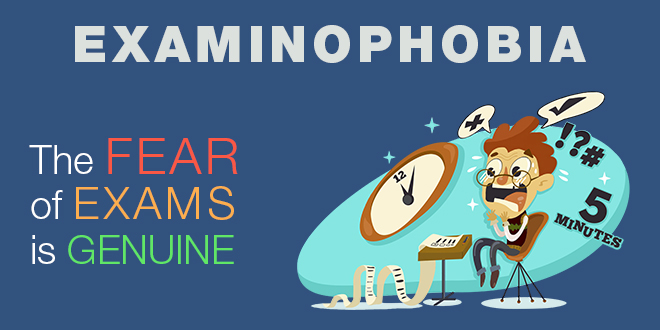

If you regularly become excessively nervous before or during an important exam, you may have examinophobia that is exam fever. This is a very common phenomenon among students especially when an important examination is approaching next to you. It is extremely terrible as it affects one psychologically, socially, emotionally and cognitively. In fact, Albert Einstein was also the one who suffered from exam fever when he appeared for an entrance exam.
Even, when I was a kid, I skipped my Maths paper by pretending to be unwell. But today, I regret this decision. I wish I hadn’t done that. I wished I had mustered up the courage to at least take the exam, irrespective of its end result. The only reason I did this was that I did not wanted to disappoint my parents.
As per survey, it is seen that around 66% of students admitted that their parents pressurize them for better academic performance. The pressure from non-graduate parents was more compared to parents those were graduates and post graduates. Although too much pressure is not a good thing and a little bit of persuasion can be a good thing as it motivates students to knuckle down and work hard. Exams can make our stress alarms go odd, which can stop students from performing their best. Hence, it is imperative to address it and get it back under control.
In most cases, exam stress is caused by the fear of failing an exam and it can also be caused by:
- Low motivation levels
- Lack of preparation and planning
- High expectations from others
- Competition from peers
Ways to Eliminate Exam Stress
Before an Exam
- If you can concentrate well in the morning then do most of your studying before lunch, not late at night if you can’t concentrate well. If you prefer studying at night then study at the later half of the day, but ensure that you go to bed at a reasonable hour and get enough sleep.
- Try answering questions from past exam papers or you can also try explaining tricky answers to someone else to make sure you have understood it well.
- Always ask for help if there are things that you don’t understand, especially if you are feeling stressed out.
- On the day of the exam, avoid talking to friends who get stressed.
- Write down everything you feel you need to do.
- Watch a movie, or TV show, or listen to music that makes you feel good.
- A shower can also help you relieve stress.
During An Exam
- Students who fear an exam should take deep breaths.
- While writing the exam, if a question causes you to freeze, then move on to an easier question and come back to the difficult one later.
After an Exam
Do not ask other people how they have done in the exam. You have done your best and you can’t go back and change your answers so the second you step out of the exam hall, forget everything else and just focus on your next exam.
FAQs
1. What is a Phobia of Exams?
Examination phobia or Examophobia is a mental disorder found in most students. When exams arrive, students become extremely worried and make plans about how to study, how to perform better, and get good grades.
2. How can I study without fear and remain positive?
Go through previous years’ question papers and take some break by listening to music or talking to friends. Get good sleep and also do some exercise daily to keep yourself fit. All these habits will help in instilling a positive study approach.
3, How long should I study a day?
Make sure to follow a daily routine where you study in one place a minimum of 4 -5 hours each day. But this can vary from student to student depending on their learning power.
4. Is studying late night harmful?
With fewer distractions and peace and quiet, studying at night can help improve a student’s concentration and focus. But once again this depends on person to person. Some students prefer studying during the day time while others prefer to study during the night when it’s all quite. If you are an evening or night studier, it’s important to make sure he or she is still getting enough sleep each night.
5. How many hours should a student sleep?
Students require a minimum of 8-10 hours of sleep per night. Getting this recommended amount of sleep can help the students to maintain their physical health, emotional well-being, and overall performance. Sleep is more than just a time for an individual’s body and mind to relax.
Conclusion
Always remember that scoring low marks or failing an exam is not the end of everything. So it is rightly said “Try Again, Fail Again. Fail better.”