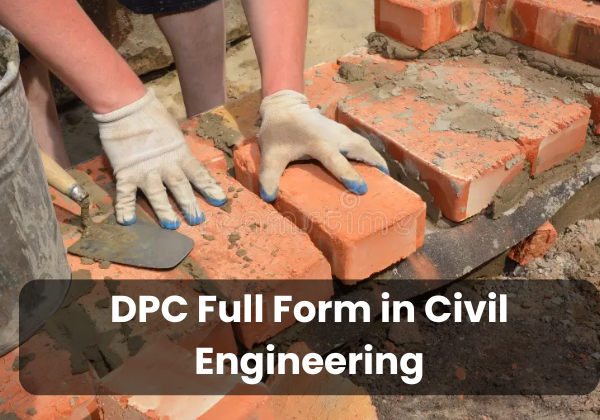

Full Form of DPC in Engineering: In the realm of construction and civil engineering, maintaining a building’s durability and preventing moisture-related damage are of utmost importance. One crucial component that plays a key role in this regard is DPC. The DPC full form in civil engineering is Damp Proof Course. It is an essential layer in building construction that prevents moisture from rising through walls and floors, thereby protecting the structure and enhancing its lifespan.
What is DPC in Civil Engineering?
DPC (Damp Proof Course) is a barrier typically installed at the plinth level of buildings to block the upward movement of water through capillary action from the ground. Without a DPC, buildings are prone to dampness, which can weaken structural integrity, damage interiors, and promote mold growth.
Purpose of Damp Proof Course (DPC)
The primary purpose of DPC is:
-
To prevent rising dampness from the soil.
-
To increase the lifespan of structural elements like walls and floors.
-
To avoid structural weakening due to long-term moisture exposure.
-
To protect interior surfaces from peeling paint, mold, and efflorescence.
Materials Used in DPC
Depending on the site conditions, budget, and building design, various materials can be used for DPC. These include:
| Type of Material | Details |
|---|---|
| Bituminous Felts | Flexible and widely used, placed between mortar beds |
| Mastic Asphalt | Durable and impervious, ideal for horizontal DPC |
| Cement Concrete | A cost-effective option for thick walls |
| Bricks Soaked in Bitumen | Traditional method, mostly in small-scale constructions |
| Metal Sheets (Lead, Copper) | Rarely used today due to high cost and installation difficulties |
| Plastic/Polythene Sheets | Lightweight, flexible, and economical, but less durable in the long term |
Where is DPC Applied in Buildings?
DPC is usually applied at various locations to effectively block dampness, including:
-
At the plinth level, just above ground level
-
Basement walls and floors
-
Window sills and door frames
-
Bathrooms and kitchens
-
Roof slabs to prevent water ingress
Types of Damp Proof Courses
There are two major types:
-
Horizontal DPC:
Applied in walls at plinth level to resist water from rising vertically. -
Vertical DPC:
Used when walls are built against soil-retaining walls or earth-filled sides.
How to Apply DPC: Key Guidelines
-
The surface should be clean, level, and free from dust or debris.
-
DPC should be continuous throughout the wall or floor level.
-
For cement concrete DPC, a mix of 1:1.5:3 (Cement: Sand: Aggregates) with waterproofing compound is commonly used.
-
DPC should be laid at least 150 mm above the ground level.
Importance of DPC in Construction
In 2025 and beyond, with the rise in advanced construction techniques and smart building materials, the role of DPC remains as relevant as ever. It ensures:
-
Longevity of construction
-
Reduced maintenance costs
-
Healthier indoor environment
-
Improved resale value of buildings
Common DPC Defects to Avoid
-
Incomplete or broken DPC layers
-
Poor quality materials
-
Inadequate thickness
-
Incorrect placement level
Regular inspection and proper installation are key to avoiding such issues.
Conclusion
Understanding the DPC full form in civil engineering—Damp Proof Course—is vital for anyone involved in construction or architecture. A properly installed DPC safeguards the building against water damage, ensures comfort, and preserves aesthetics. As climate conditions become more unpredictable, integrating effective damp-proofing solutions is a must in modern building practices.
DPC Full Form in Civil Engineering FAQs
Q1. What is the full form of DPC in civil engineering?
Answer: In civil engineering, DPC stands for Damp Proof Course. It is a protective barrier installed in buildings to prevent moisture from the ground from rising into walls and floors, thereby safeguarding the structure from dampness-related damage.
Q2. Why is DPC important in building construction?
Answer: DPC is important because it prevents rising dampness, which can lead to mold growth, plaster damage, peeling paint, and structural weakening. A properly installed DPC enhances the durability of a building and improves the health and comfort of its occupants.
Q3. What are the different types of DPC used in construction?
Answer: The two main types of DPC are:
-
Horizontal DPC: Installed at the plinth level to stop moisture from rising vertically.
-
Vertical DPC: Applied to walls that are adjacent to the soil to block lateral moisture penetration.
Common materials used include bitumen sheets, mastic asphalt, concrete with waterproofing compounds, polythene sheets, and metal sheets.
Q4. Where should DPC be placed in a building?
Answer: DPC is usually placed:
-
At the plinth level (150 mm above ground level)
-
In basements and foundation walls
-
Under window and door frames
-
In wet areas like bathrooms and kitchens
This placement ensures effective prevention of moisture ingress into structural and interior elements.