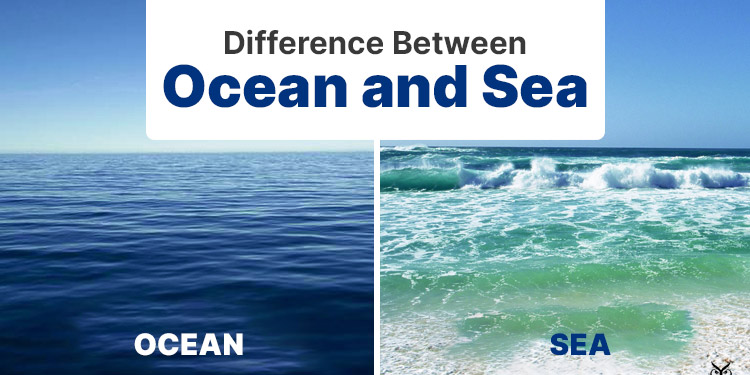

Understanding the distinctions between oceans and seas is fundamental for anyone with an interest in geography, marine biology, or environmental science. Both are large bodies of saltwater and crucial components of the Earth’s hydrosphere, but they differ significantly in various aspects such as size, depth, enclosure, and ecological roles. Oceans, the vast and deep expanses that cover about 71% of our planet’s surface, are the primary drivers of global climate and weather patterns. They are home to a diverse array of marine life, supporting ecosystems that range from the sunlit surface waters to the dark, mysterious depths of the ocean floor.
Seas, on the other hand, are smaller and are typically found where land meets the ocean, often partially enclosed by land masses. They play a vital role in regional climates and are usually characterized by more complex and diverse ecosystems due to their closer interaction with terrestrial environments. Seas can vary greatly in their physical characteristics, influenced by factors such as river inflows, ocean currents, and human activities.
This article will delve into the specific definitions of oceans and seas, highlighting their unique characteristics and the roles they play in the Earth’s environmental systems. A detailed comparison will help clarify these differences, providing a comprehensive understanding of these vital marine environments.
Definition of Ocean
Oceans are vast, continuous bodies of saltwater that cover about 71% of the Earth’s surface. They are incredibly deep, with the Mariana Trench being the deepest known point. There are five major oceans: the Pacific, Atlantic, Indian, Southern, and Arctic. Oceans play a critical role in regulating the Earth’s climate and are home to diverse marine life.
Definition of Sea
Seas are smaller than oceans and are usually located where the land and ocean meet. Typically, seas are partially enclosed by land and are connected to an ocean. Examples include the Mediterranean Sea, the Caribbean Sea, and the South China Sea. Seas are also saline but are generally shallower compared to oceans and often have more complex ecosystems due to their proximity to land.
Difference Between Ocean and Sea
The table below summarizes the primary differences between oceans and seas:
| Aspect | Ocean | Sea |
| Size | Vast, covering 71% of the Earth’s surface | Smaller, usually where land and ocean meet |
| Depth | Extremely deep, with the Mariana Trench being the deepest point | Shallower compared to oceans |
| Enclosure | Open and vast, not enclosed by land | Partially enclosed by land |
| Examples | Pacific Ocean, Atlantic Ocean, Indian Ocean, Southern Ocean, Arctic Ocean | Mediterranean Sea, Caribbean Sea, South China Sea |
| Biodiversity | Home to diverse marine life, less affected by human activities | Often have more complex ecosystems due to proximity to land |
| Role in Climate | Major influence on global climate patterns | Smaller impact, but still significant in regional climate |
| Salinity | Uniform salinity levels across vast areas | Can vary, especially near river mouths and enclosed regions |
Conclusion
While oceans and seas are both essential components of Earth’s hydrosphere, understanding their differences helps in comprehending their unique roles and characteristics. Oceans are vast, deep, and less enclosed by land, playing a significant part in global climate regulation and housing a wide variety of marine life. Seas, on the other hand, are smaller, shallower, and more enclosed, often resulting in more diverse and complex ecosystems due to their proximity to land. Both are crucial for sustaining life on Earth and have distinct features that make them fascinating subjects of study.
FAQs on the Difference Between Ocean and Sea
Q1. What is the primary difference between an ocean and a sea?
Answer: The primary difference lies in their size and depth. Oceans are vast, continuous bodies of saltwater that cover about 71% of the Earth’s surface, while seas are smaller and partially enclosed by land, often found where the land meets an ocean.
Q2. Are seas always shallower than oceans?
Answer: Generally, yes. Seas are typically shallower than oceans. While oceans have deep areas like the Mariana Trench, seas are usually more shallow, especially compared to the vast depths of oceans.
Q3. Can you give examples of oceans and seas?
Answer: Examples of oceans include the Pacific Ocean, Atlantic Ocean, Indian Ocean, Southern Ocean, and Arctic Ocean. Examples of seas include the Mediterranean Sea, Caribbean Sea, and South China Sea.
Q4. Do oceans and seas have different levels of salinity?
Answer: While both oceans and seas are saline, the salinity in seas can vary more significantly, especially near river mouths and enclosed regions. Oceans tend to have more uniform salinity levels over large areas.
Q5. How do oceans and seas impact the climate differently?
Answer: Oceans have a major influence on global climate patterns due to their vast size and capacity to store and distribute heat. Seas also impact the climate but on a more regional level, affecting the weather and climate of the surrounding land areas more directly.