
Chlorophyll is an essential molecule found in plants and other photosynthetic organisms. It plays a vital role in the process of photosynthesis, which sustains life on Earth. This article explores the function, importance, uses, and effects of chlorophyll in a simple, student-friendly manner.
What is Chlorophyll?
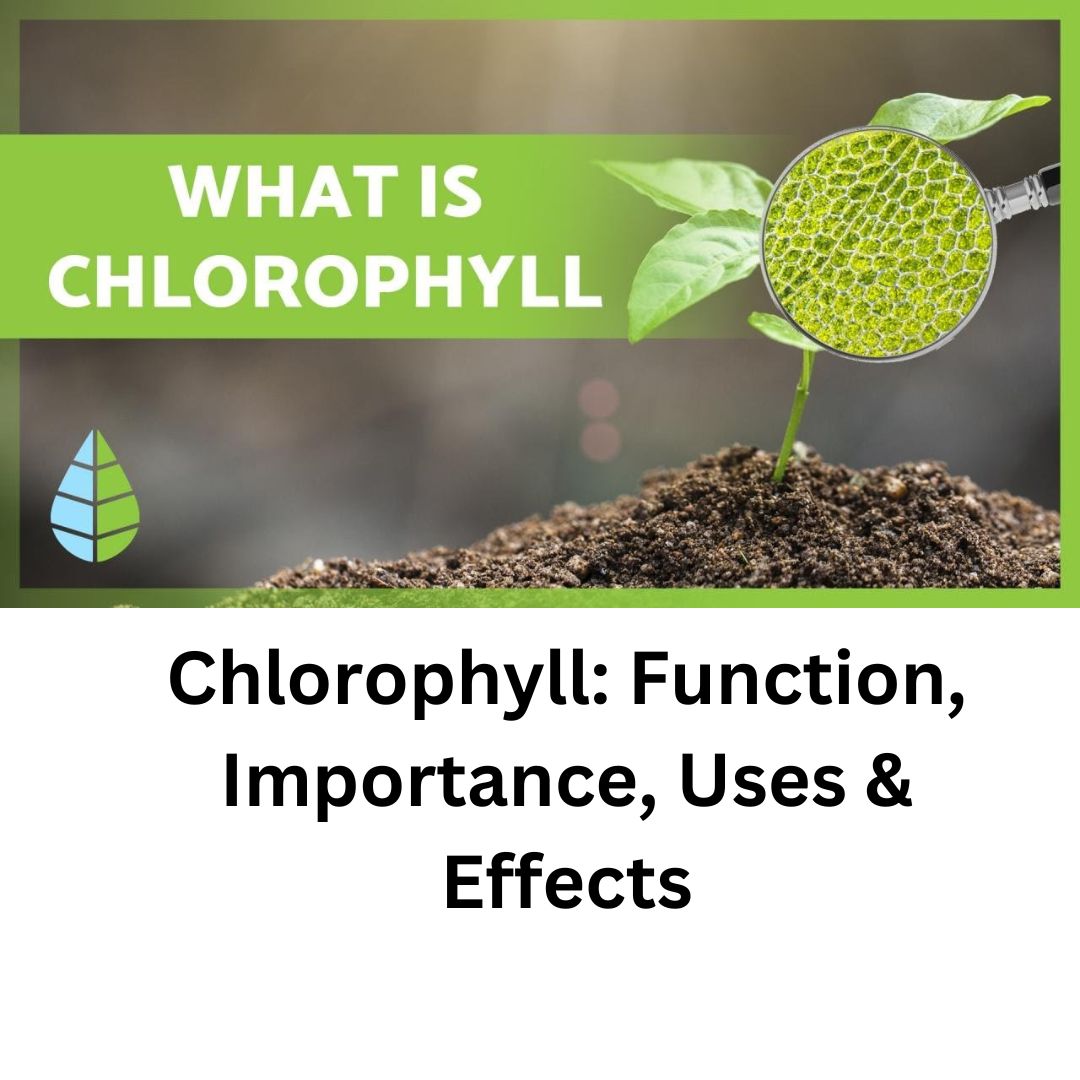
Chlorophyll is a green pigment found in the chloroplasts of plant cells. Its chemical formula is C₅₅H₇₂O₅N₄Mg. This pigment is responsible for the green color of plants and is crucial for photosynthesis, the process by which plants convert light energy into chemical energy.
Function of Chlorophyll
The primary function of chlorophyll is to absorb light, primarily sunlight, and convert it into chemical energy through photosynthesis. During this process, chlorophyll absorbs light energy and uses it to convert carbon dioxide (CO₂) and water (H₂O) into glucose (C₆H₁₂O₆) and oxygen (O₂). The chemical equation for photosynthesis is:
Importance of Chlorophyll
Chlorophyll is crucial for several reasons:
- Photosynthesis: It enables plants to produce glucose, which is used as a source of energy and as a building block for growth.
- Oxygen Production: Through photosynthesis, chlorophyll helps produce oxygen, which is essential for the survival of most living organisms.
- Food Chain: Chlorophyll-containing plants are the primary producers in the food chain, providing energy for herbivores and, subsequently, carnivores.
Uses of Chlorophyll
Chlorophyll has various uses, including:
- Health Supplements: Chlorophyll supplements are believed to have health benefits, such as detoxification, improving digestion, and promoting healthy skin.
- Food Coloring: Due to its natural green color, chlorophyll is used as a food coloring agent.
- Deodorizing: Chlorophyll has deodorizing properties and is used in products to reduce body odor.
Effects of Chlorophyll
Chlorophyll has several beneficial effects:
- Antioxidant Properties: Chlorophyll has antioxidant properties, which help protect cells from damage caused by free radicals.
- Wound Healing: It is believed to promote wound healing and reduce inflammation.
- Detoxification: Chlorophyll aids in detoxifying the body by binding to and removing harmful toxins.
Chlorophyll is an essential pigment with a pivotal role in photosynthesis, making it indispensable for life on Earth. Its importance extends beyond plant biology to human health and various practical applications. Understanding chlorophyll’s functions, importance, uses, and effects helps us appreciate its crucial role in sustaining life and maintaining health.
Chlorophyll FAQs
Q1. What is the primary function of chlorophyll in plants?
Ans. The primary function of chlorophyll is to absorb light energy and convert it into chemical energy through photosynthesis. This process enables plants to produce glucose and oxygen from carbon dioxide and water.
Q2. Why is chlorophyll important for life on Earth?
Ans. Chlorophyll is crucial for life on Earth because it drives photosynthesis, which produces glucose as an energy source for plants and oxygen for other living organisms. Additionally, plants form the base of the food chain, supporting all higher trophic levels.
Q3. What are some common uses of chlorophyll outside of its role in plants?
Ans. Common uses of chlorophyll include:
- Health supplements for detoxification, improved digestion, and healthy skin
- Natural food coloring due to its green pigment
- Deodorizing products to reduce body odor
Q4. What health benefits are associated with chlorophyll?
Ans. Health benefits of chlorophyll include:
- Antioxidant properties that protect cells from damage
- Promoting wound healing and reducing inflammation
- Detoxifying the body by binding to and removing harmful toxins
Q5. How does chlorophyll contribute to the food chain?
Ans. Chlorophyll-containing plants are the primary producers in the food chain. They convert sunlight into energy through photosynthesis, producing food that is consumed by herbivores. Herbivores are then eaten by carnivores, transferring energy up the food chain and supporting various forms of life.