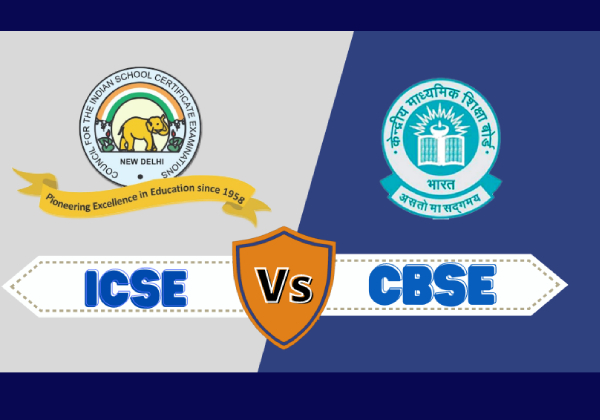

Choosing the right education board for your child is a crucial decision that can significantly impact their academic growth, skill development, and career opportunities. In India, the two most prominent education boards are the Central Board of Secondary Education (CBSE) and the Indian Certificate of Secondary Education (ICSE), managed by the Council for the Indian School Certificate Examinations (CISCE). Each board has its strengths and characteristics that cater to different educational needs and future goals. This guide will help you understand the key differences, advantages, and considerations when deciding between CBSE and ICSE.
Overview of CBSE and ICSE Boards
CBSE (Central Board of Secondary Education)
The CBSE board is one of the most widely recognized educational boards in India, known for its national presence and standardized curriculum. It is managed by the Union Government of India and has over 20,000 affiliated schools across the country. CBSE is popular among students aspiring for competitive exams like JEE (Joint Entrance Examination) and NEET (National Eligibility cum Entrance Test), as the curriculum aligns well with these exams.
Key Features of CBSE:
- Nationally standardized curriculum.
- Focus on Science and Mathematics.
- Extensive availability across India.
- Regular updates to syllabus and evaluation methods.
ICSE (Indian Certificate of Secondary Education)
ICSE is managed by the Council for the Indian School Certificate Examinations (CISCE), a private, non-governmental board. ICSE is known for its rigorous and comprehensive curriculum, which emphasizes a balanced approach to all subjects, including arts and humanities. It is recognized for its focus on detailed study, especially in languages and social sciences.
Key Features of ICSE:
- Detailed and diverse curriculum.
- Strong emphasis on language and literature.
- Equal weightage to all subjects.
- Recognized internationally for its academic rigor.
CBSE Board Vs ICSE Board Comparison
Here is a table that compares CBSE and ICSE:
| Feature | CBSE | ICSE |
|---|---|---|
| Founded | 1962 | 1958 |
| Location | All over India | All over India |
| Curriculum | Based on NCF | Based on English National Curriculum |
| Assessment | Written exams, practical exams, projects | Written exams, practical exams, projects |
| Exams | Twice a year | Once a year |
Curriculum Structure
CBSE Curriculum
The CBSE curriculum is designed to be student-friendly, with a focus on ensuring that the concepts are easy to understand. The board follows a sequential approach, where the syllabus is divided into units, and each unit is interlinked with the other. The curriculum is more streamlined and less intensive, which helps in reducing the stress levels of students.
Key Aspects:
- NCERT textbooks are the primary resource.
- Emphasis on core subjects like Mathematics, Science, and Social Studies.
- Simplified and standardized content.
- Regular updates to match contemporary needs.
ICSE Curriculum
The ICSE curriculum is known for its extensive and well-rounded content. It covers a wide range of subjects and is designed to encourage students to explore various fields of study. The board emphasizes detailed learning and requires students to engage in projects, lab work, and presentations, which enhances their analytical and practical skills.
Key Aspects:
- Detailed study material with multiple reference books.
- Broad range of subjects including arts, science, commerce, and humanities.
- Emphasis on English language proficiency.
- Regular assessment through projects and practical work.
Focus on Subjects and Syllabus
CBSE Subjects and Syllabus
CBSE offers a streamlined syllabus with a focus on Science, Mathematics, and Social Studies. The board’s content is designed to prepare students for national-level competitive exams. CBSE textbooks are usually concise, with a focus on concept clarity and application. The syllabus is more objective in nature, with less emphasis on subjective interpretation.
Key Subjects:
- Mathematics
- Science (Physics, Chemistry, Biology)
- Social Studies (History, Geography, Civics)
- English
- Optional subjects like Computer Science, Physical Education
ICSE Subjects and Syllabus
ICSE provides a broad spectrum of subjects, giving equal importance to all streams including languages, humanities, and arts. The syllabus is more comprehensive, requiring in-depth study and critical thinking. ICSE students often engage with a variety of reference books, which helps in developing a strong foundation in multiple subjects.
Key Subjects:
- English (compulsory)
- Second language (regional or foreign language)
- History, Civics, and Geography
- Mathematics
- Science (Physics, Chemistry, Biology)
- Environmental Science, Computer Science, Art, and Commercial Studies
Teaching Methodologies
CBSE Teaching Methodology
CBSE teaching methodologies are often geared towards concept clarity and standardized testing. The board encourages teachers to adopt teaching techniques that simplify complex concepts, making it easier for students to grasp the content. The focus is more on theoretical knowledge, with a structured approach to learning.
Teaching Methods:
- Lecture-based teaching.
- Use of NCERT textbooks as primary resources.
- Regular tests and standardized assessments.
- Focus on preparing students for competitive exams.
ICSE Teaching Methodology
ICSE adopts a more diverse and interactive approach to teaching. The board encourages experiential learning, where students are involved in projects, presentations, and group activities. The emphasis is on understanding and applying knowledge rather than rote learning. ICSE schools often integrate creative teaching methods to ensure a holistic learning experience.
Teaching Methods:
- Interactive and project-based learning.
- Use of multiple reference books and resources.
- Emphasis on language proficiency and writing skills.
- Encouragement of extracurricular and co-curricular activities.
Assessment and Evaluation
CBSE Assessment and Evaluation
CBSE follows a continuous and comprehensive evaluation (CCE) system that includes formative and summative assessments. The board conducts periodic tests, half-yearly exams, and annual exams to assess student progress. The evaluation system is designed to reduce exam pressure and encourage consistent learning throughout the academic year.
Assessment Pattern:
- Formative Assessments (FA) – Regular tests, quizzes, and assignments.
- Summative Assessments (SA) – Mid-term and final exams.
- Emphasis on both academic performance and co-curricular activities.
- Grading system that reduces stress on final exam performance.
ICSE Assessment and Evaluation
ICSE’s assessment is known for its rigor and comprehensiveness. The board conducts a single board exam at the end of Class 10, which carries significant weightage in the final score. ICSE evaluations are based on written exams, projects, lab work, and internal assessments. The board places a strong emphasis on English language proficiency, which is reflected in its detailed evaluation of language skills.
Assessment Pattern:
- Comprehensive internal assessments (projects, assignments).
- Lab work and practical exams for science subjects.
- Written exams with a mix of objective and subjective questions.
- Detailed evaluation of language and literary skills.
Global Recognition and Opportunities
CBSE Global Recognition
CBSE is widely recognized by universities and educational institutions across India and abroad. The board’s standardized curriculum and emphasis on Science and Mathematics make it easier for students to transition into higher education, especially in technical and medical fields. CBSE qualifications are also accepted by several international universities, particularly in countries like the USA, UK, and Australia.
Key Points:
- Easier transition to Indian universities and colleges.
- Well-aligned with competitive exams like JEE, NEET.
- Recognized by international universities.
ICSE Global Recognition
ICSE is known for its academic rigor and is highly regarded by universities worldwide. The board’s comprehensive curriculum and strong emphasis on English proficiency make ICSE students attractive candidates for higher education institutions abroad. ICSE qualifications are particularly recognized in countries like the UK, Canada, and Singapore, where the education system values detailed and diverse learning.
Key Points:
- Strong global recognition, especially in the UK and Commonwealth countries.
- High acceptance rate in international universities.
- Equips students with a strong foundation in multiple disciplines.
Extracurricular Activities
CBSE Extracurricular Activities
CBSE schools encourage participation in extracurricular activities, but the primary focus remains on academics. The board supports various co-curricular activities like sports, arts, and cultural programs, but these are often secondary to academic achievements. However, CBSE does emphasize the importance of a balanced education, encouraging students to participate in activities that contribute to their overall development.
Common Activities:
- Sports and physical education.
- Art and craft.
- Science exhibitions and fairs.
- Debate and public speaking competitions.
ICSE Extracurricular Activities
ICSE places a strong emphasis on extracurricular activities, considering them an integral part of the curriculum. The board encourages students to engage in a wide range of activities that foster creativity, leadership, and social skills. ICSE schools often have well-developed programs for sports, arts, music, drama, and other co-curricular activities, ensuring a well-rounded education.
Common Activities:
- Drama and theatre.
- Art, music, and dance.
- Literary and cultural fests.
- Sports, including athletics and team games.
- Community service and social projects.
Cost and Accessibility
CBSE Cost and Accessibility
CBSE schools are generally more affordable and widely accessible across India. Being a government-affiliated board, CBSE schools are present in nearly every state and city, making it a viable option for a large segment of the population. The fee structure is typically lower in comparison to ICSE schools, especially in government and Kendriya Vidyalayas (Central Schools), which are known for offering quality education at a nominal cost.
Key Considerations:
- Extensive reach with numerous schools across urban and rural areas.
- Affordable fee structure, especially in government schools.
- Accessibility to study materials and resources like NCERT books.
ICSE Cost and Accessibility
ICSE schools are often more expensive due to the board’s private management and the extensive resources required to deliver its comprehensive curriculum. These schools are primarily found in urban areas and metropolitan cities, making them less accessible to students in rural regions. The fee structure of ICSE schools can be significantly higher, reflecting the board’s focus on quality infrastructure, teacher training, and extracurricular programs.
Key Considerations:
- Limited presence in rural areas, with a concentration in urban regions.
- Higher fees, reflecting the cost of maintaining a comprehensive and diverse curriculum.
- Access to a wide range of resources, including multiple reference books and specialized materials.
Language Preferences
CBSE Language Preferences
CBSE offers flexibility in language choices but primarily focuses on Hindi and English as the medium of instruction. The board mandates the study of Hindi as a compulsory subject until a certain grade level, with English often being the primary language of instruction, especially in urban schools. CBSE also allows for regional languages to be studied as a second or third language, making it suitable for students across different linguistic backgrounds.
Key Aspects:
- English and Hindi as primary languages.
- Flexibility to choose regional languages as part of the curriculum.
- Emphasis on national language (Hindi) in the early stages of education.
ICSE Language Preferences
ICSE is known for its strong emphasis on English language proficiency, with English being a compulsory subject and the primary medium of instruction. The board offers a wide range of language options, including regional and foreign languages, allowing students to choose languages that best suit their interests and future goals. ICSE’s focus on English and literature helps students develop strong communication skills, which are highly valued in higher education and professional settings.
Key Aspects:
- English as the primary medium of instruction.
- Strong emphasis on English literature and language skills.
- Wide range of language options, including foreign languages like French, German, and Spanish.
Future Prospects and Career Opportunities
CBSE Future Prospects and Career Opportunities
CBSE’s streamlined and focused curriculum is well-suited for students who wish to pursue careers in engineering, medicine, and other technical fields. The board’s alignment with national competitive exams like JEE and NEET provides students with a strong foundation for these exams. Additionally, CBSE’s wide recognition across Indian universities makes it easier for students to transition into higher education institutions within the country.
Key Career Paths:
- Engineering and technology (JEE preparation).
- Medicine and healthcare (NEET preparation).
- Government jobs (aligned with national-level exams like UPSC).
ICSE Future Prospects and Career Opportunities
ICSE’s comprehensive and balanced curriculum prepares students for a wide range of career opportunities, both in India and abroad. The board’s emphasis on language, arts, and sciences equips students with the skills necessary for diverse fields such as humanities, social sciences, law, and international relations. ICSE’s strong global recognition also opens doors to prestigious universities around the world, particularly in countries where English language proficiency and diverse academic skills are highly valued.
Key Career Paths:
- Humanities, social sciences, and law.
- Arts and literature.
- International relations and global studies.
- High acceptance in global universities.
Parental Involvement and Support
CBSE Parental Involvement and Support
CBSE encourages parental involvement, particularly in the early stages of education, to ensure that students are well-supported at home. The board’s use of a standardized curriculum and NCERT textbooks allows parents to easily access and understand the educational content, enabling them to assist their children with studies. The board’s focus on reducing exam stress through continuous assessment also promotes a more collaborative approach between teachers, students, and parents.
Parental Involvement:
- Easier access to study materials and resources.
- Regular parent-teacher meetings to discuss student progress.
- Emphasis on a stress-free learning environment.
ICSE Parental Involvement and Support
ICSE requires a higher level of parental involvement due to its detailed and demanding curriculum. Parents are often expected to assist with projects, assignments, and language development. The use of multiple reference books and the board’s emphasis on extracurricular activities also require parents to be more engaged in their child’s education. However, this involvement can lead to a deeper understanding of the child’s academic strengths and weaknesses, fostering a supportive home environment.
Parental Involvement:
- Active participation in project work and assignments.
- Regular communication with teachers to monitor progress.
- Involvement in extracurricular activities and language development.
Conclusion: Which Board is Right for Your Child?
Deciding between CBSE and ICSE ultimately depends on your child’s learning style, academic goals, and future aspirations. Both boards offer unique advantages, and the choice should align with what best suits your child’s needs.
Choose CBSE If:
- Your child is inclined towards Science, Technology, Engineering, and Mathematics (STEM) fields.
- You prefer a standardized curriculum that prepares students for national-level competitive exams.
- Accessibility and affordability are key considerations.
- You want a curriculum that is relatively less intensive and allows for a balanced approach to academics.
Choose ICSE If:
- Your child has a strong interest in languages, arts, and humanities.
- You value a comprehensive and diverse curriculum that encourages in-depth learning and critical thinking.
- Global recognition and opportunities for studying abroad are important.
- You are comfortable with a more detailed and demanding educational approach that requires active parental involvement.
In conclusion, both CBSE and ICSE have their unique strengths and are designed to cater to different educational needs. Understanding your child’s interests and future goals will help you make an informed decision that provides the best possible foundation for their academic and career success.
FAQs
1. Which board is more difficult, CBSE or ICSE?
- ICSE is generally considered more challenging due to its comprehensive and detailed curriculum. The board emphasizes in-depth learning and requires students to engage with a wide range of subjects and reference materials. CBSE, on the other hand, focuses more on concept clarity and is aligned with national competitive exams, making it less intensive in comparison.
2. Is ICSE better than CBSE for studying abroad?
- ICSE is often preferred by students planning to study abroad, particularly in English-speaking countries. The board’s strong emphasis on English language proficiency and its comprehensive curriculum make ICSE students well-prepared for international universities. However, CBSE is also recognized globally and provides a solid foundation for students pursuing higher education abroad.
3. What is the main difference between the CBSE and ICSE syllabus?
- The main difference lies in the depth and breadth of the syllabus. CBSE has a more streamlined and focused syllabus, especially in Science and Mathematics, while ICSE offers a more detailed and diverse syllabus that includes a strong emphasis on languages, humanities, and arts. ICSE students often use multiple reference books, whereas CBSE relies primarily on NCERT textbooks.
4. Which board is better for competitive exams like JEE and NEET?
- CBSE is generally considered better for preparing students for competitive exams like JEE and NEET. The board’s curriculum is closely aligned with the syllabus of these exams, making it easier for students to prepare. CBSE’s focus on concept clarity and standardized testing methods are designed to help students excel in national-level competitive exams.
5. Can students switch from ICSE to CBSE and vice versa?
- Yes, students can switch from ICSE to CBSE and vice versa, although the transition may require some adjustment. Switching from ICSE to CBSE may be easier due to the streamlined curriculum of CBSE, while switching from CBSE to ICSE might be more challenging due to ICSE’s broader and more detailed syllabus. It’s important to consider the timing of the switch and the student’s adaptability to the new curriculum.
6. How do extracurricular activities differ between CBSE and ICSE?
- CBSE encourages extracurricular activities but places a stronger emphasis on academics. ICSE, on the other hand, integrates extracurricular activities more deeply into the curriculum, considering them an essential part of a well-rounded education. ICSE schools often offer a wider range of activities, including arts, drama, and music, in addition to sports.
7. Which board is more recognized internationally, CBSE or ICSE?
- Both CBSE and ICSE are recognized internationally, but ICSE is often more highly regarded due to its academic rigor and strong emphasis on English proficiency. ICSE qualifications are particularly recognized in countries like the UK, Canada, and Singapore, while CBSE is also accepted by many universities worldwide, particularly in countries with a large Indian diaspora.
8. Is ICSE more expensive than CBSE?
- Generally, ICSE schools tend to be more expensive than CBSE schools. The higher fees reflect the comprehensive and diverse curriculum, the use of multiple reference materials, and the emphasis on extracurricular activities. CBSE schools, particularly government-affiliated ones, are more affordable and widely accessible.
9. How do the teaching methodologies differ between CBSE and ICSE?
- CBSE teaching methodologies are more traditional, with a focus on lecture-based teaching and standardized testing. The board encourages concept clarity and prepares students for competitive exams. ICSE, however, adopts a more interactive and experiential approach, with a focus on project-based learning, critical thinking, and practical application of knowledge.
10. Which board should I choose if I want my child to have a well-rounded education?
- If you are looking for a well-rounded education that includes strong academics along with a balanced emphasis on languages, arts, sciences, and extracurricular activities, ICSE would be a good choice. The board’s comprehensive curriculum encourages holistic development and prepares students for a variety of career paths. However, CBSE also offers a balanced education with a slightly stronger focus on academics, particularly in STEM fields.
By understanding the differences between CBSE and ICSE, parents can make an informed decision that aligns with their child’s strengths, interests, and future aspirations. Both boards offer quality education, and the choice ultimately depends on what best suits the child’s individual needs and goals.