
Definition of Cardiovascular System
The cardiovascular system, often known as the circulatory system, is like the body’s delivery network. It’s responsible for moving blood around the body to supply organs and tissues with the nutrients and oxygen they need to function properly. The cardiovascular system is essential for keeping our bodies functioning smoothly. By delivering oxygen and nutrients, removing waste, regulating temperature, and protecting against infections, it plays a crucial role in maintaining overall health. This article gives details on the cardiovascular system including its types, parts, functions, organs, working and common disorders associated with it.
What is Cardiovascular System?
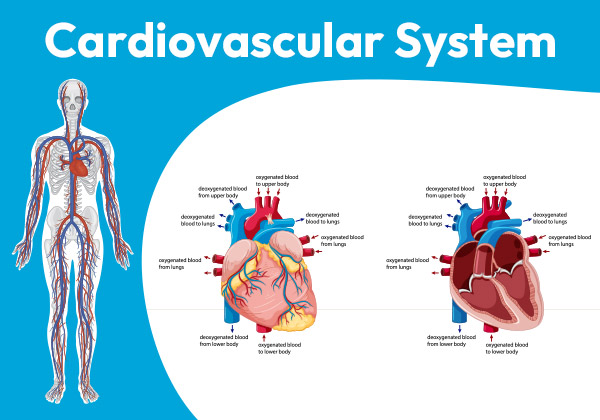
The cardiovascular system, also known as the circulatory system, is like a big delivery network for your body. It’s made up of the heart, blood vessels, and blood.
- The heart is a pump that moves blood through a series of tubes called blood vessels. These blood vessels are like roads that carry the blood to every part of your body.
- Blood travels through arteries, which carry oxygen-rich blood from the heart to the body. It then comes back through veins, which bring oxygen-poor blood back to the heart. Tiny blood vessels called capillaries connect arteries and veins and help exchange oxygen, nutrients, and waste between blood and cells.
In simple terms, the cardiovascular system keeps your body supplied with the things it needs and takes away the things it doesn’t need.
Types of Cardiovascular System in Humans
In humans, there are two main types of cardiovascular systems that work together:
Pulmonary Circulation
Imagine your heart is like a central hub that controls two main routes for your blood. The first route is called pulmonary circulation, and it’s like a short journey between the heart and the lungs.
Here’s how it works:
- Starting Point: The right side of your heart is where this journey begins. This side handles the blood that doesn’t have much oxygen and carries waste products like carbon dioxide.
- Journey to the Lungs: The right side of your heart pumps this oxygen-poor blood through blood vessels to the lungs.
- In the Lungs: When the blood reaches the lungs, it’s like a pit stop. Here, the blood picks up fresh oxygen from the air you breathe in and gets rid of carbon dioxide (a waste product).
- Returning to the Heart: After picking up oxygen, the blood travels back to the left side of your heart. This is now oxygen-rich and ready to be sent out to the rest of your body.
Systemic Circulation
The second route is called systemic circulation, and it’s a longer journey that involves the entire body.
Here’s how it works:
- Starting Point: The left side of your heart handles the oxygen-rich blood coming from the lungs.
- Journey to the Body: The left side pumps this oxygen-rich blood through a series of arteries to all the organs and tissues in your body. This blood carries essential nutrients and oxygen that your cells need to function.
- Delivering and Collecting: As the blood travels through the arteries, it delivers oxygen and nutrients to every part of your body. At the same time, it picks up waste products and carbon dioxide from the cells.
- Returning to the Heart: After the blood has delivered its oxygen and collected waste products, it travels back to the right side of your heart through veins. This is where the journey starts again with pulmonary circulation.
Components of Cardiovascular System
The cardiovascular system is made up of four main components:
| Components | Explanation |
| Heart | The heart is like a powerful pump made of muscle. It has four chambers: two on the top called atria and two on the bottom called ventricles. The heart’s main job is to push blood around the body. It sends oxygen-poor blood to the lungs to get oxygen and then pumps oxygen-rich blood out to the rest of the body. Think of it as the central control station that keeps blood moving through the entire system. |
| Arteries | Arteries are large blood vessels that carry oxygen-rich blood away from the heart to all the different parts of your body. They have thick and strong walls because they need to handle the high pressure of blood being pumped from the heart. Imagine them as highways that carry fresh, oxygen-filled blood to every cell and tissue. |
| Viens | Veins are blood vessels that bring oxygen-poor blood back to the heart. Unlike arteries, veins have thinner walls and often have valves inside them. These valves are like one-way gates that keep blood from flowing backward. Veins can be thought of as return roads that carry used blood back to the heart after it has delivered oxygen and nutrients. |
| Capillaries | Capillaries are the tiniest blood vessels in your body. They form a network that connects arteries to veins. They are so small and thin that they allow the exchange of oxygen, nutrients, and waste products between the blood and the cells. Think of capillaries as the delivery and pickup trucks of the cardiovascular system, making sure that every cell gets what it needs and that waste products are carried away. |
List of Nervous System Organs
Here’s a list of the main organs in the nervous system:
- Brain:The brain is like the boss of your body. It controls everything you think, feel, and do. It’s where your thoughts and emotions come from and where coordination happens. For example, when you decide to move your hand, the brain sends signals to make it happen. The brain also helps you understand what you see, hear, smell, taste, and feel.
- Spinal Cord: The spinal cord is like a big, important cable that runs down your back. It connects your brain to the rest of your body. Think of it as a major highway for nerves. It helps carry messages between your brain and other parts of your body.
- Nerves: Nerves are like thin, string-like wires that run all over your body. They carry messages to and from your brain and spinal cord. For example, when you touch something, nerves in your skin send a message to your brain, telling you what you’re touching and how it feels. Nerves also carry commands from your brain to muscles to make them move.
- Sensory Organs: Sensory organs are special parts of your body that help you gather information from the world around you. These include your eyes, ears, nose, tongue, and skin. Each one has a specific job: your eyes let you see, your ears let you hear, your nose helps you smell, your tongue lets you taste, and your skin lets you feel touch and temperature. They send this information to your brain so you can understand and react to your environment.
These organs work together to help you think, move, and react to the world around you.
How Does Cardiovascular System Work?
Here’s a simple breakdown of how the cardiovascular system works:
- Heart Pumps Blood: The heart acts like a pump. It squeezes and pushes blood out into the blood vessels.
- Blood Travels Through Arteries: Blood leaves the heart through arteries. These are big, strong tubes that carry oxygen-rich blood to all parts of the body.
- Blood Reaches Tissues: As blood flows through smaller arteries and tiny capillaries, it delivers oxygen and nutrients to the cells and picks up waste products.
- Blood Returns Through Veins: After the blood has given away its oxygen and collected waste, it travels back to the heart through veins. These are the tubes that carry blood back to the heart.
- Heart Sends Blood to Lungs: The heart then sends this oxygen-poor blood to the lungs. In the lungs, the blood gets rid of carbon dioxide and picks up fresh oxygen.
- Oxygen-Rich Blood Returns: Finally, the newly oxygen-rich blood returns to the heart, ready to be pumped out again to the rest of the body.
This cycle repeats continuously to keep oxygen and nutrients flowing to where they’re needed and to remove waste from the body.
Different Cardiovascular System Parts
The cardiovascular system is made up of the following parts working together to keep blood flowing, deliver essential supplies to the body, and remove waste.
| Parts | Functions |
| Heart | Pumps blood through the body and lungs. It has four chambers: two atria and two ventricles. |
| Arteries | Carry oxygen-rich blood from the heart to the organs and tissues. |
| Veins | Return oxygen-poor blood back to the heart. |
| Capillaries | Tiny blood vessels where oxygen, nutrients, and waste products are exchanged with cells. |
| Blood | Transports oxygen, nutrients, hormones, and waste products throughout the body. |
Types of Circulation in Cardiovascular System
In addition to pulmonary and systemic circulation, there are a few more specific types of circulation in the cardiovascular system:
Coronary Circulation
Coronary circulation is the flow of blood specifically to and from the tissues of the heart. The heart needs its own dedicated blood supply to stay healthy and continue pumping blood to the rest of the body.
How Does It Work?
- Coronary Arteries: These are the blood vessels that supply oxygen-rich blood to the heart muscle. They wrap around the heart, delivering the oxygen and nutrients needed for the heart to function.
- Coronary Veins: After the heart muscle has used the oxygen and nutrients, the blood is collected by veins and carried away from the heart.
Without coronary circulation, the heart would not receive the oxygen and nutrients it needs, which could lead to heart problems or failure.
Cerebral Circulation
Cerebral circulation involves the flow of blood to and from the brain. The brain is very demanding in terms of oxygen and nutrients, so this circulation is crucial for brain health and function.
How Does It Work?
- Arteries: Several important arteries supply fresh, oxygen-rich blood to different parts of the brain.
- Veins: These carry the used blood, which now has less oxygen and more waste products, away from the brain.
Cerebral circulation ensures that the brain receives a continuous supply of oxygen and nutrients, which is vital for maintaining cognitive functions and overall brain health.
Renal Circulation
Renal circulation refers to the blood flow to and from the kidneys. The kidneys play a key role in filtering the blood and removing waste products.
How Does It Work?
- Renal Arteries: These arteries carry blood to the kidneys. Inside the kidneys, the blood is filtered to remove waste and excess fluids.
- Renal Veins: After filtration, the cleaned blood returns to the heart through the renal veins.
Renal circulation is essential for maintaining the body’s fluid balance and removing waste products from the bloodstream. Without it, the blood would become contaminated with waste, leading to health issues.
Common Cardiovascular System Disorders
Here are some common problems that can affect the cardiovascular system:
High Blood Pressure (Hypertension): When blood pressure is consistently too high, it can lead to serious issues like heart disease and stroke.
Heart Disease: Includes conditions that affect the heart’s ability to function properly, such as coronary artery disease, where the heart’s arteries become blocked or narrowed.
Stroke: Happens when blood flow to the brain is interrupted, either by a blockage or a burst blood vessel, leading to brain damage.
Heart Attack (Myocardial Infarction): Occurs when the blood flow to part of the heart is blocked for long enough that part of the heart muscle is damaged or dies.
Arrhythmias: Irregular heartbeats that can be too fast, too slow, or erratic. Common types include atrial fibrillation and ventricular tachycardia.
Heart Failure: When the heart can’t pump blood effectively, leading to symptoms like shortness of breath and swelling in the legs.
How To Prevent Cardiovascular System Disorders?
Here are some simple steps to help prevent problems with your cardiovascular system:
- Eat a Healthy Diet: Focus on fruits, vegetables, whole grains, and lean proteins. Limit salt, sugar, and unhealthy fats.
- Stay Active: Regular exercise, like walking, jogging, or swimming, helps keep your heart and blood vessels in good shape.
- Maintain a Healthy Weight: Being overweight can increase your risk of cardiovascular problems. Try to stay at a healthy weight for your body.
- Don’t Smoke: Smoking damages your heart and blood vessels, raising your risk of heart disease and other issues.
- Limit Alcohol: Drinking too much alcohol can lead to high blood pressure and other heart problems. Keep your intake within recommended limits.
- Manage Stress: Find healthy ways to cope with stress, such as relaxation techniques or hobbies. Chronic stress can affect your heart health.
- Get Regular Check-ups: Visit your doctor for routine health checks to catch any potential issues early and manage them effectively.
Cardiovascular System FAQs
Q1. What is the cardiovascular system?
Answer: The cardiovascular system, also known as the circulatory system, is a network that includes the heart, blood vessels, and blood. Its main job is to transport oxygen, nutrients, and waste products throughout the body.
Q2. What are the main parts of the cardiovascular system?
Answer: The main parts are the heart, arteries, veins, capillaries, and blood. The heart pumps blood, arteries carry it away from the heart, veins bring it back, and capillaries allow exchanges between blood and tissues.
Q3. How does the heart pump blood?
Answer: The heart pumps blood by contracting and relaxing. It pushes oxygen-rich blood out through the arteries and draws oxygen-poor blood back through the veins.
Q4. What are some common symptoms of cardiovascular problems?
Answer: Common symptoms include chest pain, shortness of breath, dizziness, palpitations, and swelling in the legs. If you experience any of these symptoms, consult a healthcare professional.
Q5. How does stress affect the cardiovascular system?
Answer: Chronic stress can raise blood pressure and contribute to heart disease. Finding ways to manage stress is important for maintaining heart health.