
What is BSL?
Basic Life Support (BLS) is a level of medical care provided to patients experiencing life-threatening emergencies, such as cardiac arrest, respiratory distress, or airway obstruction. It is a crucial intervention aimed at maintaining circulation and breathing until advanced medical help arrives. This article delves into the details of BLS, its components, procedures, importance, and frequently asked questions to provide a comprehensive understanding of this life-saving practice.
Understanding Basic Life Support (BLS)
Basic Life Support (BLS) refers to the basic techniques and procedures used to assist someone in a medical emergency to sustain life. These techniques are designed to support the airway, breathing, and circulation of a patient in distress until professional medical care can be provided.
Components of BLS
BLS primarily consists of the following components:
- Chest Compressions
- Airway Management
- Breathing Support
- Use of an Automated External Defibrillator (AED)
Importance of BLS
BLS is critical in emergency situations because it can:
- Restore Circulation: Effective chest compressions can help maintain blood flow to vital organs.
- Provide Oxygen: Rescue breaths can supply oxygen to the lungs, supporting oxygenation of the blood.
- Increase Survival Rates: Early intervention with BLS can significantly improve the chances of survival and recovery.
BLS Procedures
Initial Assessment
Before administering BLS, an initial assessment should be conducted:
- Scene Safety: Ensure the area is safe for both the rescuer and the victim.
- Check Responsiveness: Gently shake the victim and ask if they are okay.
- Activate Emergency Response System: Call for emergency medical services (EMS) if the victim is unresponsive.
Chest Compressions
Chest compressions are the cornerstone of BLS. They are performed as follows:
- Positioning: Place the heel of one hand on the center of the victim’s chest, and the other hand on top.
- Compression Depth and Rate: Compress the chest at least 2 inches deep at a rate of 100-120 compressions per minute.
- Allow Full Recoil: Ensure the chest fully recoils between compressions to allow the heart to refill with blood.
Airway Management
Maintaining an open airway is crucial. Techniques include:
- Head-Tilt, Chin-Lift Maneuver: Tilt the victim’s head back and lift the chin to open the airway.
- Jaw-Thrust Maneuver: Used when a neck injury is suspected. Lift the jaw without tilting the head.
Breathing Support
Providing rescue breaths can help oxygenate the blood. Steps include:
- Mouth-to-Mouth Resuscitation: Pinch the victim’s nose, seal your mouth over theirs, and give two breaths, each lasting about one second.
- Mouth-to-Mask Ventilation: Use a resuscitation mask to provide breaths, ensuring a good seal over the victim’s mouth and nose.
Use of an Automated External Defibrillator (AED)
An AED can restore a normal heart rhythm in cases of cardiac arrest caused by ventricular fibrillation or pulseless ventricular tachycardia. Steps to use an AED include:
- Turn on the AED: Follow the voice prompts.
- Attach Pads: Place the AED pads on the victim’s bare chest as indicated.
- Analyze Rhythm: Allow the AED to analyze the heart rhythm.
- Deliver Shock: If advised, ensure no one is touching the victim and press the shock button.
BLS in Different Populations
Adult BLS
For adults, the primary focus is on delivering high-quality chest compressions and early defibrillation. The ratio of compressions to breaths is typically 30:2.
Pediatric BLS
For children and infants, BLS modifications include:
- Compression Depth: About one-third the depth of the chest (approximately 1.5 inches for infants and 2 inches for children).
- Compression Rate: Similar to adults, at 100-120 compressions per minute.
- Breath to Compression Ratio: In cases with a single rescuer, use a ratio of 30:2. With two rescuers, use a ratio of 15:2.
BLS for Healthcare Providers
Healthcare providers receive advanced BLS training, which includes:
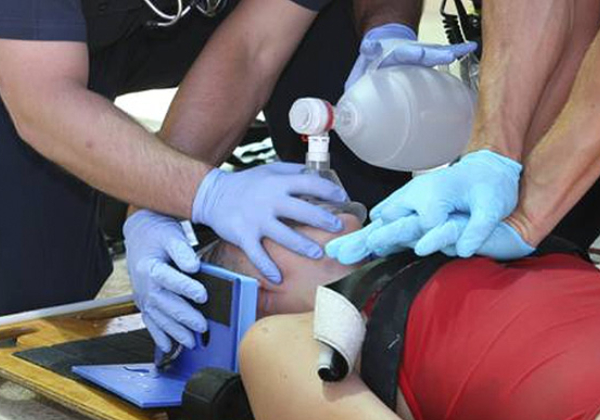
- Advanced Airway Management: Use of devices like oropharyngeal airways (OPAs) and bag-valve-mask (BVM) ventilation.
- Team Dynamics: Coordinating with other healthcare professionals during resuscitation efforts.
Training and Certification in BLS
BLS Certification
BLS certification is essential for many healthcare professionals and first responders. Certification programs are offered by organizations such as the American Heart Association (AHA) and the Red Cross.
Training Components
BLS training typically includes:
- Theoretical Knowledge: Understanding the physiology of cardiac arrest and the principles of resuscitation.
- Practical Skills: Hands-on practice of chest compressions, rescue breaths, and AED use on manikins.
- Assessment: Written and practical exams to demonstrate competency.
BLS for Adults vs. Children vs. Infants
| Aspect | Adults | Children | Infants |
|---|---|---|---|
| Compression Depth | At least 2 inches | About 2 inches | About 1.5 inches |
| Compression Rate | 100-120 compressions/min | 100-120 compressions/min | 100-120 compressions/min |
| Compression to Breath Ratio | 30:2 | 30:2 (single rescuer), 15:2 (two rescuers) | 30:2 (single rescuer), 15:2 (two rescuers) |
| AED Use | As soon as available | Use pediatric pads if available | Use pediatric pads if available |
| Airway Management | Head-tilt, chin-lift or jaw-thrust | Head-tilt, chin-lift or jaw-thrust | Head-tilt, chin-lift or jaw-thrust |
Importance of BLS in Emergency Situations
BLS is vital in various emergency scenarios:
- Cardiac Arrest: Immediate BLS can double or triple the chances of survival after cardiac arrest.
- Choking: BLS techniques can effectively relieve airway obstructions.
- Drowning: Providing BLS can prevent hypoxic injury and increase survival rates.
FAQs about BLS
Q1. What is Basic Life Support (BLS)?
Ans - Basic Life Support (BLS) is a set of emergency procedures, including chest compressions, airway management, and rescue breathing, used to support the life of someone in cardiac or respiratory distress.
Q2. Who should learn BLS?
Ans - BLS training is recommended for healthcare professionals, first responders, and anyone interested in being prepared to respond to emergencies.
Q3. How often should BLS certification be renewed?
Ans - BLS certification typically needs to be renewed every two years, though requirements may vary by organization.
Q4. What is the difference between BLS and CPR?
Ans - BLS includes CPR (cardiopulmonary resuscitation) along with additional skills such as the use of an AED and more comprehensive airway management techniques.
Q5. Can BLS be performed without an AED?
Ans - Yes, BLS can be performed without an AED, but using an AED as soon as possible is crucial for increasing the chances of survival in cardiac arrest.
Q6. What should I do if I am unsure about performing BLS correctly?
Ans - If unsure, always call emergency services immediately and provide what help you can. Any attempt at BLS is better than no attempt.
Q7. Can BLS be harmful?
Ans - While there is a small risk of injury, the potential benefits of BLS in saving a life far outweigh the risks.
Q8. What are the key differences in BLS for children and infants compared to adults?
Ans - Key differences include the depth of chest compressions, the ratio of compressions to breaths, and modifications in airway management techniques.
Q9. How long should BLS be performed?
Ans - Continue BLS until emergency medical services arrive, the person shows signs of life, or you are too exhausted to continue.
Q10. What equipment is essential for BLS?
Ans - Essential equipment includes a resuscitation mask, gloves, and an AED if available. Training also covers how to perform BLS without equipment.