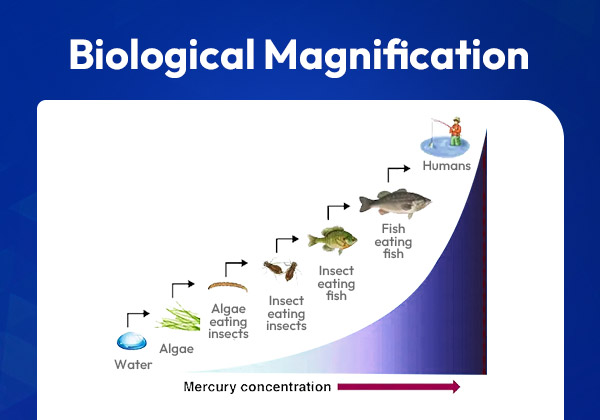

Biological magnification, also known as biomagnification, refers to the process by which pollutants or substances become more concentrated in organisms as they move up the food chain. This phenomenon has significant implications for ecosystems and human health.
Types of Biological Magnification
There are two primary types of biological magnification:
- Bioaccumulation: This occurs when organisms accumulate substances faster than they can eliminate them. Pollutants such as heavy metals or pesticides enter the organism through ingestion or absorption and accumulate in tissues over time.
- Biomagnification: In biomagnification, the concentration of pollutants increases at higher trophic levels in the food chain. Predators that consume contaminated prey accumulate higher levels of pollutants in their bodies compared to organisms lower in the food chain.
Functions of Biological Magnification
- Biological magnification serves as a mechanism for pollutants to enter and persist in food webs.
- It highlights the interconnectedness of ecosystems and how contaminants introduced into one part of the environment can impact organisms across different trophic levels.
Importance of Biological Magnification
Understanding biological magnification is crucial for environmental management and conservation efforts:
- Ecological Balance: It helps in assessing and mitigating the impact of pollutants on biodiversity and ecosystem health.
- Human Health: Biomagnification can lead to human exposure to harmful substances through consumption of contaminated food, posing risks such as neurological damage, cancer, and reproductive issues.
Uses of Biological Magnification
Researchers and environmental scientists use biological magnification to:
- Monitor pollutant levels in ecosystems.
- Assess the effectiveness of pollution control measures.
- Inform policies and regulations aimed at reducing environmental contamination.
Effects of Biological Magnification
The effects of biological magnification include:
- Ecosystem Disruption: High levels of pollutants can disrupt food webs and biodiversity, affecting species interactions and ecosystem stability.
- Health Risks: Elevated concentrations of toxins in organisms higher in the food chain pose health risks to predators, including humans, who consume contaminated organisms.
In summary, biological magnification underscores the intricate relationship between pollutants, organisms, and ecosystems. By understanding its types, functions, and effects, we can better protect our environment and mitigate the adverse impacts of pollution on both wildlife and human populations.
Biological Magnification FAQs
Q1: What is biological magnification?
Answer: Biological magnification, or biomagnification, is the process where pollutants or substances become increasingly concentrated in organisms as they move up the food chain.
Q2: How does biomagnification differ from bioaccumulation?
Answer: Bioaccumulation occurs when organisms accumulate substances faster than they can eliminate them, while biomagnification refers to the increase in concentration of pollutants at higher trophic levels in the food chain.
Q3: Why is understanding biological magnification important?
Answer: Understanding biological magnification is crucial for assessing environmental health, managing pollution, and safeguarding ecosystems and human health from the harmful effects of contaminants.
Q4: What are some examples of pollutants that undergo biomagnification?
Answer: Common pollutants that undergo biomagnification include heavy metals (like mercury and lead), pesticides (such as DDT), and persistent organic pollutants (like PCBs).
Q5: How can biological magnification affect human health?
Answer: Biomagnification can lead to human exposure to toxic substances through the consumption of contaminated food, potentially causing health issues such as neurological disorders, reproductive problems, and cancer.