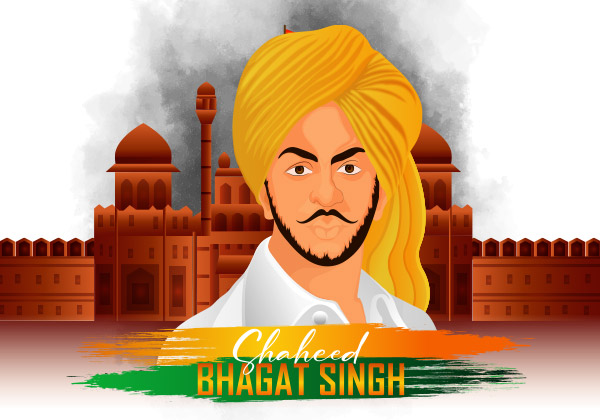

Bhagat Singh remains one of the most revered and influential figures in India’s struggle for independence. His life, characterized by fearless activism and a profound commitment to the liberation of India from British colonial rule, continues to inspire generations. This article delves into the life, ideology, and enduring legacy of Bhagat Singh, providing a comprehensive overview of his contributions to India’s freedom movement.
Bhagat Singh Early Life and Background
Birth and Family
Bhagat Singh was born on September 28, 1907, in Banga, a small village in the Lyallpur district of Punjab, now in Pakistan. He was born into a Sikh family with a history of political activism.
| Detail | Information |
| Birth Date | September 28, 1907 |
| Birth Place | Banga, Lyallpur district, Punjab (now in Pakistan) |
| Parents | Kishan Singh Sandhu (father) and Vidyavati Kaur (mother) |
| Siblings | Six siblings |
Education and Early Influences
Bhagat Singh was influenced by the political environment of his family from an early age. His father and uncles were involved in the struggle for India’s independence, which shaped his worldview.
| Stage of Education | Institution | Notable Events |
| Primary Education | Local school in Banga | Learned about the political climate of India. |
| Secondary Education | DAV High School, Lahore | Developed an interest in socialism and revolutionary literature. |
| Higher Education | National College, Lahore | Met prominent freedom fighters, engaged in revolutionary activities. |
Bhagat Singh Political Awakening and Revolutionary Activities
Early Activism
Bhagat Singh’s early exposure to the independence movement led him to join various revolutionary groups. He was deeply influenced by the Jallianwala Bagh massacre in 1919, which intensified his resolve to fight against British rule.
| Event | Impact on Bhagat Singh |
| Jallianwala Bagh Massacre | Deepened his hatred for British rule and fueled his desire for revolution. |
| Non-Cooperation Movement | Participated and became disillusioned with the movement’s sudden withdrawal by Mahatma Gandhi. |
Hindustan Socialist Republican Association (HSRA)
Bhagat Singh joined the HSRA, which aimed to overthrow British rule through armed struggle. He became a prominent member and was involved in several revolutionary activities.
| Role | Activities |
| Member | Participated in planning and executing revolutionary actions. |
| Leader | Played a key role in the reorganization of the HSRA, emphasizing socialist principles. |
Major Revolutionary Actions
The Killing of Saunders
On December 17, 1928, Bhagat Singh and his associate, Shivaram Rajguru, assassinated John Saunders, a British police officer. This was in retaliation for the death of Lala Lajpat Rai, who had been injured during a protest and subsequently died.
| Detail | Information |
| Date | December 17, 1928 |
| Target | John Saunders, British police officer |
| Reason | Retaliation for the death of Lala Lajpat Rai |
| Outcome | Escaped from the scene, later intensified his revolutionary activities. |
Assembly Bombing Incident
On April 8, 1929, Bhagat Singh and Batukeshwar Dutt threw non-lethal bombs in the Central Legislative Assembly in Delhi. Their intent was not to harm but to make a statement against oppressive laws.
| Detail | Information |
| Date | April 8, 1929 |
| Location | Central Legislative Assembly, Delhi |
| Objective | Protest against the repressive Public Safety Bill and Trade Dispute Act. |
| Outcome | Arrested and used the trial as a platform to promote their revolutionary ideals. |
Bhagat Singh Ideology and Writings
Socialist Ideals
Bhagat Singh was a committed socialist, believing that only a socialist state could ensure true freedom for the people. His readings of Marxist literature and his interactions with fellow revolutionaries shaped his socialist ideology.
| Aspect | Details |
| Influences | Marxist literature, writings of Lenin, anarchist thinkers. |
| Beliefs | Advocated for a classless society, redistribution of wealth, and the abolition of exploitation. |
Key Writings
Bhagat Singh was a prolific writer and his writings reflect his revolutionary fervor and his vision for an independent, socialist India.
| Title | Description |
| “Why I Am an Atheist” | An essay explaining his rejection of religious orthodoxy and his belief in rationalism and humanism. |
| “The Philosophy of the Bomb” | A manifesto justifying the use of violence for political ends when all other means fail. |
| Jail Diary | Reflections written during his imprisonment, outlining his thoughts on freedom, justice, and sacrifice. |
Bhagat Singh Trial and Execution
The Trial
The trial of Bhagat Singh, Rajguru, and Sukhdev for the murder of Saunders was a significant event. They used the courtroom as a platform to promote their revolutionary message.
| Detail | Information |
| Charges | Murder of John Saunders, assembly bombing |
| Legal Representation | Advocated for themselves, presenting their political ideology |
| Outcome | Found guilty and sentenced to death |
Execution
Bhagat Singh, along with Rajguru and Sukhdev, was executed on March 23, 1931, in Lahore Central Jail. Their execution was a turning point in the Indian freedom struggle, galvanizing the youth and intensifying the fight against British rule.
| Detail | Information |
| Date | March 23, 1931 |
| Location | Lahore Central Jail |
| Age at Execution | 23 years |
| Impact | Became a martyr, inspiring future generations of freedom fighters. |
Bhagat Singh Legacy and Impact
Influence on the Freedom Movement
Bhagat Singh’s martyrdom had a profound impact on the Indian independence movement. His sacrifice became a rallying point for the youth and a symbol of fearless resistance against oppression.
| Aspect | Details |
| Inspiration | Inspired countless young Indians to join the freedom struggle. |
| Symbolism | Became a symbol of bravery, sacrifice, and unwavering commitment to freedom. |
Memorials and Recognition
Numerous memorials, statues, and institutions have been established in Bhagat Singh’s honor. His legacy is preserved in various forms across India.
| Memorial | Location |
| Shaheed-e-Azam Bhagat Singh Museum | Khatkar Kalan, Punjab |
| Bhagat Singh Memorial | New Delhi |
| Statues and Educational Institutions | Various locations across India |
Cultural Depictions
Bhagat Singh’s life and legacy have been depicted in numerous films, books, and songs, keeping his memory alive in popular culture.
| Medium | Title/Details |
| Films | “Shaheed” (1965), “The Legend of Bhagat Singh” (2002), “Rang De Basanti” (2006) |
| Books | “The Jail Notebook and Other Writings”, “Bhagat Singh: The Eternal Rebel” |
| Songs | Folk songs and modern compositions celebrating his heroism. |
Bhagat Singh’s life was short but immensely impactful. His fearless commitment to India’s independence, his radical ideologies, and his ultimate sacrifice made him an enduring icon of the freedom struggle. Through his actions and writings, Bhagat Singh continues to inspire new generations, reminding us of the power of courage, conviction, and the relentless pursuit of justice.
This detailed exploration of Bhagat Singh’s life, from his early influences to his lasting legacy, provides a comprehensive understanding of why he remains one of India’s most celebrated freedom fighters. His story is a testament to the indomitable spirit of those who fought for India’s independence, ensuring that their sacrifices are never forgotten.
FAQs on Bhagat Singh
Q1. Who was Bhagat Singh?
Ans: Bhagat Singh was a revolutionary freedom fighter in India's struggle for independence from British colonial rule. Born on September 28, 1907, he is renowned for his fearless activism and sacrifice, which have made him a lasting icon of the Indian independence movement.
Q2. What were the key influences in Bhagat Singh's early life?
Ans: Bhagat Singh was influenced by the political activism of his family, the Jallianwala Bagh massacre in 1919, and the broader non-cooperation movement led by Mahatma Gandhi. His education at DAV High School and National College, Lahore, further shaped his revolutionary ideologies.
Q3. What organization did Bhagat Singh join to further his revolutionary activities?
Ans: Bhagat Singh joined the Hindustan Socialist Republican Association (HSRA), a revolutionary group committed to overthrowing British rule through armed struggle. He played a prominent role in the organization, emphasizing socialist principles and direct action.
Q4. What was the significance of the killing of John Saunders?
Ans: The assassination of John Saunders, a British police officer, on December 17, 1928, was in retaliation for the death of Lala Lajpat Rai, who had been injured during a protest. This act highlighted Bhagat Singh's commitment to avenge British atrocities and became a significant moment in India's freedom struggle.
Q5. What was the objective of the Assembly Bombing Incident?
Ans: On April 8, 1929, Bhagat Singh and Batukeshwar Dutt threw non-lethal bombs in the Central Legislative Assembly in Delhi. Their objective was to protest against the repressive Public Safety Bill and Trade Dispute Act, and to make a statement without causing harm.
Q6. What are some of Bhagat Singh’s key writings?
Ans: Bhagat Singh authored several influential writings, including:
"Why I Am an Atheist": An essay explaining his rationalist and humanist beliefs.
"The Philosophy of the Bomb": A manifesto justifying the use of violence for political ends when all other means fail.
Jail Diary: Reflections written during his imprisonment, discussing freedom, justice, and sacrifice.
Q7. How did Bhagat Singh use his trial as a platform for his revolutionary ideals?
Ans: During his trial for the murder of Saunders and the Assembly bombing, Bhagat Singh and his comrades used the courtroom to articulate their revolutionary ideas and criticize British rule. Their defiant stance and articulate speeches inspired many and garnered widespread attention.
Q8. When and where was Bhagat Singh executed?
Ans: Bhagat Singh was executed on March 23, 1931, in Lahore Central Jail, along with his associates Rajguru and Sukhdev. He was 23 years old at the time of his execution, and his martyrdom became a rallying point for India's freedom movement.
Q9. What impact did Bhagat Singh's martyrdom have on the Indian independence movement?
Ans: Bhagat Singh's execution galvanized the Indian independence movement, particularly among the youth. He became a symbol of bravery, sacrifice, and unwavering commitment to the cause of freedom, inspiring countless others to join the struggle against British colonial rule.
Q10. How is Bhagat Singh remembered and honored today?
Ans: Bhagat Singh is remembered and honored through numerous memorials, statues, and institutions named after him across India. His life and legacy are depicted in films, books, and songs, ensuring that his contributions to India's freedom struggle remain alive in popular culture and collective memory. Some notable memorials include the Shaheed-e-Azam Bhagat Singh Museum in Khatkar Kalan, Punjab, and various statues and educational institutions across the country.