-
Call Now
1800-102-2727


Indian Agricultural Research Institute: Courses, Fees, Admission 2025, Cutoff & More
Explore Indian Agricultural Research Institute 2025 – check courses, fees, cutoffs, admissions, placements & more to make the right decision.
About Indian Agricultural Research Institute: Overview
The Indian Agricultural Research Institute (IARI), popularly known as Pusa Institute, was established in 1905 at Pusa, Bihar, with a £30,000 grant from American philanthropist Henry Phipps. Initially called the Agricultural Research Institute (ARI), it began with five departments—Agriculture, Cattle Breeding, Chemistry, Economic Botany, and Mycology. A Bacteriology unit was added in 1907. The institute was renamed the Imperial Institute of Agricultural Research in 1911, and later the Imperial Agricultural Research Institute in 1919. After a major earthquake in 1934, it was relocated to Delhi in 1936. Post-independence, it became the Indian Agricultural Research Institute.
This private institute offers a total of 24 specialised postgraduate courses across various fields, including Engineering, Science, and IT & Software. Students can choose from M.Tech, M.Sc., and MCA programmes, all of which are available in full-time mode. The institute provides seven specialisations across three main streams.
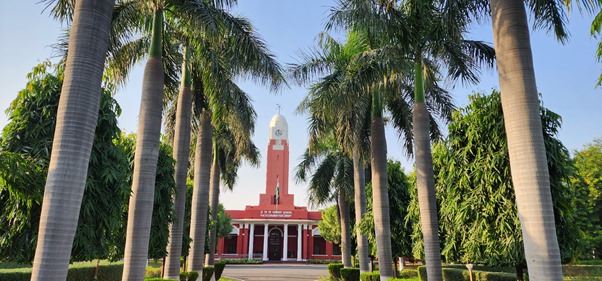
Source: Official Website
Indian Agricultural Research Institute Highlights
| Feature | Details |
| Established | 1905 |
| Type | Private |
| NAAC Accreditation | A+ |
| Campus Size | 1250 acres |
| Location | Pusa Campus, New Delhi |
| Recognised By | UGC, ICAR, AIU MemberShip |
| Popular Courses | M.Sc, M.Tech & Ph.D. |
Courses Offered at the Indian Agricultural Research Institute
The Indian Agricultural Research Institute offers a variety of undergraduate, postgraduate, and doctoral programs in agriculture and related fields. These courses combine classroom learning with hands-on research to prepare students for careers in farming, research, and agri-business.
| Level | Courses Offered |
| Undergraduate |
|
| Postgraduate |
Offers programs in 28 disciplines, including:
|
| Doctoral |
|
Indian Agricultural Research Institute Fees Structure 2025
The Indian Agricultural Research Institute (IARI) offers quality education at an affordable cost. The fee structure for 2025 is designed to be accessible while providing top-notch facilities and research opportunities.
| Programme Level | Duration | Approx Total Fees (₹) | Mode |
|---|---|---|---|
| B.Sc (Hons) Agriculture | 4 years | 51,850 | Full-time |
| M.Sc | 2–3 years | 52,600 | Full-time |
| M.Tech | 3 years | 52,600 | Full-time |
| Ph.D | 3–4 years | 75,200 | Full-time |
| Doctoral (Some specific disciplines) | 3 years | 65,050 | Full-time |
Indian Agricultural Research Institute Admission Process
The admission process in IARI is as follows:
Step 1: Get the form
- First, go to the official IARI website
- On the homepage, look for the academics tab in the menu.
- Under Academics, click on Admission - this will take you to the admissions page.
- You’ll see separate links - one for Ph.D. admissions and one for PG (Postgraduate) and Graduate admissions.
- Click the one that matches your course choice.
Step 2: Fill the form carefully
- Download the form and open it.
- Start entering details like:
- Personal details - Name, Date of Birth, contact info.
- Academic details - Your marks, qualifications, and universities attended.
- Work experience - If you have any job history relevant to your course.
- Address for correspondence - Where they should send official communication.
- Take your time - even small mistakes can delay your admission.
Step 3: Attach documents & pay the fee
- Before you submit, you must attach a set of required documents.
- Then, pay the ₹500 application fee - without payment, your application isn’t complete.
Documents You Must Have Ready
These act as proof of who you are, what you’ve studied, and your eligibility:
- Proof of Date of Birth
- 10th mark sheet/certificate
- 12th mark sheet/certificate
- Bachelor’s degree mark sheet/certificate - if you’re applying for PG.
- Master’s degree mark sheet/certificate - if you’re applying for Ph.D.
- If your university uses a course-credit system, get a Course Completion Certificate from the Registrar/Principal/Dean.
- Caste/Category/Disability certificate (if applicable) issued by a recognized authority.
Proof of employment - only if you’re currently working and it’s required. - Recent passport-size photograph
Eligibility Criteria
| Course Level | Programmes Offered | Entrance Exam | Admission Basis |
|---|---|---|---|
| B.Sc. / B.Tech | - B.Sc. (Agriculture) - B.Sc. (Community Science) - B.Tech. (Agricultural Engineering) - B.Tech. (Biotechnology) | NTA–CUET conducted by the Education Division of ICAR | Merit list prepared based on CUET scores |
| M.Sc. / M.Tech | 28 disciplines in agriculture and allied sciences | NTA exam conducted by the Education Division of ICAR | Merit list prepared based on entrance exam scores |
| Ph.D. | 28 disciplines in agriculture and allied sciences | NTA exam conducted by the Education Division of ICAR | Merit list prepared based on entrance exam scores |
IARI Important Dates 2025
| Date | Events |
|---|---|
| Jul 03, 2025 | ICAR AIEEA PG Exam |
| Jun 27, 2025 | ICAR AIEEA PG Admit Card |
| May 06, 2025 - Jun 05, 2025 | ICAR AIEEA PG Registration |
Indian Agricultural Research Institute Placements 2024
Here are the placement statistics of the Indian Agricultural Research Institute, based on the overall NIRF Report 2024:
| Metric | Data (2023-2024) |
|---|---|
| Median salary of placed graduates per annum | Rs 6,28,680 |
| Number of students graduating within the minimum stipulated time | 239 |
| No. of students placed | 26 |
| Top Recruiters | Du Pont, ITC Ltd., Indian Overseas Bank, Mahindra Group, Mankind |
Highlights:
- Indian Agricultural Research Institute has a placement cell that assists students in securing good job placements. The cell arranges interactions with industry, conducts campus interviews and job fairs, and guides students to become career-ready.
- Indian Agricultural Research Institute provides internships primarily for postgraduate students pursuing agricultural sciences and allied fields. These are typically project-based and one- or six-month duration, with or without a stipend or fixed monthly remuneration.
- Notable alumni of IARI include M. S. Swaminathan (father of India’s Green Revolution), V. L. Chopra, R. S. Paroda, and Mangala Rai. Their contributions have significantly shaped agricultural research, policy, and food security in India.
Scholarships and Financial Aid at Indian Agricultural Research Institute
- IARI offers Junior Scholarships for M.Sc. students and Senior Scholarships for Ph.D. students admitted under the General Open Competition Scheme.
- Selection process:
The Dean and Joint Director (Education) decide the awards based on:
- Merit during admission
- Academic performance during the course
- Duration:
- M.Sc. (Junior Scholarship) - 2 years
- Ph.D. (Senior Scholarship) - 3 years
- Scholarship amount:
- M.Sc. - ₹10,500 per month
- Ph.D. - ₹13,125 per month
Indian Agricultural Research Institute Cutoff 2025 (Expected)
Expected ICAR AIEEA Cutoff Rank 2025 - Course Wise
| Course | Cutoff |
|---|---|
| B.Sc. (Hons.) Community Science | 18370 |
| B. Tech. Food Technology | 18000 |
| B. Tech. Agricultural Engineering | 18550 |
| B. Tech. Biotechnology | 11580 |
| B.Sc. (Hons.) Forestry | 12050 |
| B. Tech. Dairy Technology | 16820 |
| B.Sc. (Hons) Natural Farming | 12290 |
| B.Sc. (Hons.) Agriculture | 7960 |
| B.Sc. (Hons.) Horticulture | 11260 |
| B.Sc. (Hons.) Sericulture | 13920 |
| Bachelor of Fisheries Science | 13870 |
| B.Sc. (Hons.) Food, Nutrition, and Dietetics | 14260 |
| B. Tech. Dairy Technology | 16820 |
Recognition and Rankings of the Indian Agricultural Research Institute
The Indian Agricultural Research Institute consistently ranks among the top agricultural universities in the country for its academic excellence and innovation.
| Year | Ranking Body | Category | Rank / Score |
|---|---|---|---|
| 2024 | NIRF (India) | Agriculture & Allied Sectors | 1st (Score: 87.98) |
| 2023 | NIRF (India) | Agriculture & Allied Sectors | 1st |
| 2025 | Webometrics | Global / India | 1,503rd globally, 48th in India |
| 2025 | EduRank | Global / India / Subject | 1,837th globally, 33rd in India, 47th in Agricultural Science |
| 2024 | CWUR | Global / India | 1,225th globally, 26th in India |
Campus Life, Infrastructure, and Facilities at the Indian Agricultural Research Institute
The Indian Agricultural Research Institute provides a vibrant campus life with modern infrastructure and excellent facilities. From advanced research labs to green open spaces, the campus supports both academic growth and overall well-being.
| Facility | Details |
|---|---|
| Library | Over 3,34,000 publications, including books, journals, reports, bulletins, postgraduate theses, and reference materials. Connected to DELNET and INFLIBNET for better access. |
| Hostels |
|
| Sports Complex | Cricket Ground, Football Ground, Tennis Court, Volleyball Court, Hockey Ground, Badminton Court, Chess, Carrom. |
| Laboratories | Central Seed Testing Lab, Pesticide Referral Lab, Nuclear Research Lab. |
| Other Facility | Medical Facilities Wi-Fi Auditorium Convenience Store |
FAQs About the Indian Agricultural Research Institute
Q1. Who can apply for ICAR Delhi?
A. To be eligible for ICAR Delhi, you should have a 10+2 or equivalent degree from a recognised school or institution. If you belong to the General or OBC category, you need a minimum of 50% marks in total.
Q2. What are the career opportunities after passing out of ICAR institutes?
A. Once you complete a degree from the Indian Agricultural Research Institute, there are several fields where you can work. You can be a scientist, researcher, agricultural officer, or expert in areas related to farming. There are opportunities to work in agribusiness firms, opportunities to open your own farming or food business, and opportunities to teach or train others in agriculture.
Q3. Does ICAR offer entrepreneurship assistance?
A. Yes, the Indian Agricultural Research Institute assists individuals in initiating and developing agri-businesses through various programs and support mechanisms.
They have Pusa Krishi, an incubation centre which nurtures startups from the conceptual stage to business development. They offer training, mentorship, and even funding through programs such as RKVY-RAFTAAR and NAIF.
IARI also conducts special training, such as the Agripreneur Development Program, to educate students in skills for operating successful farm-related businesses. Their Zonal Technology Management Unit aims to convert research concepts into real, profitable products. Briefly, they provide knowledge, advice, and monetary assistance to make agri-startups a success.
Q4. Are ICAR degrees recognised overseas?
A. Yes, ICAR-accredited college degrees, such as the Indian Agricultural Research Institute, are recognised by most countries. That is, you can utilise them to pursue further studies or even work overseas, since they conform to international education standards.
Q5. What type of research work may students undertake at IARI?
A. Students at the Indian Agricultural Research Institute have the opportunity to work on various kinds of research. This involves enhancing crops to yield more, making crops pest and disease-resistant, discovering better ways to plant and maintain crops, and utilising environmentally safe farming practices. They could also work on areas involving agricultural machinery, fundamental sciences, social sciences, and even combining older farming practices with new ones.


Talk To Our Experts

 Call Now
 Let's Chat
 Share
Share