-
Call Now
1800-102-2727


Sets, Representation of a set, Types of Sets, Practice Problems & FAQ’s
In day-to-day life, we often discuss the collection of objects of a specific kind, like, collection of coins, collection of books, players of a cricket team, etc.
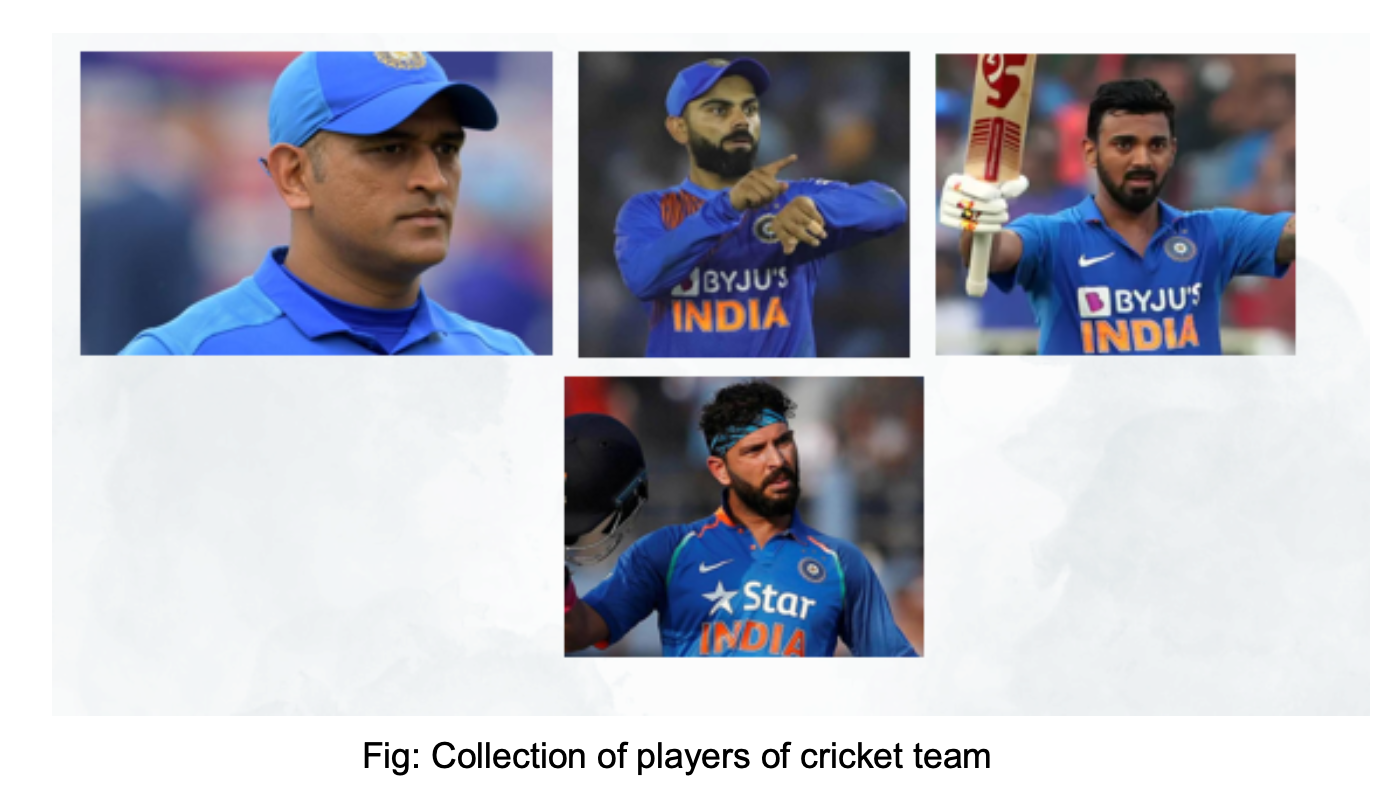
So, can we say that this is a collection of good cricket players or a set of good cricket
players? The answer will vary from person to person. So this is not a well defined collection.
Similarly, we come across some collections in mathematics as well. For example: collection of irrational numbers, lines, composite numbers, etc. Let’s understand when some of these collections will be termed as Sets and when not.
Table of contents:
- Definition of Set
- Elements of a set
- Representation of a Set
- Cardinality of a Set
- Types of Sets
- Practice Problems
- FAQs
Definition of Set
A set is a well-defined collection of elements or objects. A set is always denoted by a capital letter. Some examples of sets:
- 𝑅 : Set of all real numbers
- 𝑁: Set of all natural numbers
- The collection of all states of India
Note: A collection of good students is not a set as the term “good” is vague i.e. not well defined.
Elements of a set
The objects in a set are called its members/elements. Elements can be present in any order and in general, we won't repeat elements in a set.
If𝑎isanelementofset𝐴thenwewrite 𝑎 ∈ 𝐴 andisreadas“𝑎belongsto𝐴”. If𝑎isnotanelementofset‘𝐴’thenwewrite𝑎∉𝐴andisreadas “𝑎doesnotbelongto𝐴”.
Representation of a set
A set is represented within curly braces { }. There are two common ways of representing the set:
- Roster or Tabular notation
In Roster form, all the elements of a set are listed, separated by commas and enclosed within braces.
Example: 𝐴 = the set of even natural numbers will be represented in Roster/Tabular form as 𝐴 = {2, 4, 6, 8,......}
Set builder notation
In the set-builder form, property or properties which are satisfied by all the members of the set are listed. We write, {𝑥: 𝑥 𝑠𝑎𝑡𝑖𝑠𝑓𝑖𝑒𝑠 𝑝𝑟𝑜𝑝𝑒𝑟𝑡𝑦 𝑃}, which is read as “ set of all those 𝑥 such that (represented by | or :) , each 𝑥 has property 𝑃
Example: 𝐴 = The set of even natural numbers will be represented in set builder form as 𝐴 = {𝑥: 𝑥 = 2𝑛, 𝑛 ∈ 𝑁}
Cardinality of a set
The order of a set defines the number of elements in the set. It is also known as the cardinality of a set. The cardinality of a given set 𝐴 is denoted by 𝑛(𝐴), |𝐴|, 𝑂(𝐴)
Example: Let a set 𝐴 = {1, 2, 3, 4} then cardinality or order of set 𝐴 is 𝑛(𝐴) = 4.
Types of sets
- Empty Set
A set is said to be a null set or void set or empty set if it contains no element. An empty set is represented by { } or φ
Example: 𝐴 = set of natural numbers lying between 1 and 2 is an empty set
- Singleton Set
A set containing only one element is known as a singleton set.
Example:𝑃 = {𝑦 ∈ 𝑅: 𝑦 − 7= 0} = { 7},whichisasingleton set
- Finite Set
A set is called a finite set if it contains either no element or a finite number of elements. Example:
𝐴 = the set of natural numbers less than 10 i.e. 𝐴 = {1,2,3,4,5,6,7,8,9}
- Infinite Set
A set containing an infinite number of elements is known as an infinite set.
Example: 𝑃 = the set of all natural numbers i.e. 𝑃 = { 1, 2, 3, 4, 5...........}
- Equivalent Sets
Two finite sets 𝐴 and 𝐵 are said to be equivalent sets if their order or cardinalities are the same, i.e., 𝑛(𝐴) = 𝑛(𝐵).
For example, 𝐴 = {1,2,3,4}&𝐵 = {𝑎,𝑏,𝑐,𝑑} , hence sets 𝐴 and 𝐵 are equivalent.
- Equivalent Sets
Two sets are said to be equal if the cardinalities as well as the members in both the sets are the same.It is not necessary that the elements are listed in the same sequence in both the sets. For example, 𝑃 = {𝑎,𝑏,𝑐,𝑑}&𝑆 = {𝑏,𝑐,𝑎,𝑑}. Here 𝑃&𝑆 are equal sets.
Practice Problems
Example : Write the set 𝐷 = {𝑡|𝑡3 = 𝑡, 𝑡 ∈ 𝑅} in the roster form.
Solution :
Example : Write the set 𝐷 = {𝑡|𝑡3 = 𝑡, 𝑡 ∈ 𝑅} in the roster form. Solution :
Here,𝐷= 𝑡|𝑡3=𝑡,𝑡∈𝑅 {}
Now, 𝑡3 = 𝑡 ⇒ 𝑡3 − 𝑡 = 0 ⇒𝑡(𝑡2 − 1)= 0
⇒𝑡(𝑡+1)(𝑡−1)=0
⇒𝑡=0,1, −1
Hence, the roster form is 𝐷 = {− 1, 0, 1}
Example : If 𝑌 = {1, 2, 3, .... 10}, and 𝑎 represents any element of 𝑌, write the set containing all the elements satisfying the condition, 𝑎 ∈ 𝑌 𝑏𝑢𝑡 𝑎2 ∉ 𝑌
Solution :
Here,𝑌 = {1,2,3,4,5,6,7,8,9,10} and 𝑎∈𝑌
Since 12, 22, 32 ∈ 𝑌
∴{𝑎:𝑎∈𝑌𝑎𝑛𝑑𝑎2 ∉ 𝑌}= {4,5,6,7,8,9,10} Hence, the required set is {4, 5, 6, 7, 8, 9, 10}
Example : Let 𝐴 be the set of all real numbers between 4 and 5, including 4 but not 5. Describe 𝐴 in set builder notation, using the variable name as 𝑥.
Solution :
In the set builder form, we could write 𝐴 = {𝑥|𝑥∈𝑅, 4≤𝑥 < 5} Example : Let 𝐵 = {2𝑚 + 5𝑛|𝑚, 𝑛∈𝑁}. Is 10 ∈ 𝐵? Is 13∈𝐵? Explain. Solution :
For different values of 𝑚 and 𝑛, we can see 𝐵 = {7, 9, 11, 12, 13, 14, 15, 16 ...}. From this list we can say that 10 ∉ 𝐵, as no natural numbers 𝑚 and 𝑛, satisfies 2𝑚 + 5𝑛 = 10. However, 13∈𝐵,asfor𝑚 = 4and𝑛 = 1,2𝑚 + 5𝑛 = 13
Example : Are the following pair of sets equal? Justify your answer.
[⸪𝑎2−𝑏2=(𝑎−𝑏)(𝑎 +𝑏)]
𝐴 = {𝑛 : 𝑛 ∈ 𝑍 𝑎𝑛𝑑 𝑛2 ≤ 4} and 𝐵 = {𝑥 : 𝑥 ∈ 𝑅 𝑎𝑛𝑑 𝑥2 − 3𝑥 + 2 = 0}
FAQs
1.What is the difference between equal and equivalent sets ?
For two sets to be equivalent, order/cardinality should be the same while for two sets to be equal the order as well as the elements of both sets should also be the same.
2.Can we represent sets using diagrams?
Yes, sets can be represented using Venn Diagrams(Possible hyperlink).
3.Can small letters be used to represent a set?
A set is always represented by a capital letter while its elements are written in small letters.
A set is said to be a null set or void set or empty set if it contains no element. An empty set is represented by { } or φ
Example: 𝐴 = set of natural numbers lying between 1 and 2 is an empty set

Talk to our expert

 Call Now
 Let's Chat
 Share
Share