-
Call Now
1800-102-2727



Conformations of Butane and Stability Order - Conformations, Barrier to Rotation, Stability of Conformations and Energy Diagram
Do you know what is celebrated on June 21?
Make a hunch. You've probably seen people pose in various body-contorting positions.
Yes! The 21st of June is recognized as International Yoga Day!
The advantages of yoga for physical and mental health care are available to people of all ages. If you are recovering from surgery, fighting an illness, or managing a chronic condition, yoga can also play a significant role in your care and possibly hasten your recovery. Tadasana (Mountain Pose), Utkatasana (Chair Pose), and Virabhadrasana (Warrior Pose), to mention a few, are a handful of the many yoga poses.
You may have noticed that shifting your body position can be done in a variety of ways. Alternately, we could assert that there are countless possible spatial configurations. Similarly in chemistry, by rotating the single bonds, a molecule can take on a number of shapes while maintaining its localised atom arrangement (every saturated carbon atom is tetrahedral).
Let us study more related to the different conformations of butane and their stability in detail on this concept page.
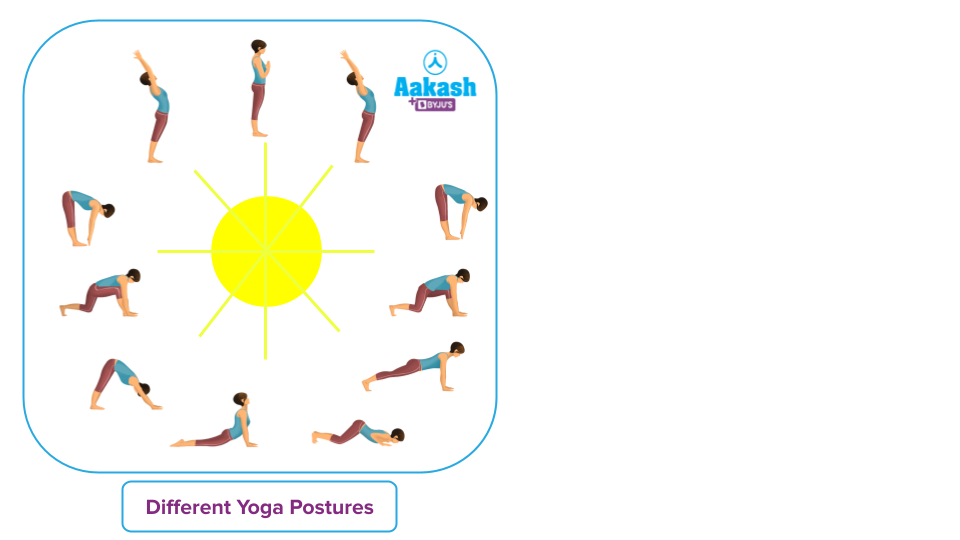
TABLE OF CONTENTS
- What is Conformation?
- Key Terms in Conformational Analysis
- Conformations of Butane
- Stability Order of Conformers of Butane
- Energy Level Diagram
- Related Videos
- Practice Problems
- Frequently Asked Questions - FAQ
What is Conformation?
In alkanes, the electron distribution in the sigma molecular orbital is symmetrical around the C-C bond's internuclear axis. As a result, unfettered rotation around the C-C single bond (sigma bond) is possible. Different spatial arrangements of carbon atoms in space are observed as a result of this rotation, which can transform into one another.
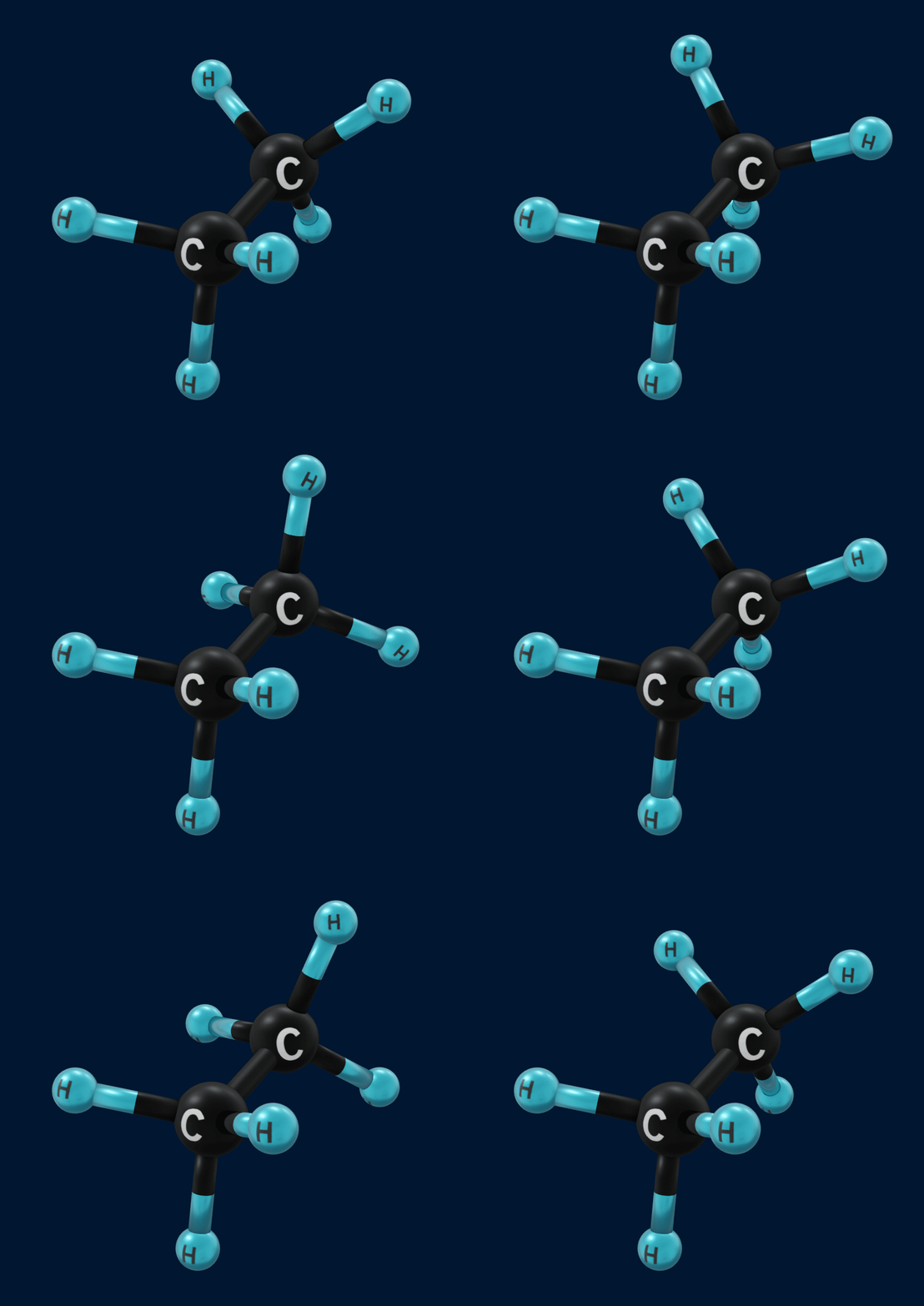

Conformation, conformer, or rotamer refers to a spatial configuration of different groups (substituents) transformed into one another by rotating around a C-C sigma bond.
Rotation around C-C single bonds allows alkanes to have an endless variety of conformations. However, due to repulsive interactions between the electron clouds of C-C bonds, this rotation is not totally free. Torsional strain and van der Waals strain are the names for this repulsive relationship.
Key Terms in Conformational Analysis
There are a few terms related to conformational analysis. These are explained below.
a.) Free Rotation
A sigma covalent bond which undergoes free rotation at room temperature such as
b.) Conformers / Rotamers or Conformations
Due to free rotation along a sigma covalent bond, molecules can have an endless variety of spatial orientations which are referred to as conformers.
c.) Conformational Isomers
- Conformational isomers are those conformations that are the most stable and have the lowest potential energy.
- These can never be isolated because they are not real isomers.
- They are defined as conformations that are most stable and have the lowest potential energy as a result of free rotation from 0° to 360°.
- Degenerate isomers or equienergic isomers are those conformers that share the same energy.
- Non-degenerate isomers are conformational isomers with varying energies.
- According to the rotational angle, the conformational isomers are located at the potential energy minima in the potential energy diagram.
- Conformational Energy
- The rotational energy barrier is known as conformational energy. It is the potential energy difference between conformations at potential energy minima and maxima.
- We can spin roughly as many single bonds as we like to go from one conformation to another. Breaking any bonds is the one thing we are unable to accomplish.
- Conformational energy is the required amount of energy to overcome this rotational barrier to convert one conformer into another.
- Dihedral Angle (DHA) / Torsion Angle / Angle of Rotation (ф)
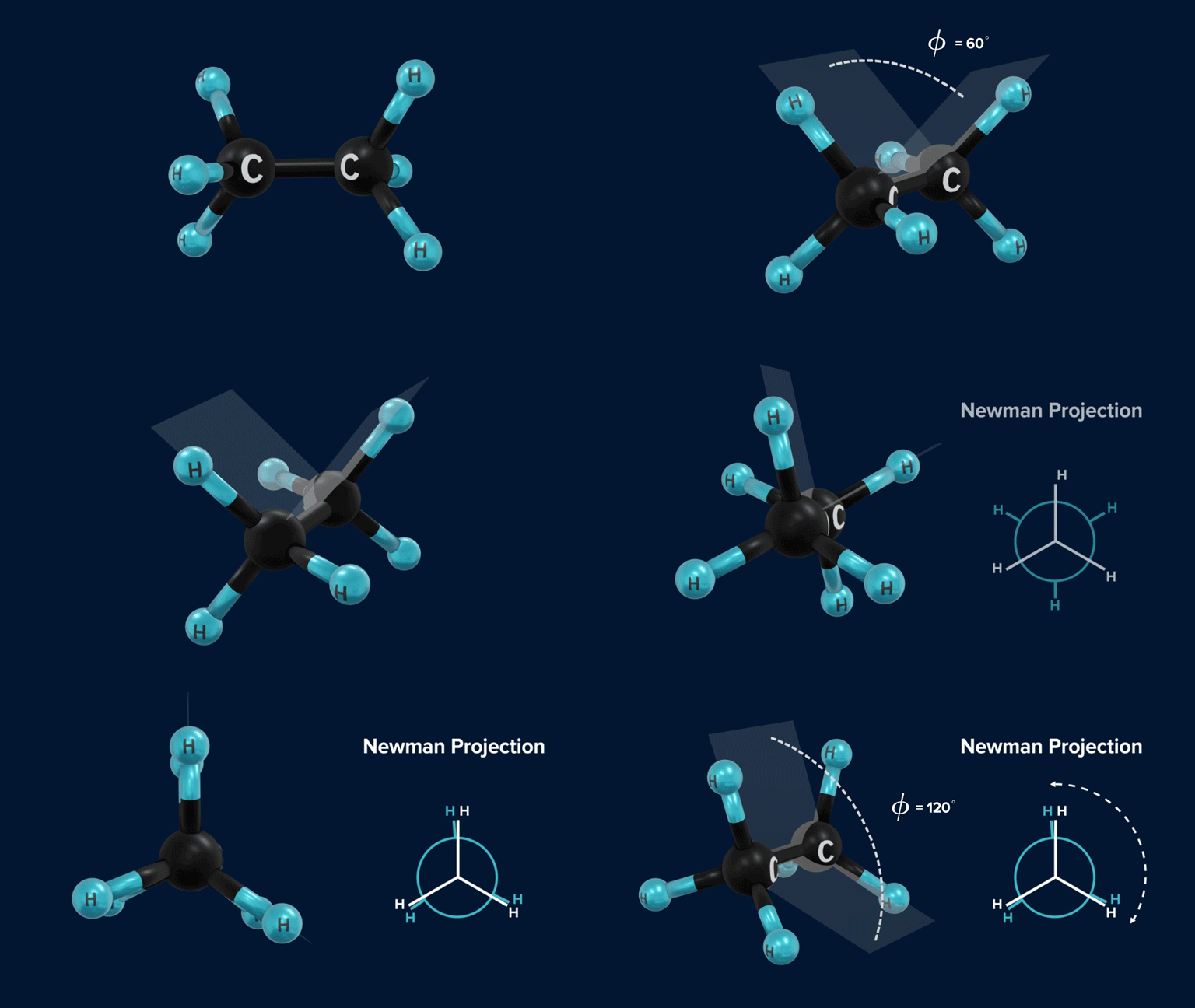
- The angle between a C-H bond at the closer carbon and a C-H bond at the farther carbon is what we refer to as the dihedral angle, which is also known as the torsion angle
- It can also be defined as the angle formed by two intersecting planes with two atoms in common.
- ф = 0° in the eclipsed configuration, ф = 60° in the staggered conformation, ф = 180° in the anti configuration.

- Torsional Strain
- It is described as the electrical repulsion of the electrons in two neighbouring eclipsed bonds' bond pairs.
- When the molecule is in an eclipsed conformation, it is active at torsional angles of 0°, 120°, and 240°.
- In the staggered conformation, it is seen as being almost zero. (DHA. = 60º, 180º, 300º)
- Torsional strain is a chemical compound's resistance to bond twisting.
- It has to do with the bond angle with respect to bond rotation. The two big groups are furthest apart in the staggered conformation (anti), which reduces torsional strain.
- Van der Waals Strain
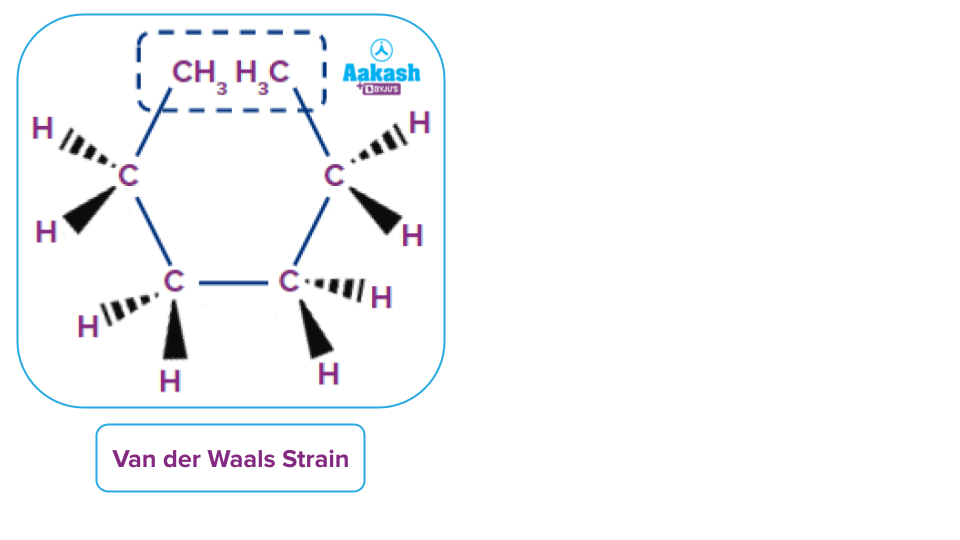
- It is the repulsion of the group to the bonds that are adjacent to it. The van der Waal strain is intermediate in gauche conformations and is maximal in the eclipsed conformation and least in the anti-conformation.
- When two substituents in a molecule approach one another at a distance that is less than the total of their Van der Waals radii, this is referred to as Van der Waals repulsion in chemistry.
- Van der Waals repulsion, commonly known as Van der Waals strain, is connected to steric hindrance.
- Since the sum of van der Waals radii is less than the distance between two -H atoms, it is almost zero for -H atoms.
Conformations of Butane
The formula of butane can be represented as given below.
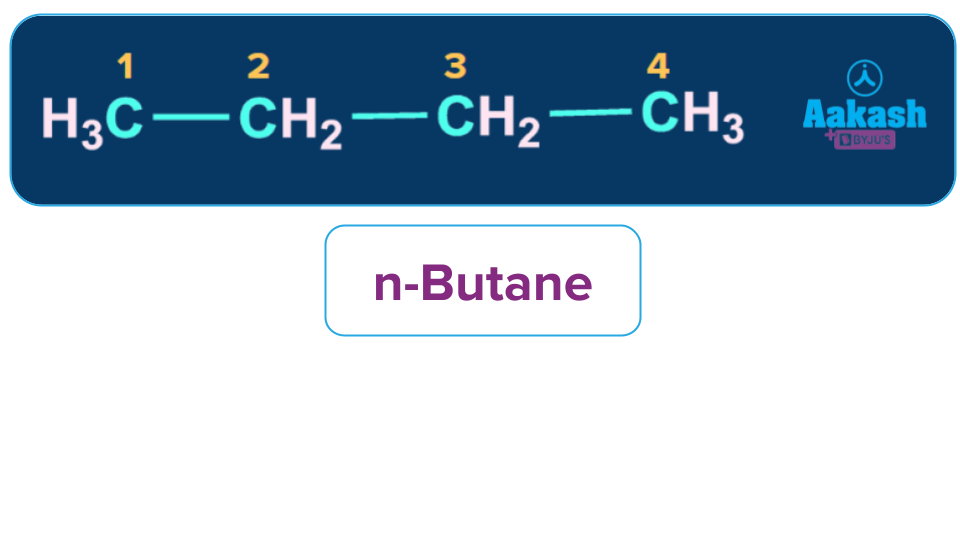
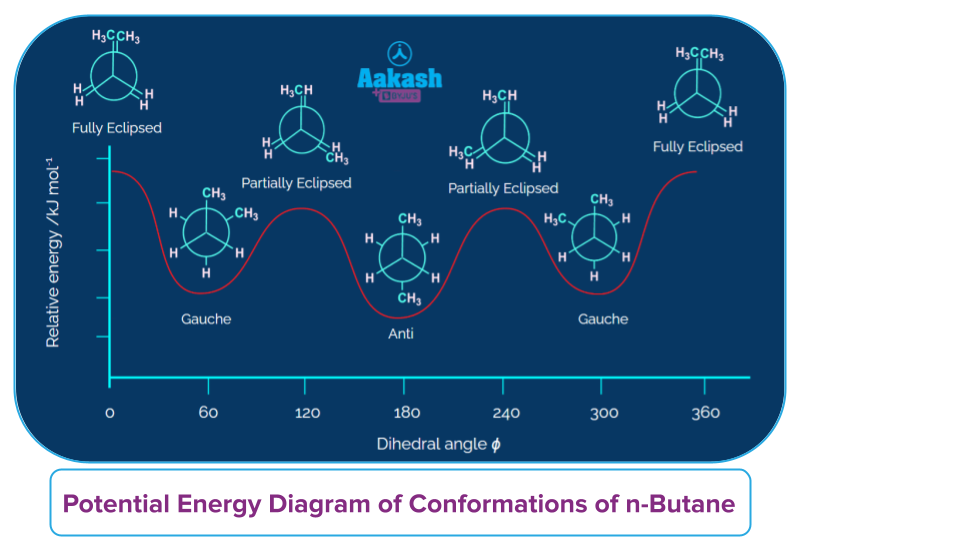
Butane is a type of alkane that has C-C bonds. When we rotate the butane molecule around the axis of the C2-C3 bond, it normally exhibits distinct conformational isomerism. Fully eclipsed, gauche, eclipsed, and anti are the four conformational isomers of Butane.
Let's have a look at these isomers in more detail.

- Butane has two substituents, which are methyl groups connected to the two end carbon atoms, as can be seen in its chemical structure. The methyl group is larger than hydrogen atoms in size. However, we can see that the structure on the back is eclipsed by everything on the front side. The other hydrogen atoms are retained behind the other hydrogen atoms, and one methyl group is in front of the other methyl group. In other words, either the structure is entirely eclipsing them or they are completely overshadowed.
- When the back methyl group is rotated 60° or the dihedral angle is 60°, a gauche or staggered conformation is formed. It consists of identical groups arranged at a 60°angle to one another. Because there is some van der Waals strain between the same molecules, this type of conformation is more stable.
- When the dihedral angle is set to 120°, the isomer is referred to as eclipsed conformation. This eclipsed state, however, is not the same as the prior fully eclipsed condition. The main distinction is that the hydrogen atom, not the methyl group, is eclipsing the methyl group in the back carbon. It is also referred to as partially eclipsed.
- The two methyl groups are discovered to be perfectly opposite to each other when the isomer is rotated at an angle of 180°. This conformation is often known as anti-conformation.
- By rotating the isomer around the core carbon single bond, each conformer is converted into the other forms. When a fully-eclipsed conformer is rotated by 60°, a gauche conformer is obtained; When a fully-eclipsed conformer is rotated by 120°, a partially-eclipsed conformer is obtained; When a fully-eclipsed conformer is rotated by 180°, an anti conformer is obtained; When a fully-eclipsed conformer is rotated by 240°, a partially-eclipsed conformer is obtained; When a fully-eclipsed conformer is rotated by 300°, a gauche conformer is obtained.
Stability Order of Conformers of Butane
The stability order of the conformations of butane is listed below from the lowest to the highest. The conformer with the most energy is the least stable, whereas those with the least energy are the most stable.
The order of stability of conformers of butane is Anti > Gauche > Partially eclipsed > Fully eclipsed.

Energy Level Diagram
Let's take a moment to imagine what the energy–rotation graph might look like before we start drawing it.
- The syn-periplanar (fully eclipsed) conformation (ɸ = 0°) will be more energetic than the two partially eclipsed conformations (ɸ = 120° and 240°) because two methyl groups are eclipsing each other in the syn-periplanar (fully eclipsed) conformation, but each methyl group is eclipsing only a hydrogen atom in the partially eclipsed conformations.
- The anti-periplanar (anti) conformation (ɸ=180°) has the two methyl groups furthest apart, therefore it will have lower energy than the gauche conformations (ɸ = 60° and 300°).
Related Videos
Practice Problems
Q1. Different configurations of atoms can be changed into one another by rotating around the __________.
A. Double bond
B. Single bond
C. Triple bond
D. Rotation is not possible
Answer: B)
Solution: Conformational isomerism is a type of stereoisomerism in which isomers can only be interconverted by rotating them around formally single bonds. Conformational isomers, also known as conformers or conformers, or rotamers, are examples of such isomers.
So, option B) is the correct answer.
Q2. __________ is the amount of energy required to rotate an n-butane molecule around its carbon-carbon bond.
A. Enantiomeric energy
B. Potential energy
C. Rotational energy
D. Conformational energy
Answer: D)
Solution: Conformational energy is the amount of energy required to rotate a molecule around a carbon-carbon bond.
So, option D) is the correct answer..
Q3. The energy required to rotate n-butane around the (C2-C3) carbon-carbon bond is about _______.
A. 3 kJ mol-1
B. 10 kJ mol-1
C. 50 kJ mol-1
D. 100 kJ mol-1
Answer: A)
Solution: The rotation of n-butane around the (C2-C3) carbon-carbon bond requires only about 3 kJ mol-1of energy.
So, option A) is the correct answer.
Q4. Due to _______________, gauche conformation is less stable than eclipsed conformation in n-butane.
A. Angle strain
B. Hydrogen bonding
C. van der Waals repulsion
D. Covalent bonding
Answer: C)
Solution: As van der Waals’ force of attraction is weak, gauche conformation is less stable than eclipsed conformation of n-butane.
So, option C) is the correct answer.
Frequently Asked Questions - FAQ
Q1. Is it possible to separate conformers?
Answer: Yes, it is possible to separate conformers. Atropisomers, for example, are conformational isomers that can be differentiated due to constrained rotation. Atropisomers are conformers in which steric hindrance severely restricts the rotation around a single bond. These conformers can be isolated as a result.
Q2. What exactly does it mean to be superimposable?
Answer: Superimposable (superposable) is the ability to place one thing on top of another, usually so that both are visible. The ability for an object to be positioned over another object is frequently interchanged with the broader term superimposable, which implies that visibility is not limited.
Q3. What do you understand by the term ‘Newman projection’?
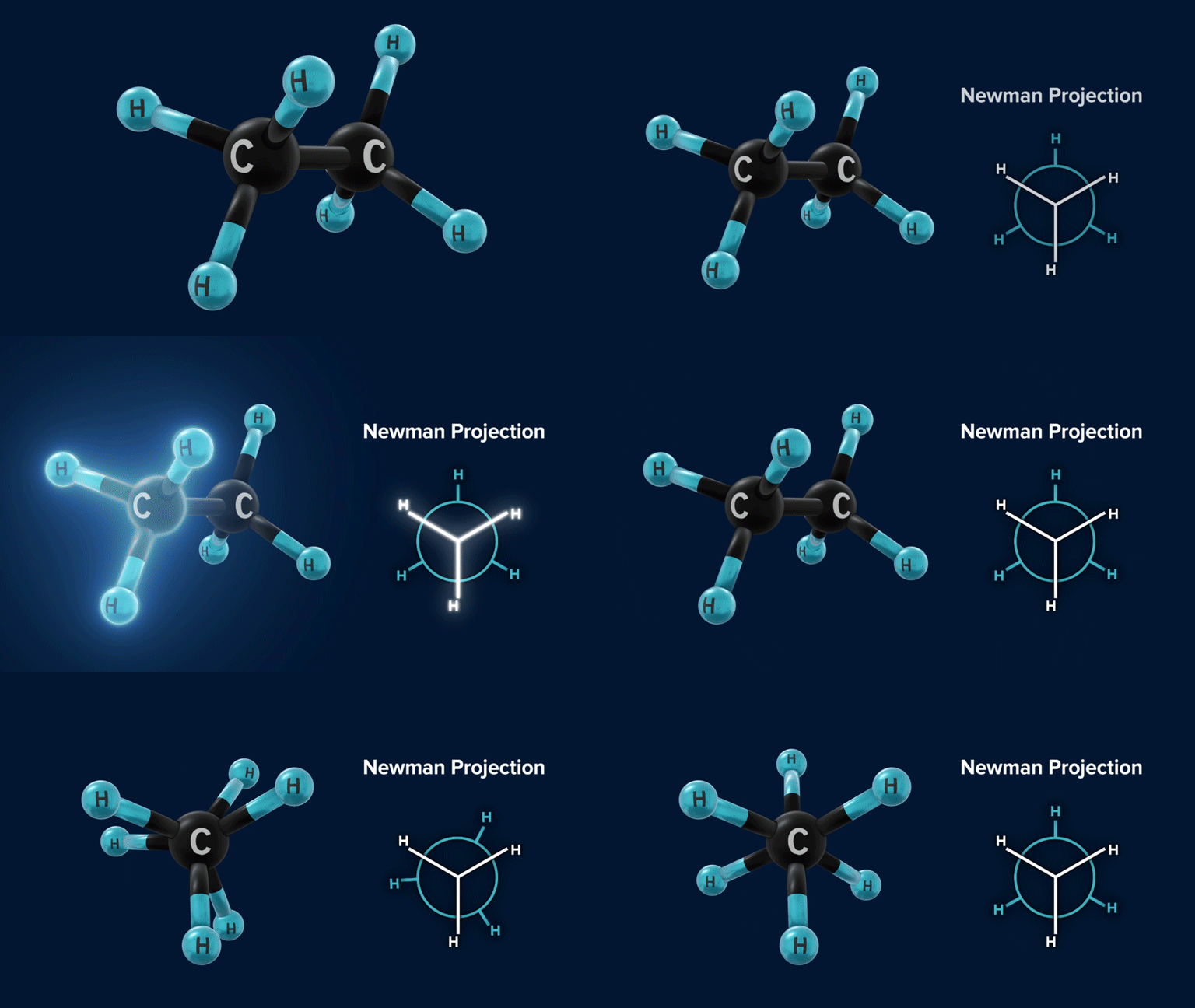
Answer: A Newman projection depicts the conformation of a chemical bond from front to back, with a line representing the front atom and a circle indicating the back carbon. It is useful in alkane stereochemistry. The atom closest to the front is referred to as proximal, whereas the atom closest to the back is referred to as distal.

Q4. What do you understand by the term ‘Sawhorse projection’?
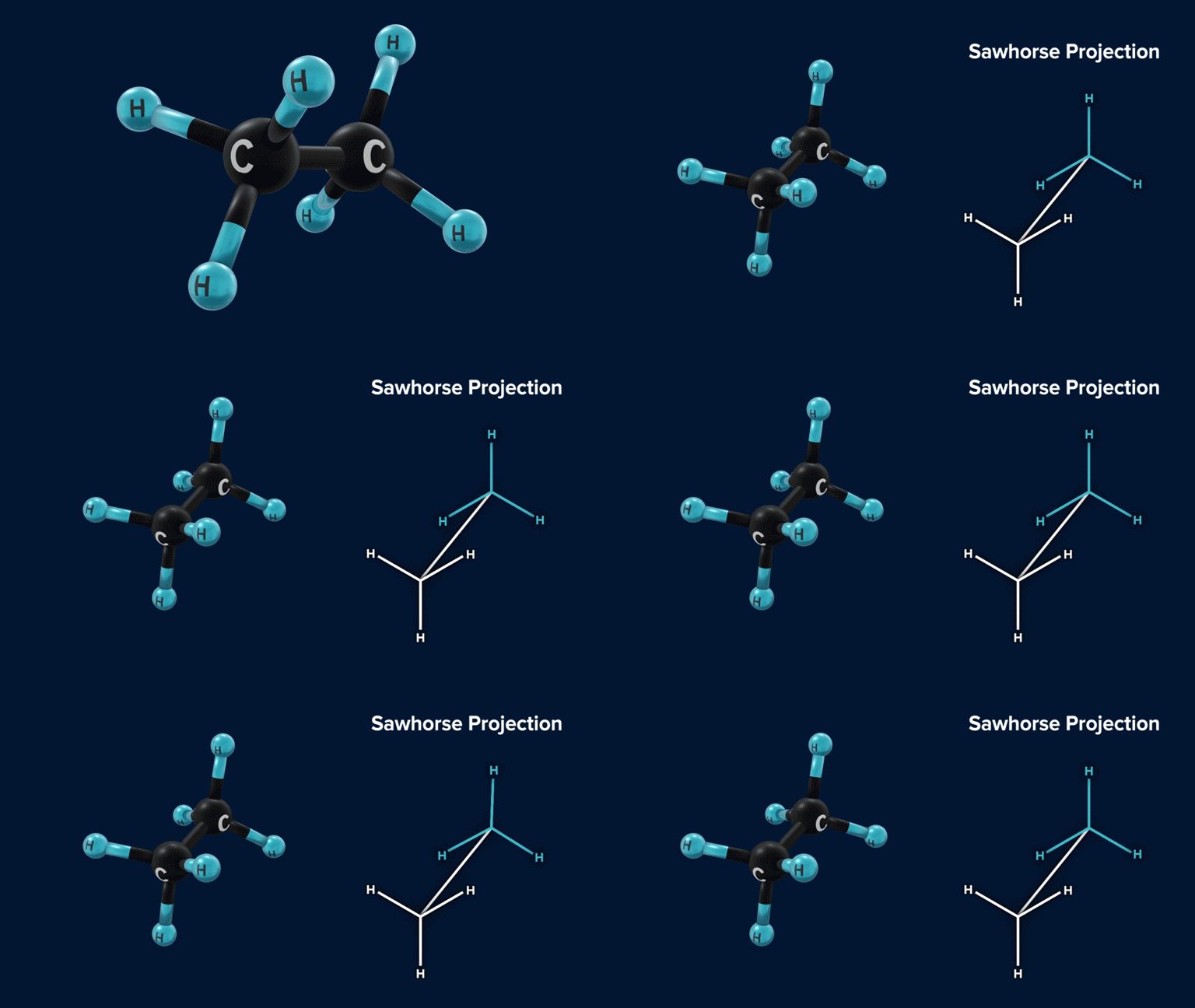
Answer: A sawhorse projection depicts the conformation of a molecule at an angle rather than straight on. A figure known as a saw-horse formula is used to show a particular molecule's conformation. The sawhorse projection makes the three-dimensional geometry between neighbouring carbon atoms easier to see. This projection is typically used to illustrate interactions in processes between groups on nearby carbon atoms.



 Call Now
 Let's Chat
 Share
Share